
Content
Industrial RO Membrane serves as the core separation element in water treatment systems, with 4040 and 8040 being the two mainstream specifications. The 4040 model suits small to medium systems processing 1-5 tons per hour, while the 8040 model is designed for large projects above 10 tons per hour. Selection requires comprehensive evaluation of four core indicators: water output capacity, salt rejection rate, operating pressure, and anti-fouling performance. Jiangsu Bangtec Huachuang Sci-tech Co., Ltd. offers a product portfolio covering high, medium, and low-pressure reverse osmosis membranes, anti-fouling reverse osmosis membranes, and special separation nanofiltration membranes, widely deployed across photovoltaics, lithium batteries, steel production, power generation, chemicals, textile dyeing, and coal chemical industries.
Industrial RO Membrane operates on the principle of selective permeation through a semi-permeable membrane. When external pressure exceeding the solution osmotic pressure is applied, typically ranging from 1.5 to 10.0 MPa, water molecules preferentially pass through the membrane layer while dissolved salts, organic compounds, heavy metal ions, and microorganisms are retained on the concentrate side. Modern industrial reverse osmosis membranes generally achieve salt rejection rates of 99.0% to 99.7%, with rejection of boron and silica exceeding 93%. These membranes have been widely deployed across sectors including photovoltaics, lithium batteries, steel production, power generation, chemicals, textile dyeing, and coal chemical industries.
Reverse osmosis membranes are essentially semi-permeable membranes with nanoscale pore structures on their surfaces. When saline water contacts the membrane, water molecules pass through the pores under pressure-driven conditions while dissolved solids, colloids, bacteria, and viruses are effectively rejected. The driving force for this process is the transmembrane pressure differential, which is the difference between applied pressure and osmotic pressure. For seawater desalination applications, osmotic pressure is approximately 2.5-3.5 MPa, requiring applied pressures of 4.0-10.0 MPa to achieve effective separation.
Modern industrial reverse osmosis membranes typically employ thin-film composite structures consisting of three layers. The bottom layer is a porous support layer made of polysulfone, providing mechanical strength. The middle layer is an ultra-thin skin layer made of polyamide, with a thickness of only about 0.2 microns, which serves as the functional separation layer. Some premium products also include a surface modification layer that enhances anti-fouling performance through hydrophilic or charge modification. The membrane products developed by Jiangsu Bangtec Huachuang Sci-tech Co., Ltd. have demonstrated internationally leading performance indicators in long-term field operations across multiple industrial sectors.
| Salt Rejection Rate | Measures the membrane's ability to remove total dissolved solids. Premium industrial membranes should maintain stable rejection above 99.5%. Sodium chloride rejection is highest, while boron and silica rejection ranges from 93% to 96% |
| Permeate Flow | The daily water output per membrane element under standard test conditions of 25 degrees Celsius, 2000 ppm NaCl, and 1.55 MPa. The 4040 model delivers 1.0-1.5 tons per hour, while the 8040 model delivers 7.5-9.5 tons per hour |
| Operating Pressure Range | Low-pressure membranes operate at 0.8 to 1.6 MPa for municipal tap water or pretreated surface water. High-pressure membranes require 4.0 to 10.0 MPa for seawater desalination or high-salinity wastewater treatment |
| Chemical Compatibility | Must tolerate citric acid (pH 2-3), sodium hydroxide (pH 11-12), and sodium hypochlorite within specified pH ranges for cleaning and maintenance |
| Anti-Fouling Performance | Surface charge, roughness, and hydrophilic modification directly affect long-term stability in complex water matrices. Anti-fouling membranes reduce contaminant attachment through charge neutralization and low surface roughness |
| Temperature Range | Standard industrial reverse osmosis membranes operate between 5 and 45 degrees Celsius. Temperatures outside this range affect permeate flow and salt rejection performance |
| pH Operating Range | Continuous operation pH range is 2-11, while short-term cleaning tolerates pH 1-13. Operating outside these ranges causes membrane hydrolysis or oxidative degradation |
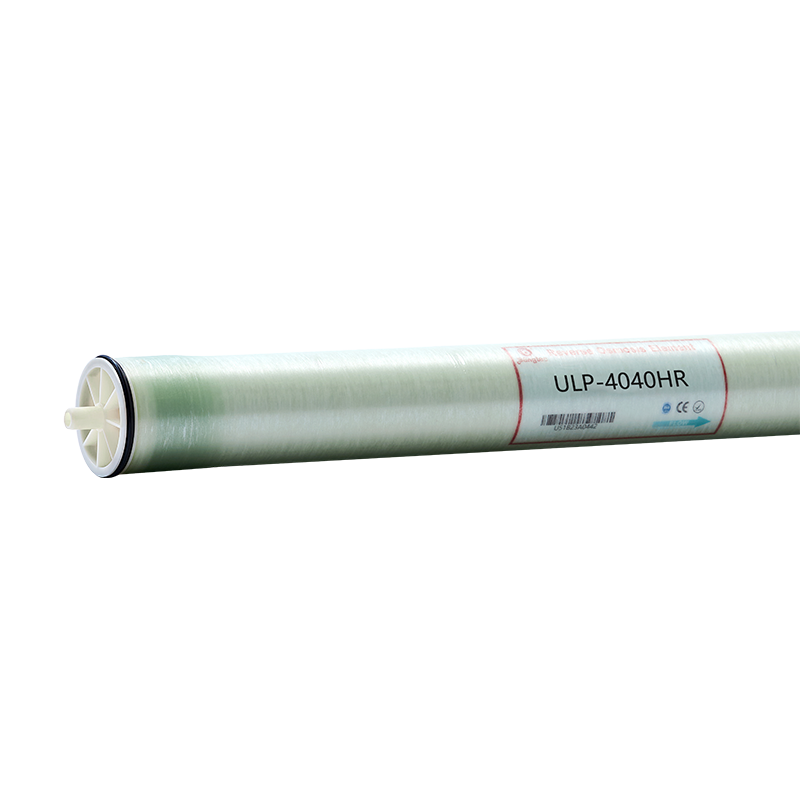
In industrial water treatment projects, the membrane element specification directly determines system output capacity and footprint. The 4040 RO Membrane (4-inch by 40-inch) and 8040 RO Membrane (8-inch by 40-inch) are currently the two most widely adopted standard sizes globally. The choice between these specifications affects not only initial investment costs but also long-term energy consumption and maintenance frequency.
The 4040 model offers an effective membrane area of approximately 7.9 square meters with a standard permeate flow of 1.0 to 1.5 tons per hour, making it suitable for space-constrained installations. The 8040 model provides an effective membrane area of approximately 37.2 square meters, which is about 4.7 times that of the 4040 model, with a standard permeate flow of 7.5 to 9.5 tons per hour. In terms of unit-area flux, the 8040 model demonstrates higher efficiency in large-flow systems, with a single element capable of replacing multiple 4040 elements, thereby reducing membrane housing quantity by approximately 75% and significantly decreasing piping complexity and footprint.
In large-scale projects, the 8040 model delivers significantly lower unit water energy consumption compared to the 4040 model. For a 100-ton-per-hour system, approximately 67 to 100 pieces of 4040 elements would be required, while only about 11 to 13 pieces of 8040 elements are needed. The reduction in membrane housing quantity not only lowers initial equipment investment but also decreases the number of seals, connection pipes, and support structures, thereby reducing leakage risk and future maintenance workload. The 8040 RO Membrane products from Jiangsu Bangtec Huachuang Sci-tech Co., Ltd. demonstrate excellent long-term operational stability in large municipal and chemical industry projects.
| Comparison Factor | 4040 RO Membrane | 8040 RO Membrane |
| Dimensions | 4 inches x 40 inches (approx. 101.6mm x 1016mm) | 8 inches x 40 inches (approx. 203.2mm x 1016mm) |
| Effective Area | Approx. 7.9 square meters | Approx. 37.2 square meters |
| Standard Flow | 1.0-1.5 tons per hour | 7.5-9.5 tons per hour |
| System Scale | Small pure water systems, laboratory units, pretreatment modules | Large industrial treatment, municipal supply, seawater desalination |
| Installation Features | Compact dimensions, flexible modular design, suitable for space-limited scenarios | Superior unit-area flux, membrane housing reduced by approx. 75%, simplified piping |
| Initial Investment | Lower per-unit cost, but more housings and piping required | Higher per-unit cost, but fewer total housings and accessories |
| Operating Energy | Relatively higher unit water energy consumption | Lower unit water energy consumption, more economical long-term operation |
| Maintenance Convenience | Light per-unit weight (approx. 4-5kg), easy replacement | Heavy per-unit weight (approx. 16-18kg), requires auxiliary equipment for replacement |
| Typical Applications | Lithium battery electrolyte water, lab-grade pure water, small commercial units | Photovoltaic ultrapure water, power plant water reuse, municipal supply, seawater desalination |
Industrial RO Membrane applications have expanded from traditional seawater desalination to nearly all industrial sectors with strict water quality requirements. Different industries have significantly varying effluent water quality requirements, and membrane element selection must precisely match specific application needs.
The photovoltaic industry requires ultrapure water for silicon wafer cleaning and cell manufacturing, demanding effluent resistivity exceeding 18 megaohm-centimeters, total organic carbon below 5 ppb, and particle counts above 0.05 microns fewer than 1 per milliliter. The 8040 RO Membrane serves as the core element in secondary reverse osmosis systems, working with EDI modules to achieve these targets. Typical treatment scales range from 50 to 200 tons per hour. In long-term photovoltaic industry operations, the 8040 RO Membrane products demonstrate permeate flow decline rates controlled within 5% annually with salt rejection stabilized above 99.5%.
Electrolyte preparation water for lithium batteries requires extremely stringent quality standards, with calcium and magnesium ion concentrations below 0.01 ppm, sodium and potassium ions below 0.1 ppm, and sulfate and chloride ions below 0.05 ppm. The 4040 RO Membrane is commonly used in laboratory-grade small pure water systems or as pretreatment units in large systems. Typical treatment scales range from 1 to 10 tons per hour. In the lithium battery sector, water purity directly affects electrolyte electrochemical stability and battery cycle life, making membrane salt rejection stability and chemical compatibility critical.
Circulating cooling water blowdown from steel and power generation industries contains elevated hardness, salinity, and trace organics. Treatment by 8040 RO Membrane achieves reuse rates above 75%, with concentrate further processed through evaporation and crystallization for zero liquid discharge. A single gigawatt-scale power plant saves approximately 2 million tons of fresh water annually. In the power generation sector, reverse osmosis systems typically serve as the front-end process for boiler feed water preparation, with subsequent mixed-bed or EDI modules upgrading effluent quality to boiler water standards.
Textile dyeing wastewater is characterized by high salinity, high chemical oxygen demand, and high color intensity, making conventional treatment methods difficult for resource recovery. Concentration using special anti-fouling Industrial RO Membrane can reduce wastewater volume by 60% to 80% while recovering approximately 70% of clean water for production reuse. Subsequent evaporation and crystallization energy consumption is thereby reduced by 30% to 40%. Anti-fouling membranes employ surface charge neutralization design to effectively reduce dye molecule and surfactant attachment, extending cleaning intervals.
High-salinity wastewater from coal chemical industries contains total dissolved solids of 50,000 to 80,000 ppm with complex organics and heavy metals. High-pressure 8040 RO Membrane can concentrate wastewater to total dissolved solids above 80,000 ppm at operating pressures of 5.5 to 8.0 MPa, creating favorable conditions for subsequent evaporation and crystallization. This process significantly reduces evaporator scale and operating energy consumption, representing a critical step toward zero liquid discharge in coal chemical wastewater treatment.
In juice concentration, dairy separation, and alcohol dealcoholization applications, nanofiltration and reverse osmosis membranes enable low-temperature concentration, preserving heat-sensitive nutritional components. Special separation nanofiltration membranes can selectively reject divalent ions and small organic molecules while allowing monovalent ions and some small molecules to pass, achieving precise separation. The special separation nanofiltration membrane products from Jiangsu Bangtec Huachuang Sci-tech Co., Ltd. demonstrate excellent selective separation performance in these applications.
| Application Sector | Core Water Quality Requirement | Recommended Membrane | Typical Treatment Scale | Key Challenges |
| Photovoltaic Ultrapure Water | Resistivity greater than 18 megaohm-centimeters, total organic carbon below 5 ppb | 8040 RO Membrane | 50-200 tons per hour | Organic and particle control |
| Lithium Battery Electrolyte Water | Calcium and magnesium ions below 0.01 ppm, sodium and potassium below 0.1 ppm | 4040 RO Membrane | 1-10 tons per hour | Trace ion deep removal |
| Power Plant Circulating Water Reuse | Salinity reduction above 90%, hardness removal above 95% | 8040 RO Membrane | 100-500 tons per hour | Scaling and biofouling control |
| Textile Dyeing Wastewater | Chemical oxygen demand rejection above 95%, color removal above 99% | Anti-Fouling 8040 RO Membrane | 20-100 tons per hour | Organic fouling and flux decline |
| Coal Chemical High-Salinity Wastewater | Total dissolved solids concentrated to 80,000 ppm, organic rejection above 90% | High-Pressure 8040 RO Membrane | 50-300 tons per hour | High-pressure stability and scaling control |
| Seawater Desalination | Product water total dissolved solids below 500 ppm, boron below 1 ppm | High-Pressure 8040 RO Membrane | 1000-50000 tons per hour | High osmotic pressure and biofouling |
| Food and Beverage Concentration | Selective rejection of divalent ions, preservation of nutritional components | Special Separation Nanofiltration Membrane | 5-50 tons per hour | Sanitary requirements and flavor retention |
Selecting an Industrial RO Membrane is a systematic engineering process requiring comprehensive consideration of technical parameters, economic factors, and operating conditions. The following six-step selection methodology helps users make scientifically sound decisions.
System water output capacity is the primary basis for membrane specification selection. Small to medium systems processing 1-5 tons per hour should prioritize the 4040 model. Large projects above 10 tons per hour should select the 8040 model to reduce unit water energy consumption. When determining water output, consider the difference between peak and average demand, typically designing for 1.2 to 1.5 times average demand. Additionally, reserve 10% to 15% extra membrane element capacity to accommodate future permeate flow decline.
Total dissolved solids content, organic concentration, hardness, silica content, and microbial levels in feed water directly influence membrane selection. High-pollution sources require anti-fouling membrane elements, while high-salinity sources require high-pressure membranes. Key water quality parameters include total dissolved solids (determining osmotic pressure and required operating pressure), hardness (determining scaling risk and pretreatment requirements), chemical oxygen demand (determining organic fouling potential), silica content (determining silica scaling risk), and silt density index (determining pretreatment precision requirements).
Low-pressure membranes suit municipal tap water or adequately pretreated surface water, operating at 0.8 to 1.6 MPa. High-pressure membranes are required for seawater desalination or high-salinity wastewater treatment, operating at 4.0 to 10.0 MPa. Operating pressure selection directly affects energy costs and equipment investment. Generally, each 0.1 MPa increase in operating pressure raises energy consumption by approximately 7% to 10%. Therefore, low-pressure membranes should be selected whenever possible to reduce operating costs while meeting permeate flow and salt rejection requirements.
Membrane materials must be compatible with system cleaning agents. Common cleaning agents include citric acid (pH 2-3, for inorganic scale removal), sodium hydroxide (pH 11-12, for organic and biofilm removal), and sodium hypochlorite (for disinfection, but requiring strict concentration and contact time control). Polyamide membranes are sensitive to oxidizers, with residual chlorine requiring control below 0.1 ppm to prevent irreversible oxidative degradation. If feed water contains chlorine, activated carbon dechlorination or reducing agent dosing must be implemented before the reverse osmosis stage.
For sources with high organics, high microbial content, or high colloid levels, anti-fouling membranes represent the superior choice. Anti-fouling membranes achieve performance through surface charge neutralization (reducing electrostatic adsorption of charged contaminants), low surface roughness (reducing contaminant trapping in surface pits), hydrophilic modification (forming a hydration layer that hinders hydrophobic contaminant attachment), and wide feed spacer design (reducing concentration polarization and contaminant deposition). The anti-fouling reverse osmosis membranes from Jiangsu Bangtec Huachuang Sci-tech Co., Ltd. demonstrate excellent long-term stability in textile dyeing and coal chemical wastewater treatment applications.
Membrane element lifecycle costs include initial procurement costs, operating energy, chemical cleaning expenses, replacement costs, and downtime losses. Although the 8040 model has higher per-unit procurement costs, the approximately 75% reduction in membrane housing quantity correspondingly lowers piping and accessory costs, and its lower unit water energy consumption typically results in superior lifecycle costs for large projects. Over a 5-year lifecycle, the 8040 model in systems above 100 tons per hour typically achieves total costs 15% to 25% lower than the 4040 model.
The design service life of Industrial RO Membrane is typically 3 to 5 years, though actual lifespan depends on feed water quality, operating pressure, cleaning frequency, and chemical compatibility. Scientific maintenance strategies can extend membrane life beyond 5 years, while inadequate maintenance may necessitate replacement within 1 to 2 years.
Comprehensive pretreatment forms the foundation for extending membrane life. Typical pretreatment processes include multimedia filtration (removing suspended solids and colloids, effluent turbidity below 1 NTU), activated carbon adsorption (removing residual chlorine and organics, residual chlorine below 0.1 ppm), softening or antiscalant dosing (preventing calcium carbonate, calcium sulfate, and silica scale deposition), and cartridge filtration (5-micron filters removing residual particles from pretreatment). Pretreatment investment typically represents 20% to 30% of total reverse osmosis system investment but influences membrane life by over 50%.
Chemical cleaning should be initiated when any of the following thresholds is reached: permeate flow decline of 10% to 15% (indicating membrane fouling reducing flux), transmembrane pressure differential increase of 15% to 20% (indicating contaminant accumulation increasing resistance), or salt rejection drop exceeding 1% (indicating surface fouling affecting separation performance). Cleaning frequency is typically every 3 to 6 months, depending on feed water quality. Cleaning protocols should be customized based on contaminant type: citric acid for inorganic scale, sodium hydroxide for organics, and sodium hypochlorite or specialized biocides for biofilms.
| Monitoring Indicator | Normal Range | Warning Threshold | Response Measures |
| Permeate Flow Decline Rate | Annual decline below 5% | Annual decline exceeding 5% | Check pretreatment effectiveness, optimize cleaning protocol |
| Salt Rejection | Stable above 99.0% | Decline exceeding 1% | Chemical cleaning, check oxidizer residuals |
| Transmembrane Pressure Differential | Stable or slowly increasing | Increase exceeding 15%-20% | Chemical cleaning, check pretreatment precision |
| Feed Water Silt Density Index | Below 5 | Exceeding 5 | Strengthen pretreatment, increase filtration precision |
| Residual Chlorine Concentration | Below 0.1 ppm | Exceeding 0.1 ppm | Strengthen dechlorination measures, check activated carbon |
| pH Value | 6.5-8.5 | Below 6.0 or above 9.0 | Adjust acid or alkali dosing rates |
Proper pretreatment including multimedia filtration, activated carbon adsorption, softening or antiscalant dosing, combined with regular chemical cleaning in place, is essential for extending membrane life. Users should develop customized cleaning protocols based on actual water quality and select cleaning agents compatible with the membrane material to avoid chemical damage. Jiangsu Bangtec Huachuang Sci-tech Co., Ltd. provides comprehensive technical support including water quality analysis, system design, and operational optimization recommendations.
Industrial RO Membrane technology is continuously evolving toward higher efficiency, lower energy consumption, and stronger anti-fouling capabilities. The continuous emergence of new materials, new processes, and new application scenarios is reshaping the technological landscape of this field.
While traditional polyamide thin-film composite membranes offer excellent performance, they still have limitations in chlorine resistance, fouling resistance, and pH tolerance range. In recent years, researchers have made important breakthroughs in several directions: graphene oxide composite membranes utilize the two-dimensional structure of graphene to achieve more precise water molecule sieving while enhancing mechanical strength and chemical stability; metal-organic framework membranes achieve selective ion separation through tunable pore structures, demonstrating higher water flux in seawater desalination; biomimetic membrane technology mimics the selective transport mechanisms of biological cell membranes, achieving equivalent salt rejection at significantly lower operating pressures. Jiangsu Bangtec Huachuang Sci-tech Co., Ltd. continuously monitors frontier material research and gradually applies new material technologies to product upgrades.
Energy consumption represents one of the major operating costs of reverse osmosis systems, accounting for 40% to 60% of total operating costs. Current energy-saving technologies focus on three main directions: energy recovery devices can recover high-pressure energy from the concentrate side and transfer it to the feed side, reducing system energy consumption by 30% to 50%; low-pressure high-salt-rejection membranes achieve equivalent desalination effects at lower pressures through optimized skin layer structure and cross-linking density; forward osmosis-reverse osmosis coupled processes utilize osmotic pressure differential as an auxiliary driving force, further reducing external energy requirements. In large seawater desalination projects, the adoption of energy recovery devices has reduced water production energy consumption from the early 5-6 kilowatt-hours per cubic meter to 2.5-3.5 kilowatt-hours per cubic meter.
The introduction of Internet of Things and artificial intelligence technologies is transforming the operation and maintenance model of reverse osmosis systems. Online monitoring systems can collect key parameters including permeate flow, salt rejection, transmembrane pressure differential, and feed water quality in real time, using data analysis to predict membrane fouling trends and optimal cleaning timing. Machine learning algorithms can optimize chemical dosing and operating pressure based on historical operational data, maximizing system energy efficiency. Remote diagnostic platforms enable technical experts to monitor multiple systems distributed across different regions in real time, providing timely operational guidance. These intelligent approaches not only reduce manual inspection costs but also decrease unplanned downtime by over 60%.
As environmental regulations become increasingly stringent, zero liquid discharge for industrial wastewater has become a mandatory requirement for an increasing number of enterprises. The reverse osmosis-evaporation crystallization combined process represents the most mature zero liquid discharge technology route, where reverse osmosis concentrates wastewater to near-saturation state and evaporation crystallization achieves salt recovery and clean water reuse. New disc-tube reverse osmosis and vibratory shear-enhanced membrane technologies can operate stably at higher concentrations, increasing wastewater concentration factors to 2-3 times that of conventional processes, significantly reducing the scale and energy consumption of subsequent evaporation crystallization. In coal chemical and power generation industries, the payback period for zero liquid discharge systems is typically 3-5 years, with main benefits coming from water cost savings and discharge fee reductions.
Beyond traditional water treatment fields, Industrial RO Membrane is extending into more emerging areas. In the hydrogen energy sector, proton exchange membrane water electrolysis for hydrogen production requires ultra-high purity feed water, making reverse osmosis indispensable as a front-end purification process. In carbon capture applications, membrane separation technology is used to separate carbon dioxide from flue gas, with new facilitated transport membranes achieving carbon dioxide selectivity over 100 times that of nitrogen. In the biomedical field, reverse osmosis and nanofiltration membranes are used for protein concentration, antibiotic separation, and vaccine purification, imposing higher standards on membrane biocompatibility and sanitary-grade requirements. The special separation nanofiltration membrane products from Jiangsu Bangtec Huachuang Sci-tech Co., Ltd. have already initiated application validation in some emerging fields.
| Technology Direction | Core Breakthrough | Expected Effect | Application Stage |
| Graphene Oxide Composite Membrane | Two-dimensional structure for precise sieving, enhanced mechanical strength and chemical stability | Water flux increased by 30%-50%, enhanced chlorine resistance | Laboratory validation stage |
| Energy Recovery Device | Recover high-pressure energy from concentrate side to feed side | System energy consumption reduced by 30%-50% | Large-scale commercial application |
| Intelligent O&M System | Real-time IoT monitoring combined with AI predictive maintenance | Unplanned downtime reduced by over 60% | Rapid promotion stage |
| Disc-Tube Reverse Osmosis | Open-channel design for stable operation at high concentrations | Concentration factor increased by 2-3 times | Engineering demonstration stage |
| Forward Osmosis-Reverse Osmosis Coupling | Utilize osmotic pressure differential as auxiliary driving force | External energy further reduced by 20%-30% | Pilot validation stage |
| Facilitated Transport Membrane | Carrier molecules selectively bind target gases | Carbon dioxide selectivity over 100 times that of nitrogen | Laboratory R&D stage |
Popular Products

+86-513 8659 8187
+86-189 6299 3952
No.28 Wenjing Road, Nangtong High-tech Industrial Development Zone, Jiangsu Province, China


 EN
EN  عربى
عربى