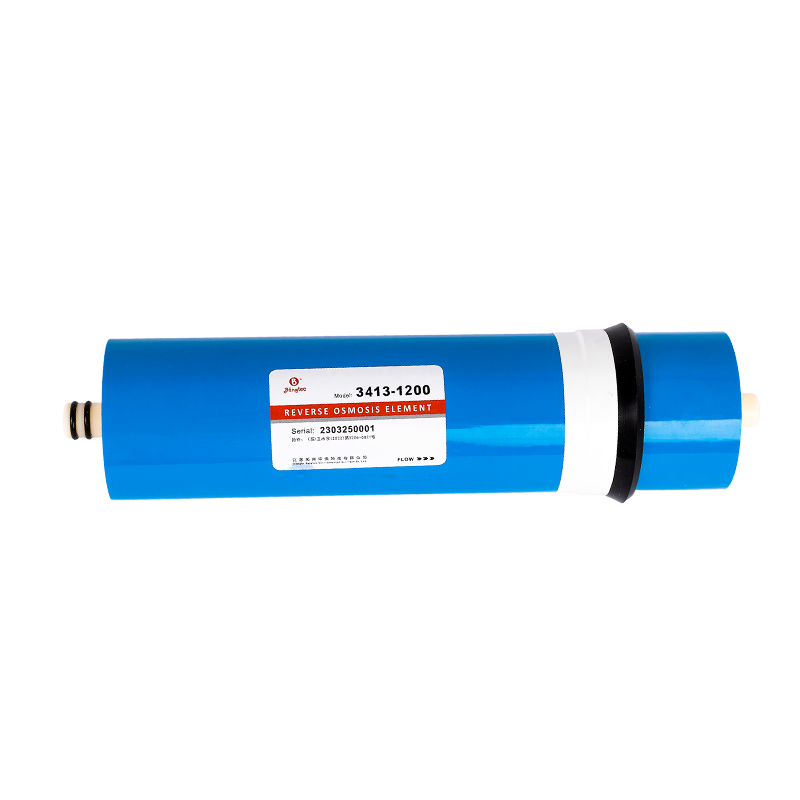
Domestic RO Membrane 3413 is a 4-inch reverse osmosis membrane element specifically designed for residential water purification systems. Utilizing polyamide composite membrane technology, it delivers an active membrane area of 3.5 square feet and achieves a production capacity of 1000 gallons per day (GPD) under standard test conditions, with a stable salt rejection rate of no less than 97.5%. This product is suitable for household direct-drinking water purifiers, small-scale commercial filtration equipment, and central water purification systems, effectively removing heavy metal ions, organic compounds, bacteria, and viruses from water to provide safe and reliable drinking water solutions for families. Jiangsu Bangtec Huachuang Sci-tech Co., Ltd., as a leading membrane separation technology enterprise, continues to supply high-performance Domestic RO Membrane 3413 to the global market.
Core Performance Specifications
Domestic RO Membrane 3413 demonstrates excellent performance across multiple key indicators. The following data is based on standard test conditions (25 degrees Celsius, pH 7.5, 20% recovery rate, test pressure 90 PSI):
| Performance Parameter |
Specification |
Notes |
| Water Production |
1000 GPD |
Daily output approximately 3,785 liters |
| Stable Salt Rejection |
Greater than or equal to 97.5% |
Removal efficiency for total dissolved solids |
| Active Membrane Area |
3.5 ft squared |
Approximately 0.325 square meters |
| Test Pressure |
90 PSI |
Approximately 0.62 MPa |
| Applicable pH Range |
2-12 |
Continuous operation conditions |
| Maximum Operating Temperature |
45 degrees Celsius |
Upper limit for polyamide composite membrane |
| Membrane Material |
Polyamide Composite |
Surface layer pore size 0.0001 micrometers |
| Housing Material |
Food-grade Plastic |
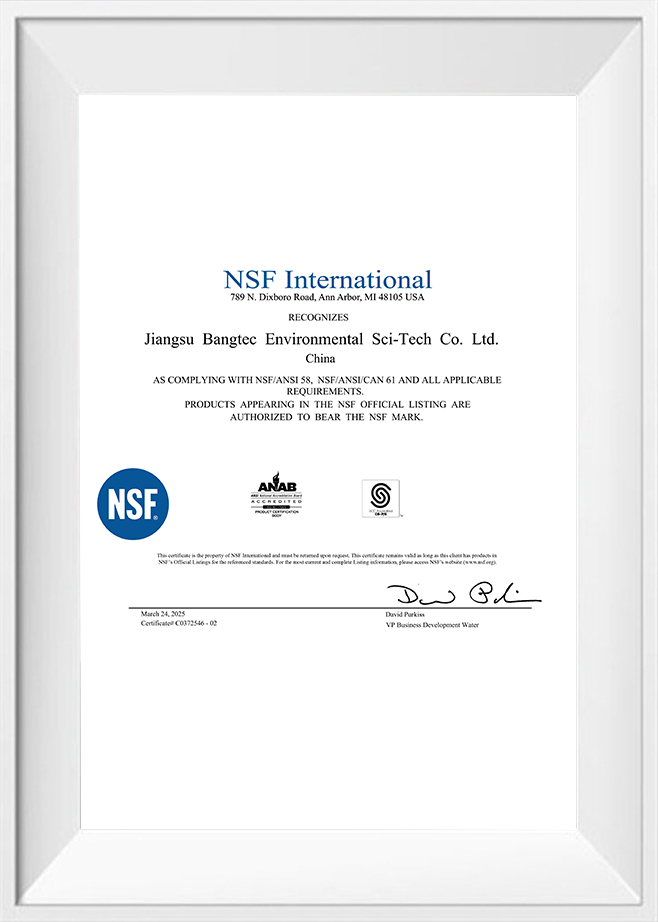
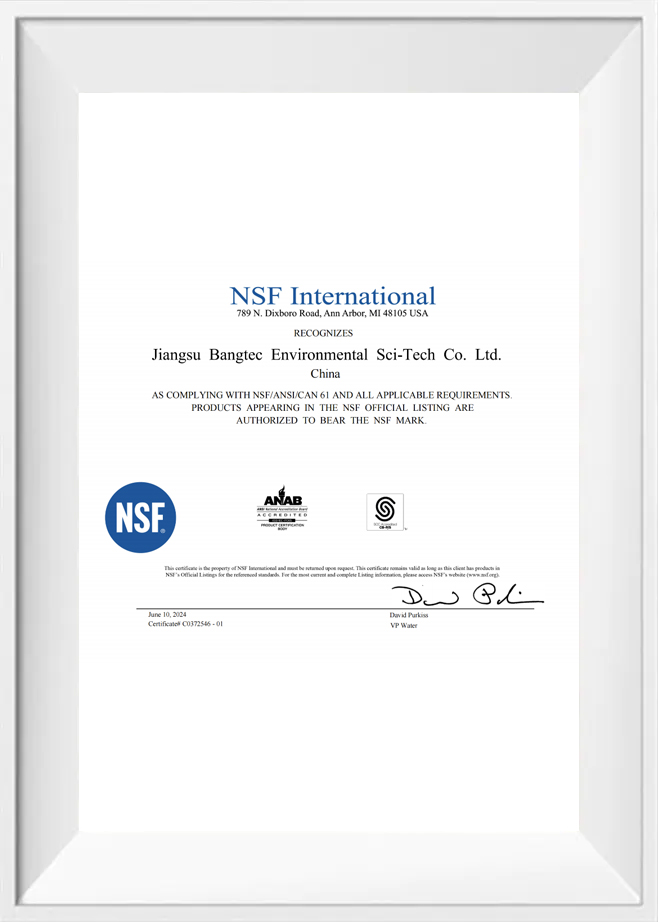
Compliant with NSF certification standards |
Structural Features and Separation Mechanism
This membrane element adopts a spiral-wound configuration, constructed by sandwiching a permeate spacer between two polyamide composite membranes, wrapping them with an outer feed spacer, and rolling them into a cylindrical form. The polyamide composite membrane is prepared through interfacial polymerization: a polysulfone porous support layer (pore size approximately 0.01 micrometers, thickness approximately 45 micrometers) is coated onto a polyester non-woven fabric substrate, followed by an interfacial reaction between m-phenylenediamine and trimesoyl chloride to form a dense separation layer only 0.2 micrometers thick, with surface pore sizes reaching 0.0001 to 0.001 micrometers.
This asymmetric structure provides Domestic RO Membrane 3413 with the dual advantages of high water permeability and selective separation. The hydrophilic gel-like structure of the membrane surface increases the effective filtration area, maintaining salt rejection above 99% while enhancing water permeability to more than twice that of traditional cellulose acetate membranes, thereby supporting high-flow water production at lower operating pressures.
Application Scenarios and Installation Requirements
Domestic RO Membrane 3413 is primarily intended for the following application scenarios:
| Application Scenario |
Water Quality Requirement |
Recommended Configuration |
| Household Direct-drinking System |
TDS less than 1000 ppm |
Pre-filter PP cotton plus activated carbon plus RO membrane |
| Small-scale Commercial Filtration |
TDS less than 2000 ppm |
Add softening pretreatment unit |
| Central Water Purification Equipment |
TDS less than 1500 ppm |
Use with storage tank |
| Hotel and Catering Water Supply |
Compliant with drinking water standards |
Dual-stage RO or UV post-treatment |
During installation, attention should be paid to ensuring that the influent chlorine concentration remains below 0.1 ppm, as polyamide material has low chlorine tolerance. It is recommended to configure an activated carbon filter before the RO membrane for dechlorination to extend the service life of the membrane element. The influent SDI value (Silt Density Index) should be controlled below 5 to prevent colloidal fouling that could cause flux decline.
Maintenance Cycle and Replacement Recommendations
The actual service life of membrane elements is influenced by raw water quality, operating pressure, and maintenance frequency. Under conventional municipal tap water conditions, the recommended maintenance cycle for Domestic RO Membrane 3413 is as follows:
| Maintenance Item |
Cycle |
Operation Content |
| Pre-filter Replacement |
3-6 months |
PP cotton filter, activated carbon filter |
| Membrane Element Flushing |
Monthly |
Low-pressure flush for 15-20 minutes |
| Chemical Cleaning |
Every 6-12 months |
Select cleaning agent based on fouling type |
| Membrane Element Replacement |
24-36 months |
Replace when production drops 15% or rejection decreases |
Frequently Asked Questions
What is the difference between Domestic RO Membrane 3413 and Model 1812?
Model 3413 features a 4-inch large-flow design with 1000 GPD production capacity, suitable for households or small commercial scenarios with higher water output requirements. Model 1812 typically delivers 50-100 GPD with a more compact size, fitting standard under-sink water purifiers. Both share the same membrane material but differ in membrane area and winding process.
Is a 97.5% salt rejection rate sufficient to ensure drinking water safety?
A stable salt rejection rate of 97.5% effectively removes the vast majority of dissolved salts, heavy metal ions, and organic contaminants from water. For municipal tap water with TDS below 1000 ppm, the product water TDS can be reduced to below 25 ppm, fully meeting direct drinking water standards. For raw water with higher TDS, pre-treatment softening is recommended.
How should production decline in membrane elements be addressed?
First, check whether the pre-filters are clogged and confirm that the feed pressure meets the rated value (greater than or equal to 50 PSI). If external factors are ruled out, perform a low-pressure flush or chemical cleaning: use citric acid solution (pH 2-3) for inorganic scaling, and alkaline cleaning agent (pH 11-12) for organic fouling. If production still declines by more than 15% after cleaning, replacement of the membrane element is recommended.
Does this product hold relevant quality certifications?
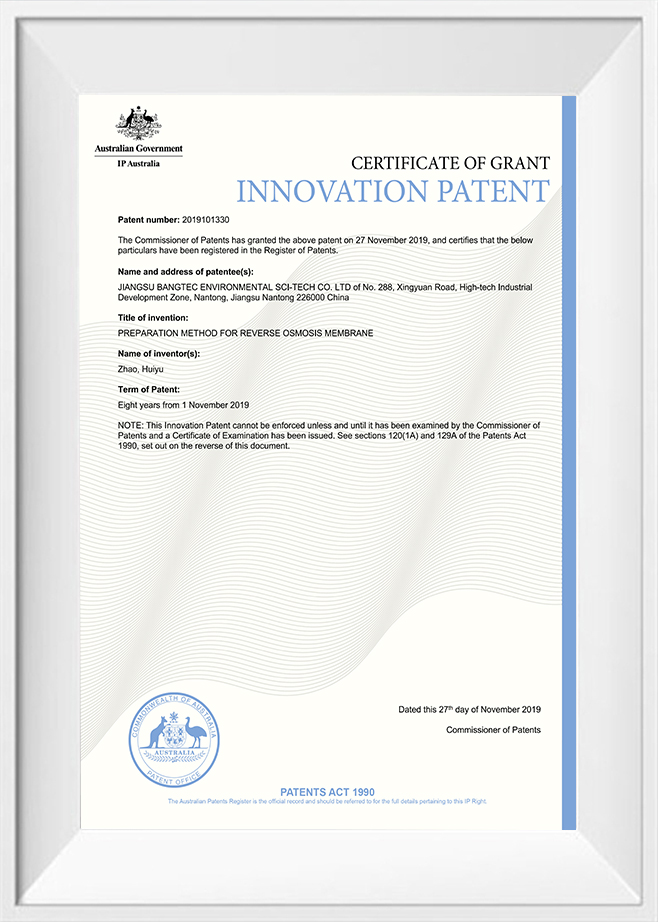
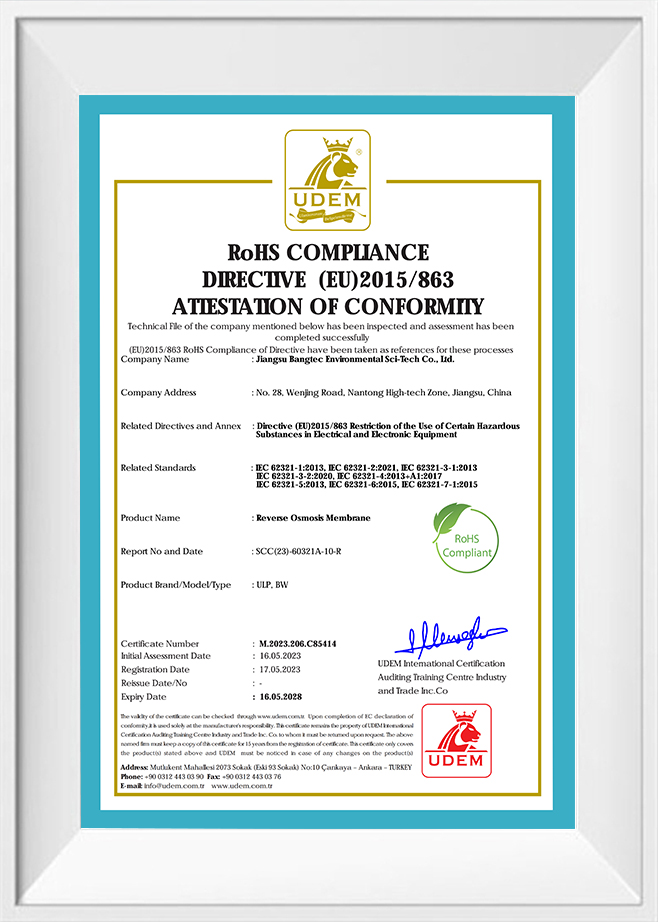
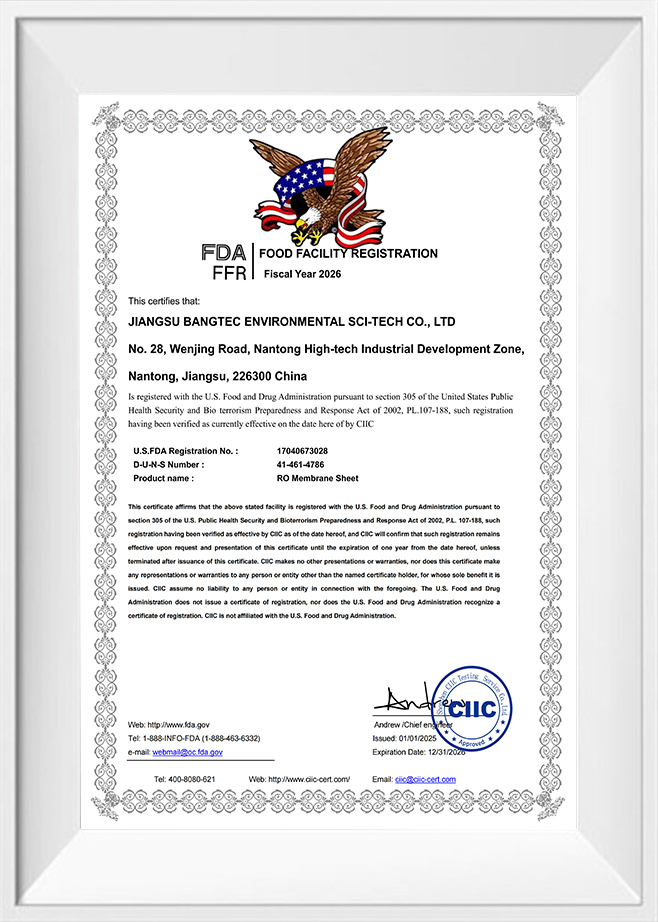
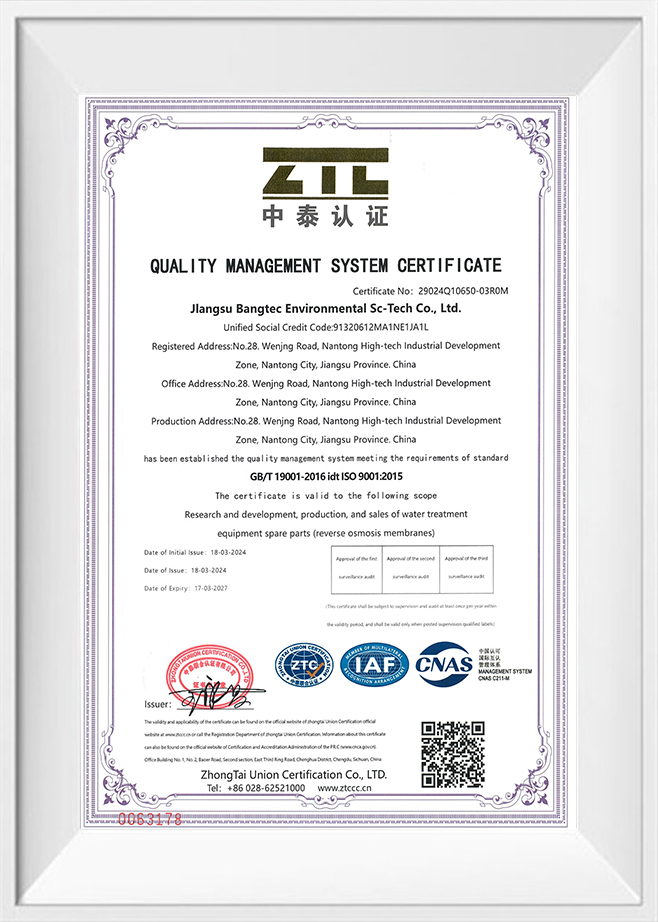
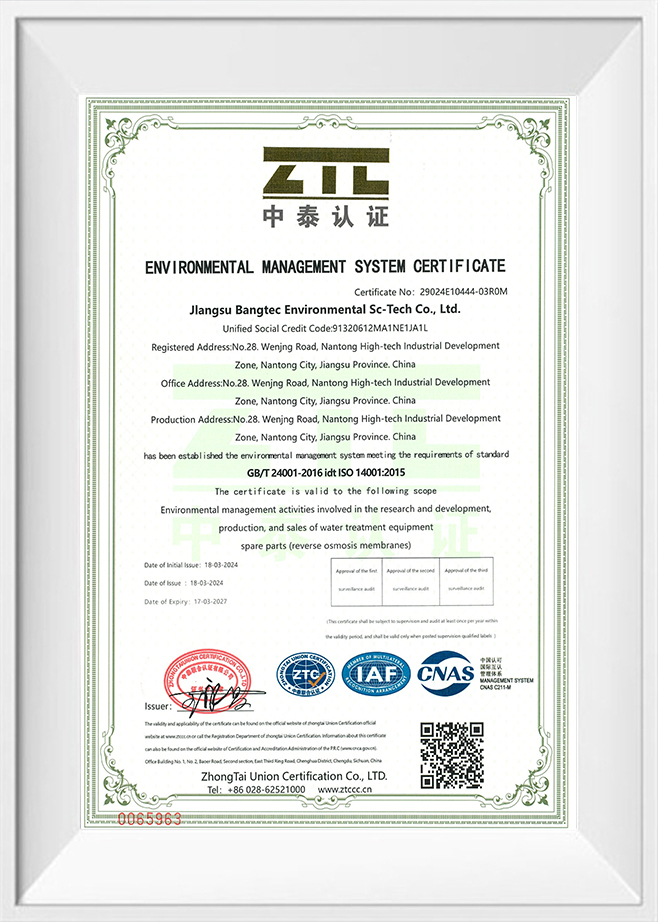
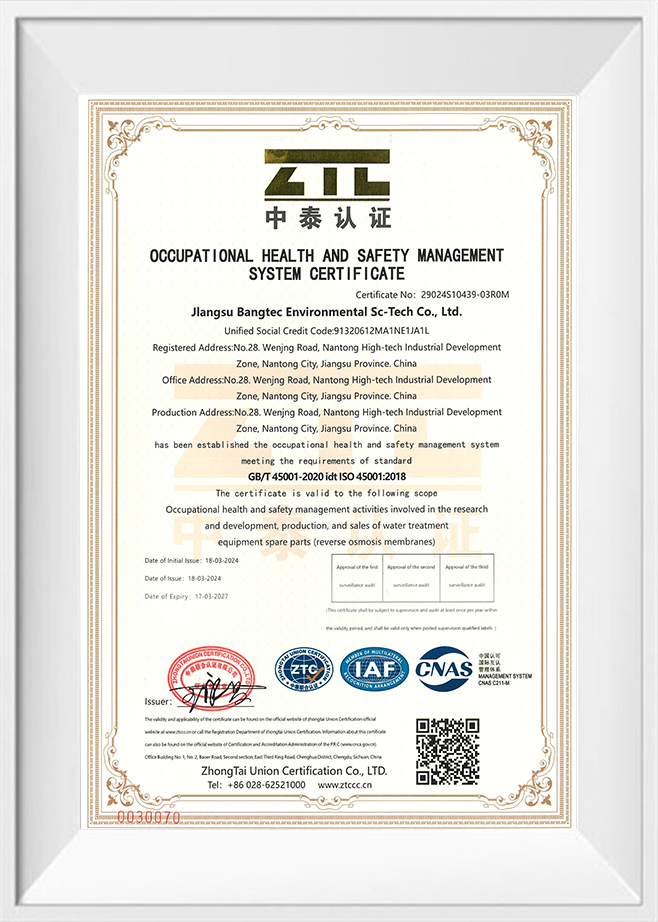
Membrane products manufactured by Jiangsu Bangtec Huachuang Sci-tech Co., Ltd. have passed ISO9001 Quality Management System, ISO14001 Environmental Management System, ISO45001 Occupational Health and Safety Management System certifications, as well as CE certification and Jiangsu Provincial Water-related Product Sanitary License, ensuring compliance with domestic and international market access requirements.
Can it operate normally in low-temperature winter environments?
The water production of polyamide composite membranes is positively correlated with temperature. For every 1 degree Celsius decrease in water temperature, production decreases by approximately 3%. When winter water temperature falls below 10 degrees Celsius, insulation measures or appropriately increasing feed pressure are recommended. The membrane element itself can tolerate minimum feed temperatures of 5 degrees Celsius, but freezing must be avoided to prevent physical damage to the membrane sheets.
How can one determine when a membrane element needs replacement?
The decision is primarily based on three indicators: production volume declining more than 15% from the initial value, salt rejection dropping below 95%, and a significant increase in product water conductivity. It is recommended to regularly test product water quality using a TDS meter. When readings consistently exceed 50 ppm, replacement should be considered. Under normal municipal tap water conditions, the service life of membrane elements is typically 24 to 36 months.
Selection Reference and Technical Support
When selecting Domestic RO Membrane 3413, a comprehensive evaluation of raw water TDS value, daily water consumption requirements, and installation space conditions is necessary. For water with TDS exceeding 1500 ppm or high hardness, adding a softening pre-treatment unit is recommended to protect the RO membrane. Jiangsu Bangtec Huachuang Sci-tech Co., Ltd. provides full-process technical support from membrane element selection, system integration to after-sales maintenance, and can customize optimal water purification solutions based on specific water quality reports.
The company's research and development team is led by doctoral graduates from the Chinese Academy of Sciences and overseas high-level talents, with three overseas R&D centers established, continuously promoting the industrial application of membrane separation technology. Its product line covers high, medium, and low-pressure reverse osmosis membranes, anti-fouling reverse osmosis membranes, and special separation nanofiltration membranes, widely used in photovoltaics, lithium batteries, steel, electric power, chemicals, printing and dyeing, and coal chemical industries, with product performance reaching international leading levels.


 EN
EN  عربى
عربى