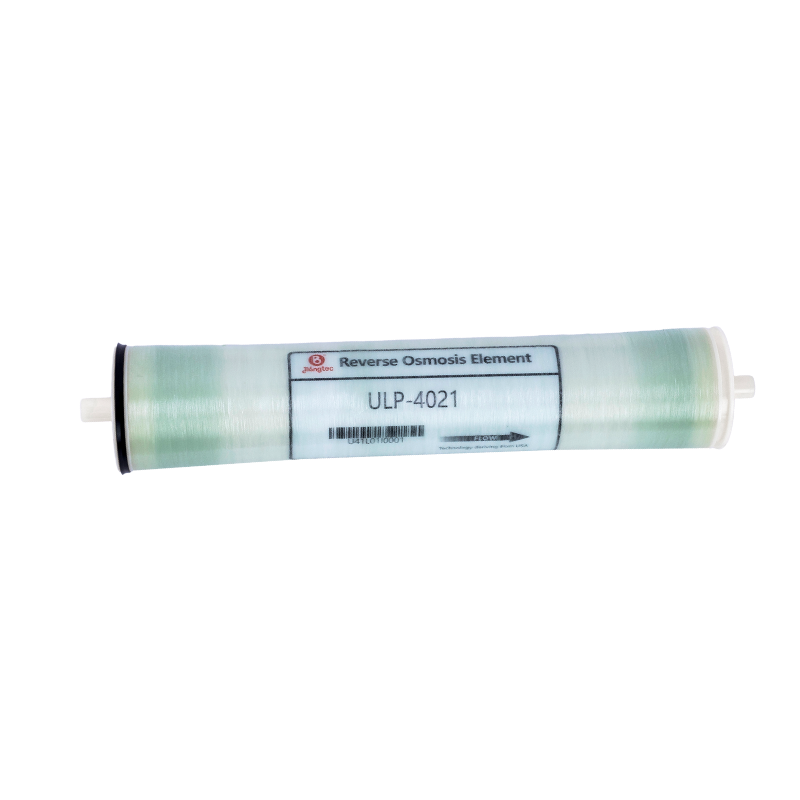
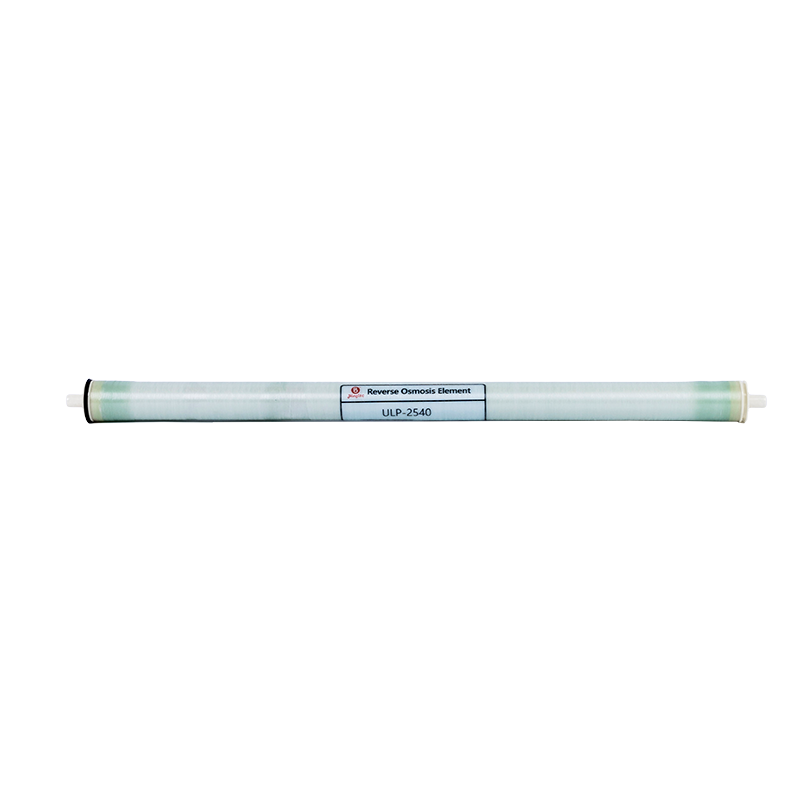
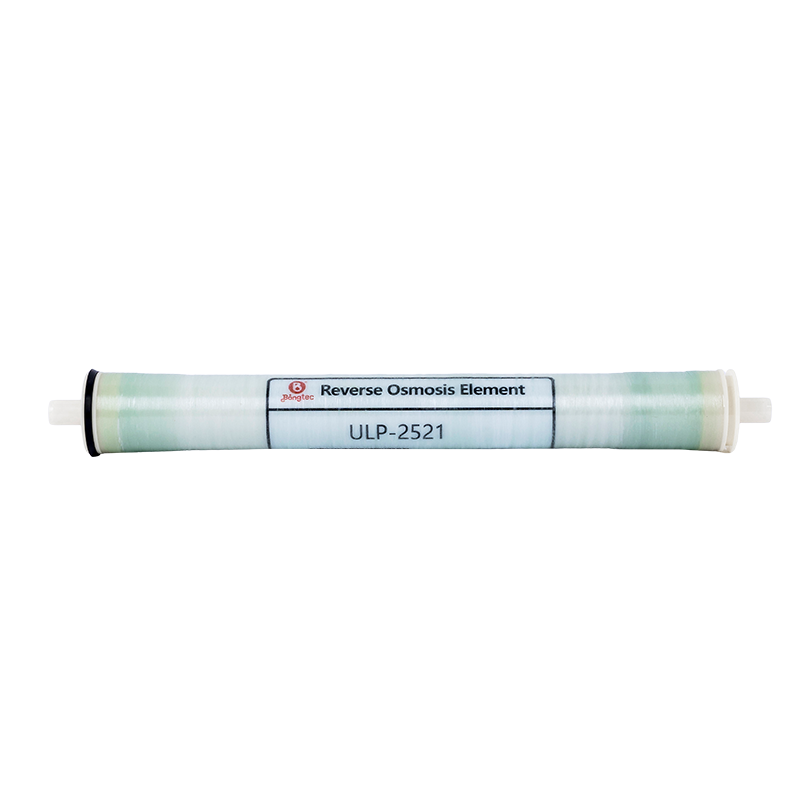
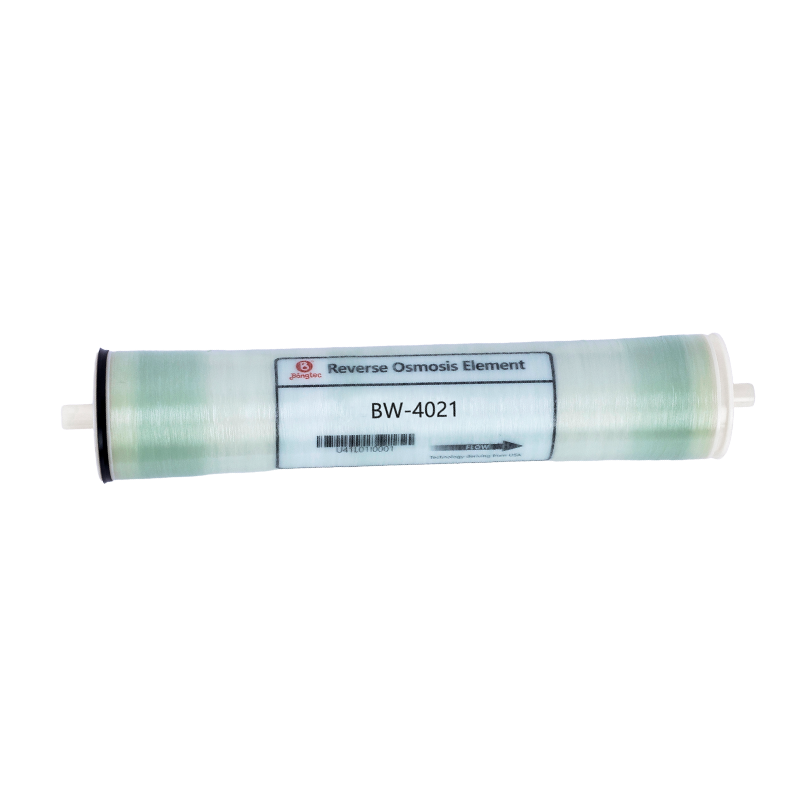
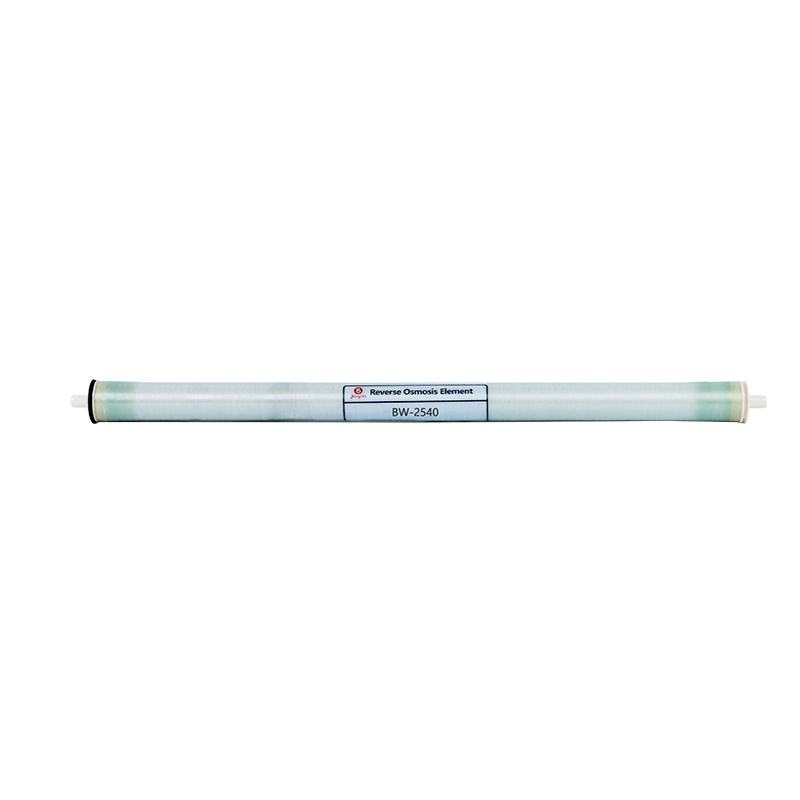
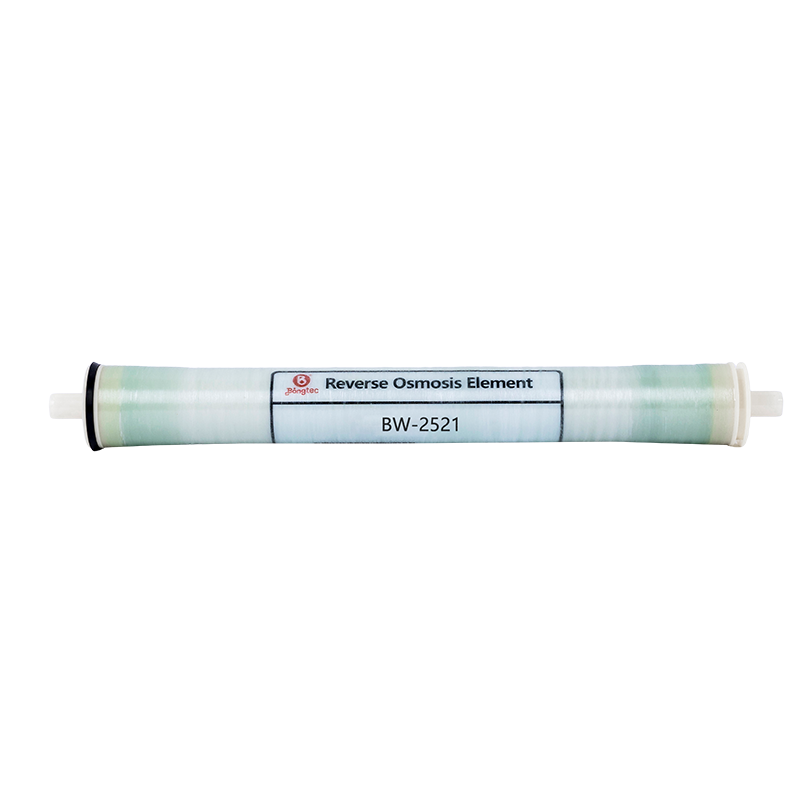
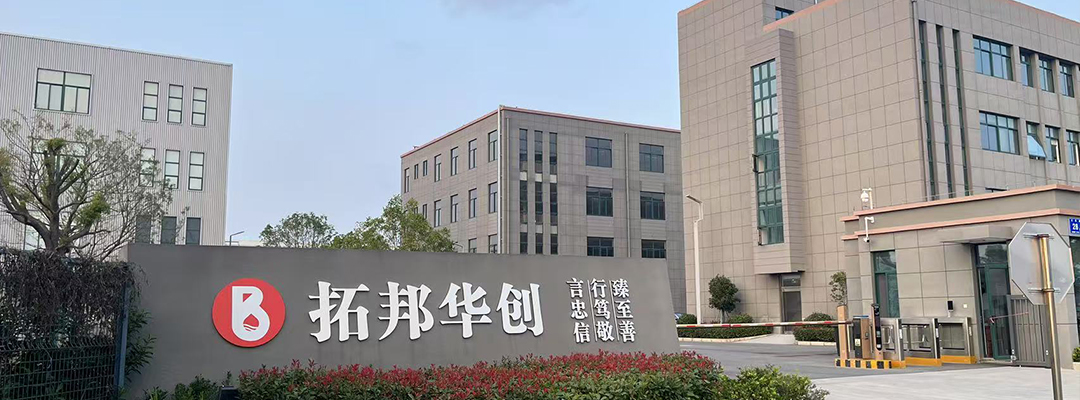
Commercial RO Membrane is the core component of water treatment systems designed for commercial applications. Utilizing semi-permeable membrane technology, it removes dissolved solids, heavy metals, bacteria, and other contaminants from water, achieving product water purity levels of 95% to 99% and above. As a leading Commercial RO Membrane Manufacturer, Jiangsu Bangtec Huachuang Sci-tech Co., Ltd. leverages technical expertise accumulated by a doctoral team from the Chinese Academy of Sciences to focus on the industrialization of high-end nanofiltration membrane products. The product portfolio covers a comprehensive range of innovative products including high-pressure, medium-pressure, and low-pressure reverse osmosis membranes, anti-fouling reverse osmosis membranes, and special separation nanofiltration membranes, serving industries such as photovoltaics, lithium batteries, steel, power generation, chemicals, printing and dyeing, and coal chemical processing.
Core Technical Principles of Commercial RO Membranes
Commercial RO Membrane elements employ thin-film composite (TFC) polyamide membrane structures, consisting of an ultrathin cross-linked polyamide active layer supported on a porous polysulfone substrate. Under operating pressure, typically ranging from 150 to 300 psi, feed water is forced across the membrane surface. Pure water molecules permeate through the membrane layer to form product water, while dissolved salts, heavy metal ions, organic compounds, and microorganisms are retained on the concentrate side and discharged. As a professional Commercial RO Membrane Supplier, Jiangsu Bangtec Huachuang Sci-tech Co., Ltd. produces membranes with polyamide layers featuring pore sizes precisely controlled to 0.0001 microns, approximately one five-hundred-thousandth of a human hair diameter, ensuring exceptionally high salt rejection and product water quality.
The global RO membrane market reached USD 4.07 billion in 2025 and is projected to grow to USD 7.93 billion by 2035, representing a compound annual growth rate of approximately 6.9%. Thin-film composite (TFC) membranes dominate the material type segment with about 63% market share, attributed to their capability of achieving over 99% NaCl rejection, high water flux, and wide pH tolerance. Spiral wound module configurations account for approximately 38% of the filter module market, serving as the established worldwide standard for large-scale industrial and commercial RO applications due to their superior membrane surface area to volume ratio and low manufacturing costs.
Commercial Application Scenarios and Selection Criteria
As a Commercial Water Filter Membrane Manufacturer, Jiangsu Bangtec Huachuang Sci-tech Co., Ltd. serves diverse commercial scenarios including food and beverage service, hospitality, healthcare facilities, laboratories, and small to medium-scale industrial operations. Selection requires comprehensive evaluation of the following core parameters:
| Selection Dimension |
Key Parameter |
Recommended Range |
| Water Production |
Daily Output (GPD) |
200 to 10,000 gallons per day |
| Salt Rejection |
NaCl Rejection Rate |
Greater than or equal to 99% |
| Operating Pressure |
Feed Pressure (psi) |
150 to 300 psi |
| Feed Water SDI |
Silt Density Index |
Less than 5 |
| pH Tolerance |
Cleaning and Operating pH |
2 to 11 |
| Element Dimensions |
Diameter and Length |
4040 (4-inch) or 8040 (8-inch) |
| Maximum Operating Temp |
Feed Water Temperature Limit |
45 degrees Celsius |
For commercial food service water applications, systems with daily water consumption of approximately 500 to 2,000 gallons typically utilize two to four 4040 specification membrane elements, maintaining operating pressure around 225 psi to ensure product water conductivity below 10 microsiemens per centimeter. Products from Jiangsu Bangtec Huachuang Sci-tech Co., Ltd. achieve lower pressure drop and more stable long-term flux performance through optimized membrane sheet rolling processes and feed spacer designs under equivalent operating conditions.
Membrane Element Performance Comparison and Maintenance Strategies
Different application scenarios impose significantly varying performance requirements on Commercial RO Membrane elements. The following table compares core specifications of mainstream commercial membrane elements:
| Membrane Element Type |
Standard Output (GPD) |
Stable Salt Rejection |
Typical Application |
Expected Service Life |
| Low-Pressure Brackish Water |
2,200 to 3,100 |
99.2% |
Municipal Water Purification |
3 to 5 years |
| Anti-Fouling Membrane |
1,800 to 2,600 |
99.0% |
Surface Water and Wastewater Reuse |
2 to 4 years |
| Seawater Desalination |
1,500 to 2,000 |
99.7% |
High Salinity Source Treatment |
3 to 5 years |
| Energy-Saving Type |
2,600 to 3,100 |
99.0% |
Low-Energy Commercial Systems |
3 to 5 years |
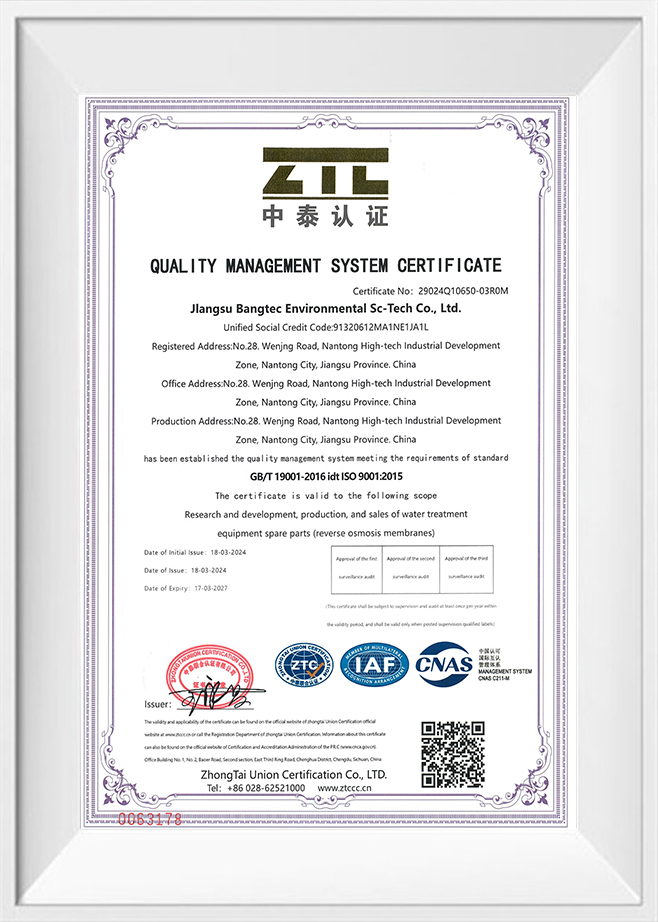
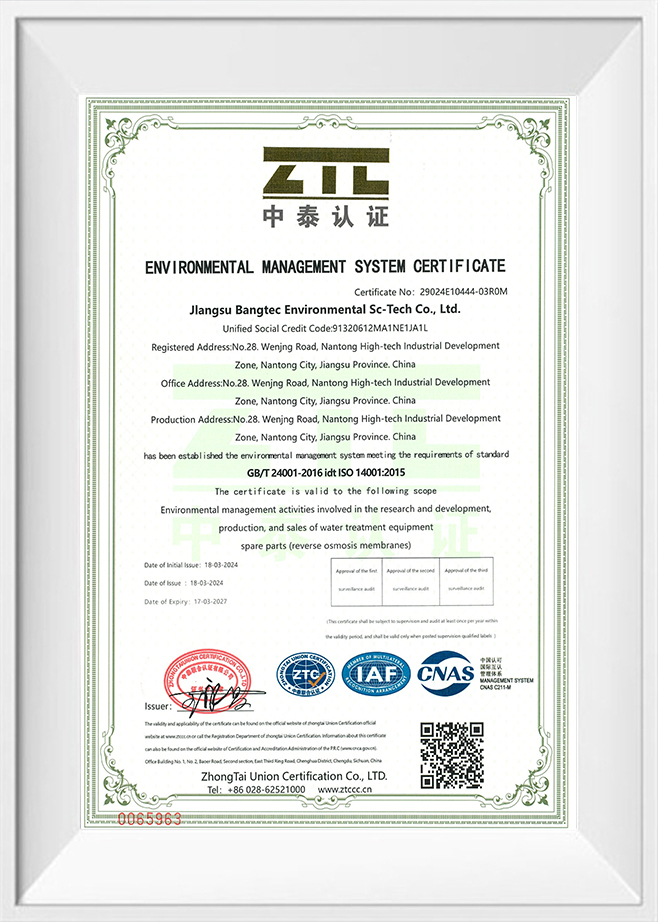
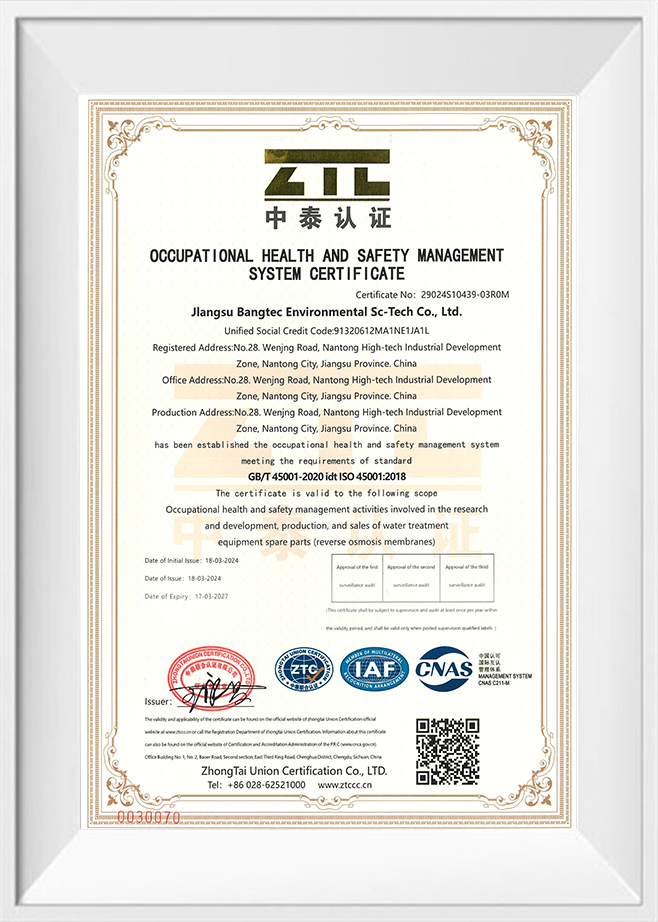
Membrane element maintenance directly impacts system operating costs. Regular chemical cleaning-in-place (CIP) procedures can restore flux and extend membrane lifespan. Standard cleaning protocols are recommended every six months to one year, utilizing pH 2 citric acid solution for inorganic scale removal or pH 11 sodium hydroxide solution for organic fouling elimination. Products from Jiangsu Bangtec Huachuang Sci-tech Co., Ltd. are certified under ISO9001 Quality Management System, ISO14001 Environmental Management System, and ISO45001 Occupational Health and Safety Management System. Under proper maintenance conditions, their membrane elements maintain annual flux decline rates within 5%.
Market Trends and Technology Innovation Directions
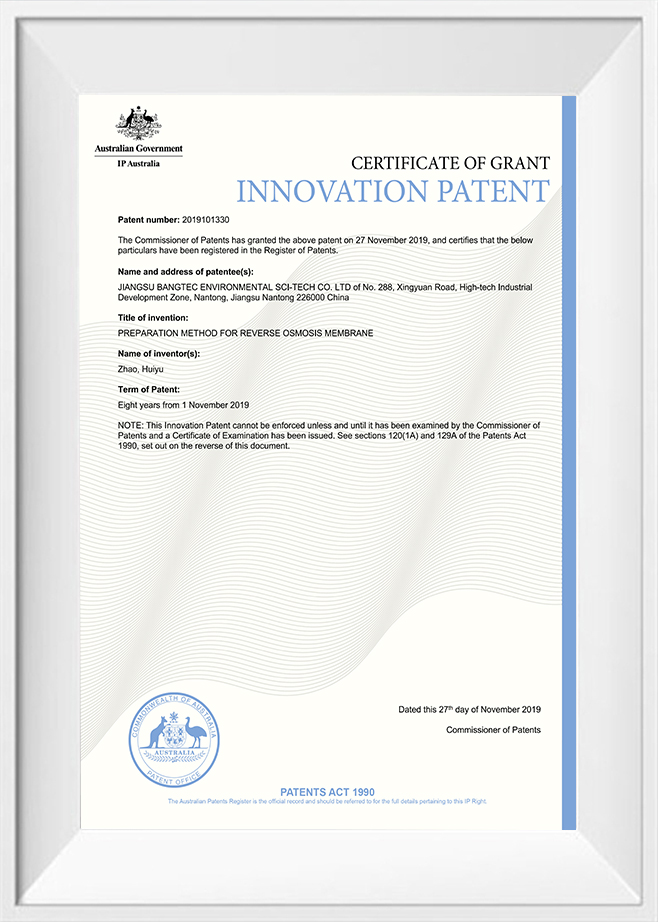
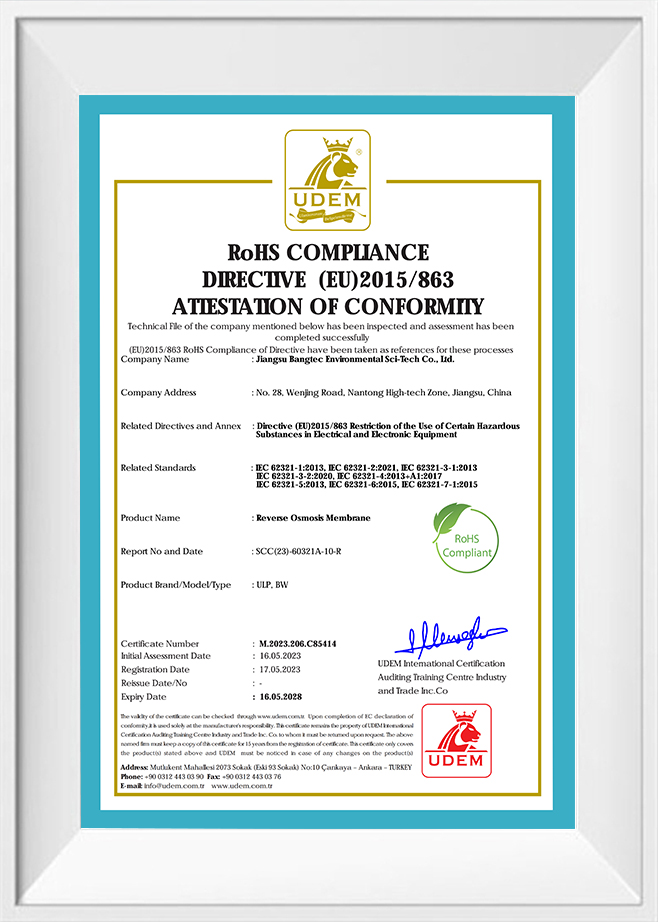
The global water treatment industry is undergoing transformation from pure filtration toward intelligent resource recovery. Jiangsu Bangtec Huachuang Sci-tech Co., Ltd. has established three overseas research and development institutions to continuously develop new products, with newly developed products achieving internationally leading performance levels. The company provides innovative products and solutions for industries including photovoltaics, lithium batteries, steel, power generation, chemicals, printing and dyeing, and coal chemical processing, holding multiple domestic and international invention patents alongside CE certification and Jiangsu Provincial Water-related Approval.
Over the next five years, the wastewater treatment and reuse segment is anticipated to capture approximately 51% of the RO membrane application market, driven by increasingly stringent wastewater discharge regulations globally and growing demand for potable water. The Asia Pacific region is expected to witness significant growth due to accelerating urbanization and rising clean water demand. Adhering to the core values of "Faithful in Words, Earnest in Deeds, and Striving for Perfection", Jiangsu Bangtec Huachuang Sci-tech Co., Ltd. is committed to providing customers with the most suitable products and solutions through continuous technological innovation.
Frequently Asked Questions
What are the main differences between commercial and residential RO membranes
Commercial membrane elements exceed residential products in water production capacity, pressure rating, and membrane surface area. Standard residential membranes produce 50 to 100 gallons per day, while commercial membranes range from 200 to 10,000 gallons per day. Commercial units typically employ 4040 or 8040 specifications with fiberglass outer wraps to withstand higher operating pressures. Jiangsu Bangtec Huachuang Sci-tech Co., Ltd. offers a full range of commercial membrane products to meet diverse commercial water treatment needs.
How to determine when membrane elements require replacement
Monitor three primary indicators: product water flow decline exceeding 15%, salt rejection decrease exceeding 1 percentage point, or transmembrane pressure increase exceeding 20% of initial values. If these metrics cannot be restored through chemical cleaning, membrane replacement is recommended. Commercial systems typically require replacement every 2 to 3 years. The technical team at Bangtec provides professional membrane performance evaluation and replacement recommendation services.
How significantly does feed water pretreatment affect membrane lifespan
Pretreatment is critical for membrane longevity. Inadequately pretreated source water can cause scaling, organic fouling, or biological fouling on membrane surfaces, potentially reducing lifespan by over 50%. Standard pretreatment includes multimedia filtration, activated carbon adsorption, and 5-micron sediment filtration, with water softeners or antiscalant dosing systems added when necessary. Jiangsu Bangtec Huachuang Sci-tech Co., Ltd. provides complete pretreatment solution design and technical support for customers.
What is the chlorine tolerance of TFC membranes
Thin-film composite polyamide membranes are sensitive to free chlorine. Prolonged exposure to free chlorine exceeding 0.1 ppm causes irreversible performance degradation. Therefore, activated carbon filters or sodium bisulfite injection must be installed upstream for dechlorination. Bangtec anti-fouling membrane series incorporates surface modification technology that provides enhanced chlorine tolerance, suitable for commercial scenarios with less stringent pretreatment conditions.
What recovery rate range should commercial RO systems maintain
Commercial systems typically operate at recovery rates between 50% and 75%. Excessively high recovery rates accelerate concentration polarization and increase scaling risk, while insufficient rates result in water waste. Specific values should be calculated using professional software based on feed water TDS, hardness, and membrane element specifications. The engineering team at Jiangsu Bangtec Huachuang Sci-tech Co., Ltd. assists customers with system recovery rate optimization design.


 EN
EN  عربى
عربى