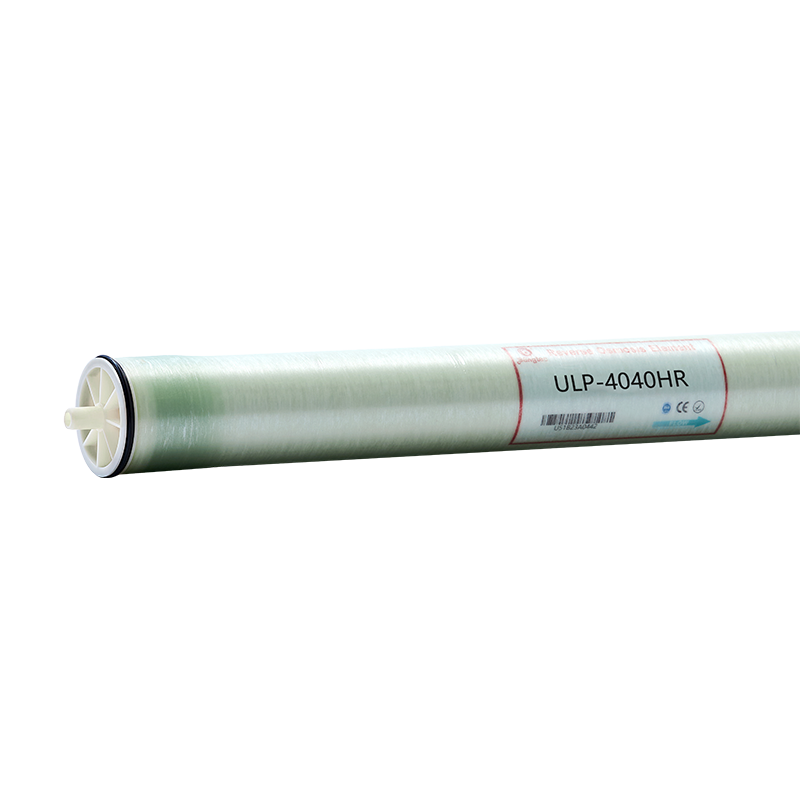
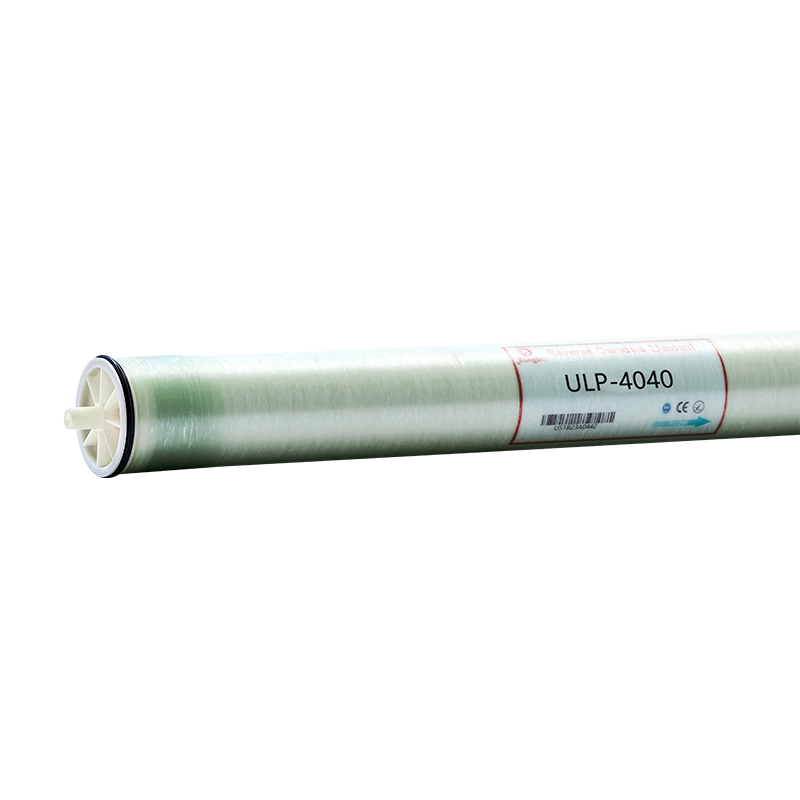
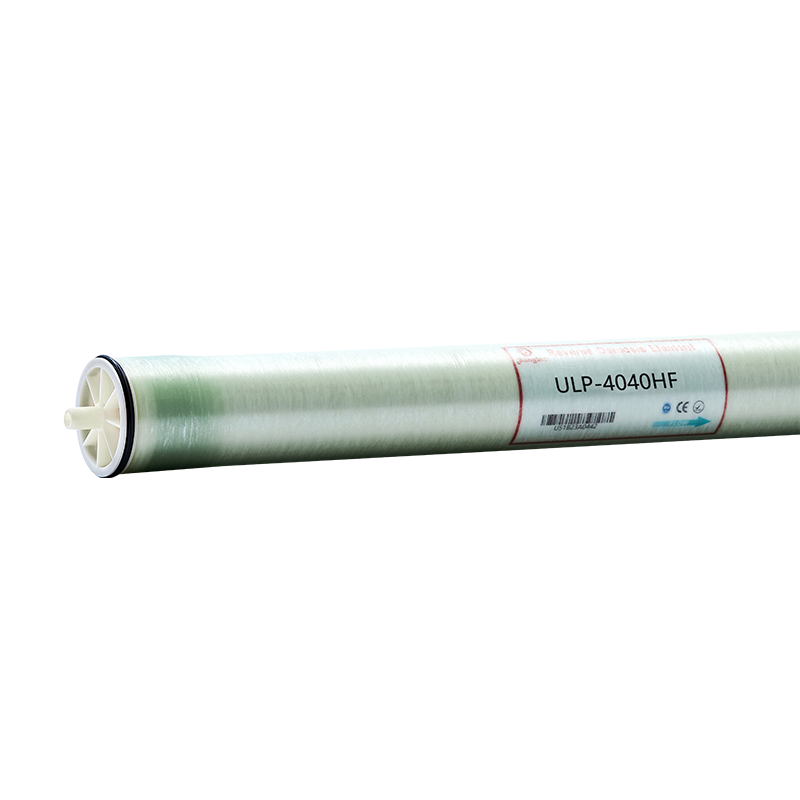
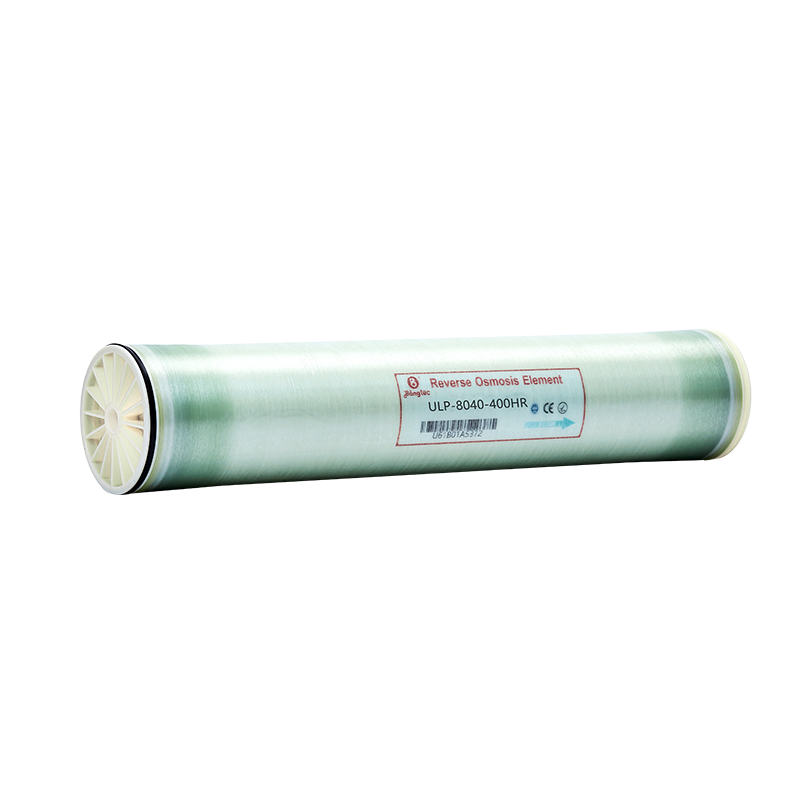
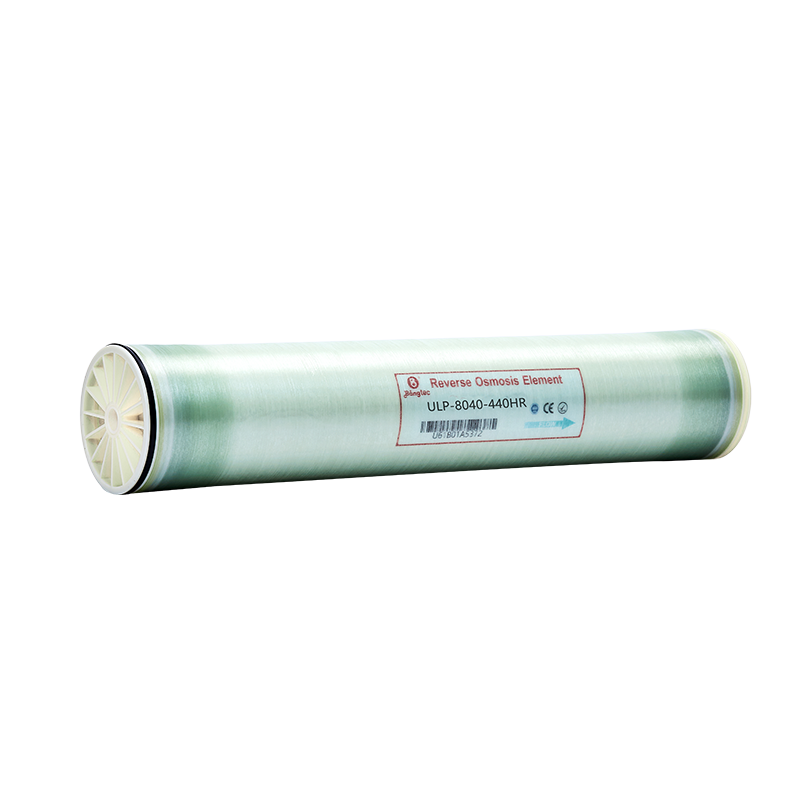
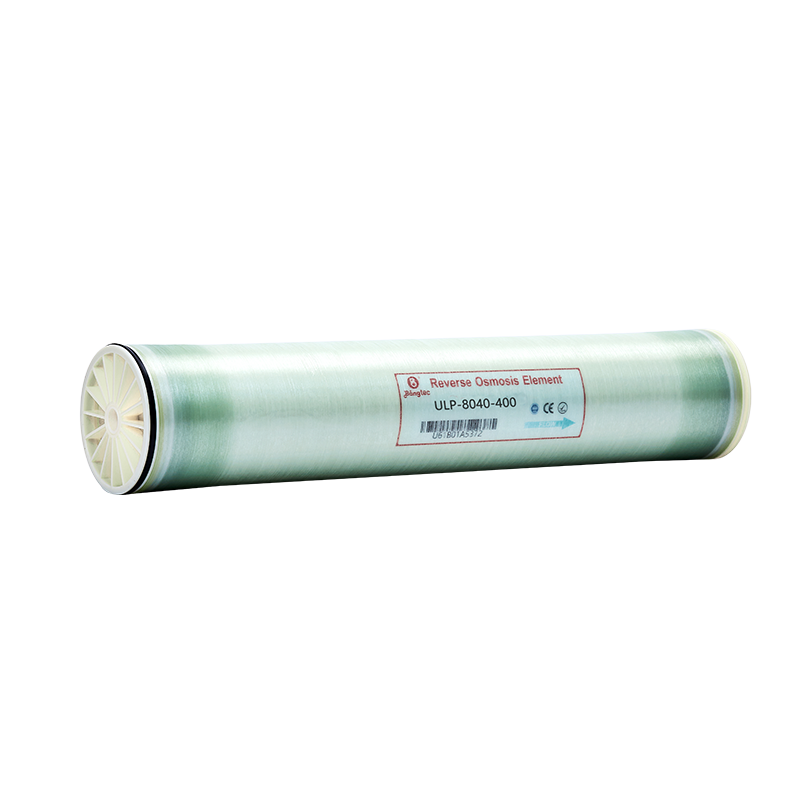
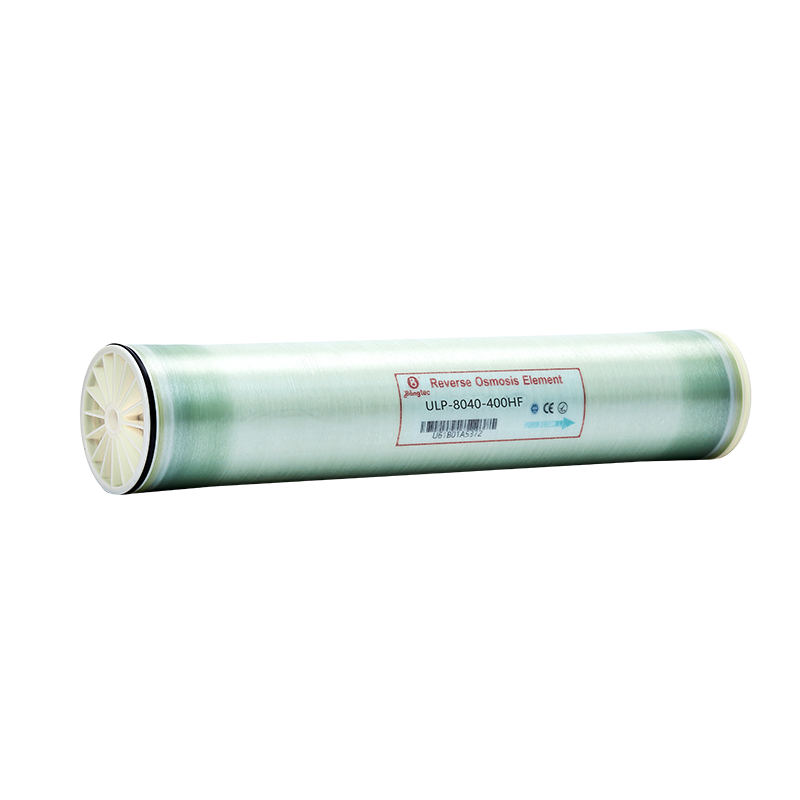
Ultra Low Pressure RO Membrane is a high-efficiency separation membrane element specifically engineered for low-salinity water sources. Its operating pressure is approximately two-thirds that of conventional low-pressure brackish water membranes, achieving a salt rejection rate of up to 99.5% at a test pressure of 150 psi (approximately 1.03 MPa). Manufactured from aromatic polyamide composite membrane materials, this element is suitable for deep desalination treatment of surface water, groundwater, tap water, and municipal water sources with TDS below 2000 ppm. It is widely applied in industrial pure water preparation, food and beverage production, boiler feed water, municipal water supply, and EDI system pretreatment. As a key participant in this field, Jiangsu Bangtec Huachuang Sci-tech Co., Ltd. focuses on the industrialization development of high-end nanofiltration membrane products, with a product portfolio covering high, medium, and low-pressure reverse osmosis membranes, anti-fouling reverse osmosis membranes, and special separation nanofiltration membranes.
Core Performance and Operating Parameters
The core advantage of the Ultra Low Pressure RO Membrane lies in achieving comparable or even higher salt rejection performance than conventional low-pressure membranes at significantly reduced energy consumption. Under standard test conditions (1500 mg/L NaCl solution, temperature 25 degrees Celsius, pH 7.5-8.0, recovery rate 15%), the typical industrial model ULP-8040 achieves a stabilized salt rejection rate of 99.5%, with a minimum salt rejection rate no lower than 99.3%, a permeate flow rate of approximately 2200 GPD (8.3 cubic meters per day), and an effective membrane area of 85 square feet (7.9 square meters).
Compared with conventional low-pressure membranes, the operating pressure of ultra low pressure membranes is substantially reduced. While conventional low-pressure membranes typically require a standard test pressure of 225 psi (approximately 1.55 MPa), ultra low pressure membranes operate at only 150 psi (approximately 1.03 MPa), representing a reduction of approximately 33%. This characteristic directly lowers the capital investment costs for high-pressure pumps, piping, pressure vessels, and other ancillary equipment, while significantly reducing long-term electricity consumption.
| Technical Parameter |
Ultra Low Pressure RO (ULP) |
Conventional Low Pressure RO (LP) |
| Standard Test Pressure |
150 psi (1.03 MPa) |
225 psi (1.55 MPa) |
| Test Solution Concentration |
1500-2000 ppm NaCl |
2000 ppm NaCl |
| Stabilized Salt Rejection |
≥ 99.0% |
≥ 99.3% |
| Applicable Source TDS Range |
< 2000 ppm |
< 2000 ppm |
| Operating Temperature Range |
≤ 45 degrees Celsius |
≤ 45 degrees Celsius |
| Continuous Operation pH Range |
3-10 |
2-11 |
| Maximum Operating Pressure |
600 psi (4.14 MPa) |
600 psi (4.14 MPa) |
| Feed Water SDI Requirement |
≤ 5.0 |
≤ 5.0 |
| Free Chlorine Tolerance |
< 0.1 mg/L |
< 0.1 mg/L |
Typical Model Specifications Comparison
Industrial Ultra Low Pressure RO Membrane elements are primarily available in two standard sizes: 4040 and 8040, suitable for small-to-medium and large-scale water treatment systems respectively. The 4040 model has a diameter of 4 inches and length of 40 inches, while the 8040 model has a diameter of 8 inches and length of 40 inches. Both sizes are compatible with standard pressure vessels and offer excellent interchangeability.
| Model |
Effective Area ft² (m²) |
Avg Permeate Flow GPD (m³/d) |
Stabilized Salt Rejection |
Recovery Rate |
| ULP-4021 |
38 (3.5) |
1000 (3.8) |
99.0% |
8% |
| ULP-4040 |
90 (8.4) |
2500-2600 (9.5-9.8) |
99.0% |
15% |
| ULP-8040 |
400 (37.2) |
11000 (41.6) |
99.0%-99.2% |
15% |
| ULP-8440 |
440 (41) |
12000 (45) |
99.2% |
15% |
Note: Permeate flow data represents average values. The actual permeate flow of individual membrane elements may deviate by ±15%. Test conditions: feed water temperature 25 degrees Celsius, test pressure 150 psi, NaCl concentration 500-2000 ppm, pH 7.5.
Primary Application Fields
Ultra Low Pressure RO Membranes, with their energy-efficient and high-performance characteristics, have gained widespread adoption across multiple industrial sectors. The following table details the main application scenarios:
| Application Field |
Typical Use |
Water Quality Requirement |
| Industrial Pure Water |
Process water for electronics, semiconductors, pharmaceuticals |
Conductivity < 10 μS/cm |
| Food and Beverage |
Bottled drinking water, beverage blending water |
Compliant with drinking water standards |
| Boiler Feed Water |
Industrial boiler softening and demineralized water |
TDS < 50 ppm |
| Municipal Water Supply |
Dual water supply for residential and industrial parks |
Meets potable water standards |
| EDI Pretreatment |
Front-end deep treatment for electrodeionization systems |
Feed TDS < 500 ppm |
| Cooling Tower Makeup |
Makeup water for cooling tower recirculation systems |
Hardness < 100 ppm |
In industries such as photovoltaics, lithium batteries, steel, electric power, chemicals, printing and dyeing, and coal chemicals, the Ultra Low Pressure RO Membrane serves as a core component of water treatment systems, effectively removing 95% to 99% of dissolved salts, colloids, organics, bacteria, and pyrogens. Jiangsu Bangtec Huachuang Sci-tech Co., Ltd. has developed new products whose performance has reached internationally leading levels, providing innovative membrane separation products and integrated solutions for these sectors.
Pretreatment Requirements and System Maintenance
To ensure long-term stable operation of Ultra Low Pressure RO Membranes, feed water quality must meet strict pretreatment standards. Key pretreatment indicators include: Silt Density Index (SDI) ≤ 5.0, turbidity < 1 NTU, and free chlorine concentration < 0.1 mg/L. Since modern thin-film composite membranes are highly sensitive to oxidizers, feed water must not contain free chlorine or other strong oxidizing substances, as these will cause irreversible damage to the membrane pore structure, manifested as abnormally increased permeate flow and significantly decreased salt rejection.
Standard pretreatment processes typically include: multimedia filtration for suspended solids and colloid removal, activated carbon adsorption for chlorine and organic removal, and cartridge filtration (5-micron filters) for residual particle capture. For high-hardness water sources, softening equipment or antiscalant dosing is required to prevent inorganic salts such as calcium carbonate from scaling on the membrane surface. Chemical cleaning should be performed when normalized permeate flow drops by 10%, normalized salt passage increases by 5% to 10%, or normalized differential pressure increases by 10% to 15%. Acid cleaning (pH 1-2) is used for inorganic scale removal, while alkaline cleaning (pH 12) addresses organic fouling and biofilms.
Energy Saving Benefit Analysis
The economic value of Ultra Low Pressure RO Membranes is primarily reflected in significant energy savings. Taking an industrial pure water station with a daily treatment capacity of 1000 cubic meters as an example, replacing conventional low-pressure membranes with ultra low pressure membranes reduces the operating pressure from 225 psi to 150 psi, cutting high-pressure pump power demand by approximately 30% to 40%. At an industrial electricity rate of 0.8 RMB per kWh, annual operation of 8000 hours can save approximately 150,000 to 250,000 RMB in electricity costs. For large municipal systems operating 24 hours continuously, the cumulative energy savings over 3 to 5 years can substantially reduce the total cost of ownership (TCO).
Furthermore, lower operating pressure delivers additional equipment protection benefits: reduced membrane compaction effects, slower differential pressure growth, and decreased wear on system piping and valves, thereby extending the service life of both membrane elements and ancillary equipment. Under normal operation and proper maintenance conditions, the typical service life of industrial Ultra Low Pressure RO Membranes ranges from 3 to 5 years.
Frequently Asked Questions
What is the main difference between Ultra Low Pressure and Low Pressure RO membranes
Ultra Low Pressure RO membranes operate at approximately two-thirds the pressure of standard low-pressure membranes, making them more suitable for water sources with TDS below 2000 ppm. They deliver maximum energy savings while maintaining a salt rejection rate of 99% or higher.
What TDS range is suitable for Ultra Low Pressure RO membranes
They are typically suitable for water sources with TDS ranging from 200 to 2000 ppm, including surface water, groundwater, tap water, and municipal water. For sources with TDS above 3000 ppm, brackish water membranes are recommended.
Does using Ultra Low Pressure membranes reduce salt rejection
No. When operated within recommended parameters, Ultra Low Pressure membranes maintain a salt rejection rate of 99% or higher under standard test conditions, with stable and controllable permeate conductivity.
How much energy can Ultra Low Pressure membranes save
The energy savings depend on system design. In large continuous-operation systems, reducing operating pressure significantly lowers electricity cost per cubic meter of permeate, with substantial cumulative savings over 3 to 5 years.
Can Ultra Low Pressure membranes directly replace existing standard membranes
In most cases, yes. However, system pressure settings and design conditions must be reassessed to ensure that pumps, piping, and control systems are compatible with the operating characteristics of the new membranes.
What pretreatment is required for Ultra Low Pressure membranes
Feed water must meet SDI ≤ 5, turbidity < 1 NTU, and zero free chlorine. Standard pretreatment includes multimedia filtration, activated carbon filtration, and cartridge filtration, with additional softening or antiscalant treatment when necessary.
What is the expected service life of Ultra Low Pressure membranes
Under proper pretreatment and standard operating conditions, the typical service life of membrane elements in industrial and municipal systems ranges from 3 to 5 years, depending on feed water quality and maintenance frequency.
Are Ultra Low Pressure membranes suitable for municipal drinking water projects
Yes. They are widely used in municipal tap water and surface water treatment systems, particularly in projects where energy efficiency is a critical consideration.


 EN
EN  عربى
عربى