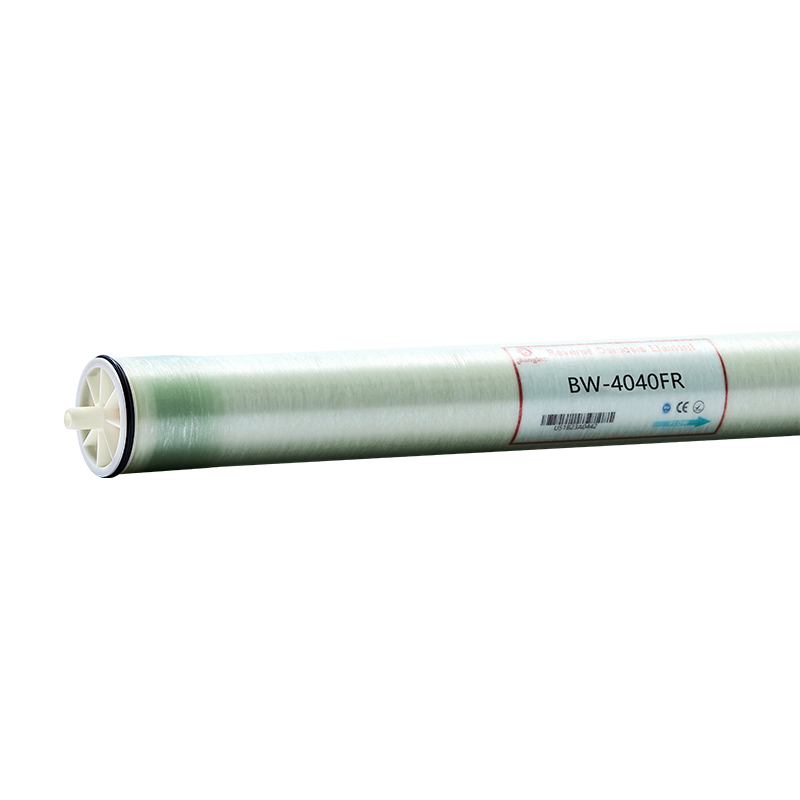
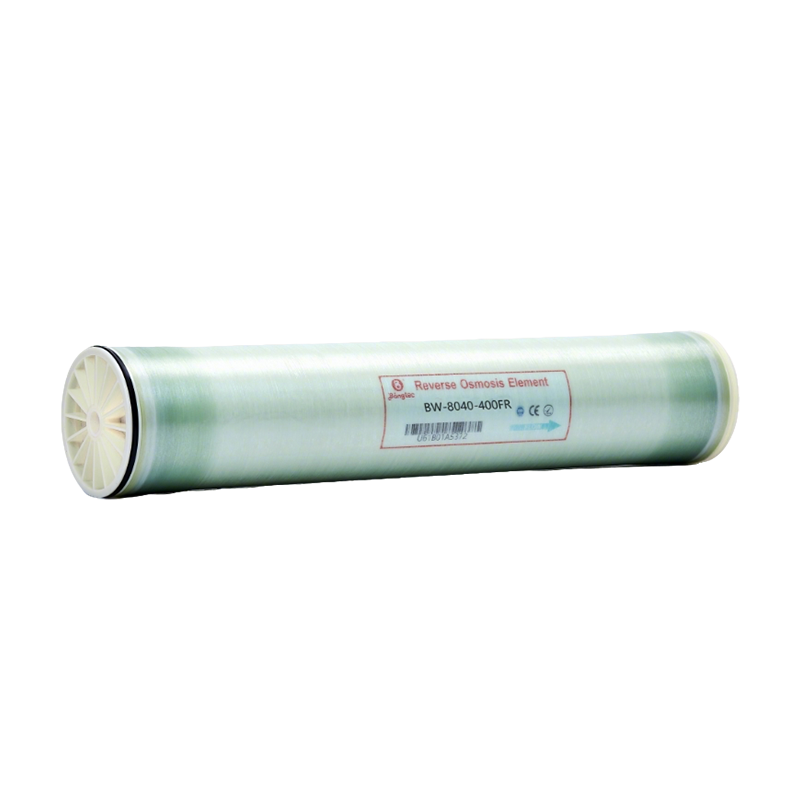
Fouling Resistance RO Membrane represents a core technological solution in industrial water treatment, specifically engineered for high-turbidity, high-organic-content, and complex water quality environments. As a leading Fouling Resistance RO Membrane Supplier and Fouling Resistance RO Membrane Manufacturer, Jiangsu Bangtec Huachuang Sci-tech Co., Ltd. leverages a research and development system led by doctoral graduates from the Chinese Academy of Sciences and overseas high-level talents to continuously develop comprehensive reverse osmosis membrane products covering high, medium, and low-pressure ranges, anti-fouling variants, and special separation membranes. These products deliver stable and reliable membrane-based water treatment solutions for industries including photovoltaics, lithium batteries, steel, electric power, chemicals, printing and dyeing, and coal chemicals.
Core Technical Positioning of Anti-Fouling RO Membranes
The fundamental value of Fouling Resistance RO Membrane lies in its surface modification technology and optimized flow channel design, which significantly reduce the adhesion and deposition of organic matter, colloids, and microorganisms on the membrane surface. Compared with conventional reverse osmosis membranes, anti-fouling variants can reduce cleaning frequency by 40% to 60% under equivalent operating conditions, effectively extending membrane element service life and reducing chemical reagent consumption. The anti-fouling series developed by Jiangsu Bangtec Huachuang Sci-tech Co., Ltd. employs unique hydrophilic surface treatment processes, controlling the membrane contact angle below 25 degrees to significantly inhibit pollutant adhesion.
Primary Application Scenarios and Performance
Anti-fouling reverse osmosis membranes are widely deployed in industrial applications where feed water quality fluctuates significantly. The following table presents core parameter comparisons for typical application fields:
| Application Field |
Typical Feed Conditions |
Rejection Rate |
Operating Flux |
Cleaning Interval |
| Photovoltaic Ultrapure Water |
TOC < 5 mg/L, SDI < 3 |
≥ 99.5% |
35-45 LMH |
90-120 Days |
| Lithium Battery Process Water |
Conductivity < 2000 μS/cm |
≥ 99.2% |
30-40 LMH |
60-90 Days |
| Steel Circulating Cooling Water |
Turbidity 5-20 NTU, Iron < 0.5 |
≥ 98.5% |
25-35 LMH |
45-60 Days |
| Printing and Dyeing Wastewater Reuse |
COD 80-200 mg/L, Color < 100 |
≥ 97.0% |
20-30 LMH |
30-45 Days |
| Coal Chemical High-Salinity Water |
TDS 5000-15000 mg/L |
≥ 98.0% |
18-28 LMH |
30-50 Days |
As demonstrated in the table, even under relatively demanding feed conditions such as steel circulating cooling water and printing and dyeing wastewater reuse, Fouling Resistance RO Membrane maintains rejection rates above 97% while achieving significantly longer cleaning intervals compared to standard membrane products.
Key Product Selection Criteria
When selecting Fouling Resistance RO Membrane, the following technical indicators require priority attention:
- Membrane Material: Polyamide composite membranes represent the mainstream, with surfaces requiring hydrophilic or charge modification treatment
- Flow Channel Width: 34mil wide-channel design reduces concentration polarization and minimizes pollutant accumulation
- Operating Pressure: Low-pressure models (< 1.5 MPa) suit municipal reclaimed water applications, while high-pressure models (> 4.0 MPa) serve seawater desalination
- Rejection Rate Classification: Standard models (98.0%-99.0%) and high-rejection models (> 99.5%) are matched according to terminal water quality requirements
- Membrane Area: Standard 4040 (7.9 m²) and 8040 (37 m²) specifications accommodate different water production capacity needs
Bangtec Anti-Fouling Membrane Technical Advantages
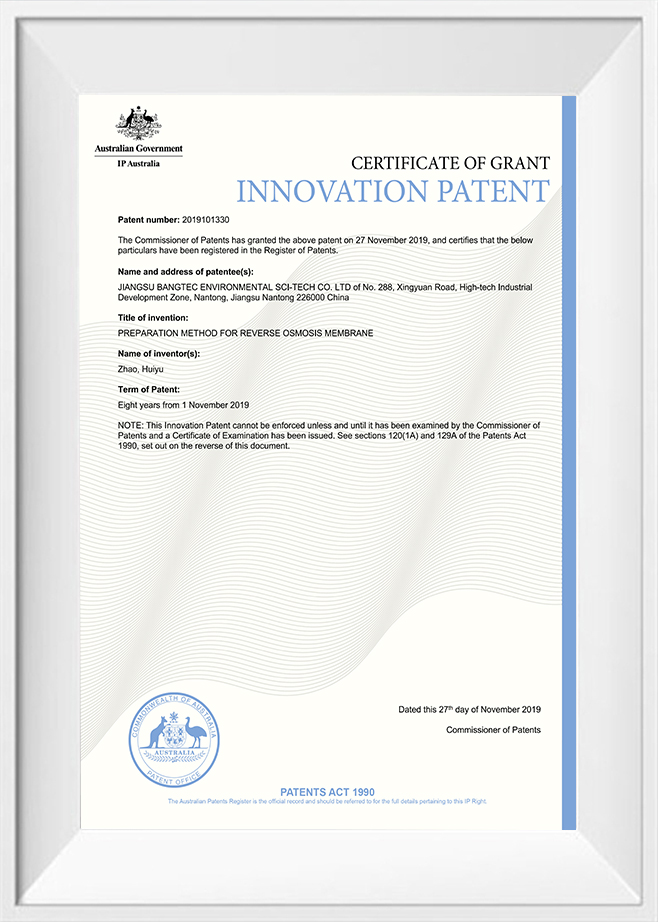
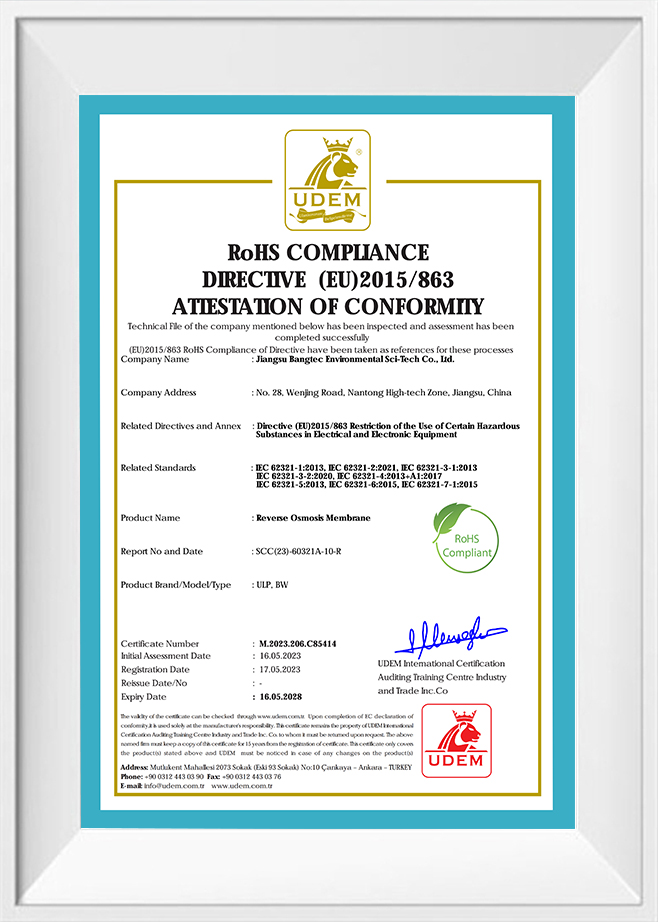
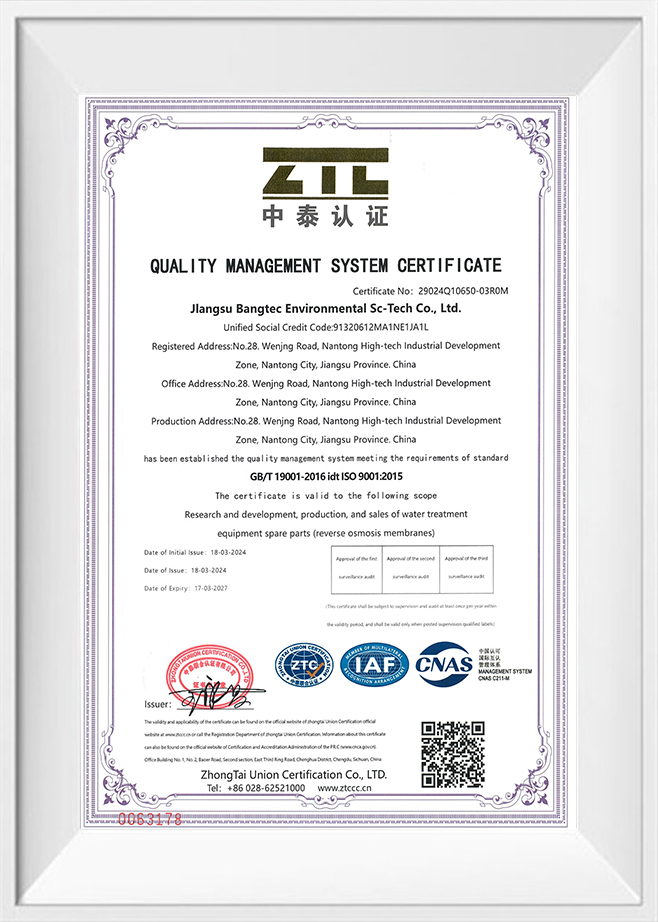
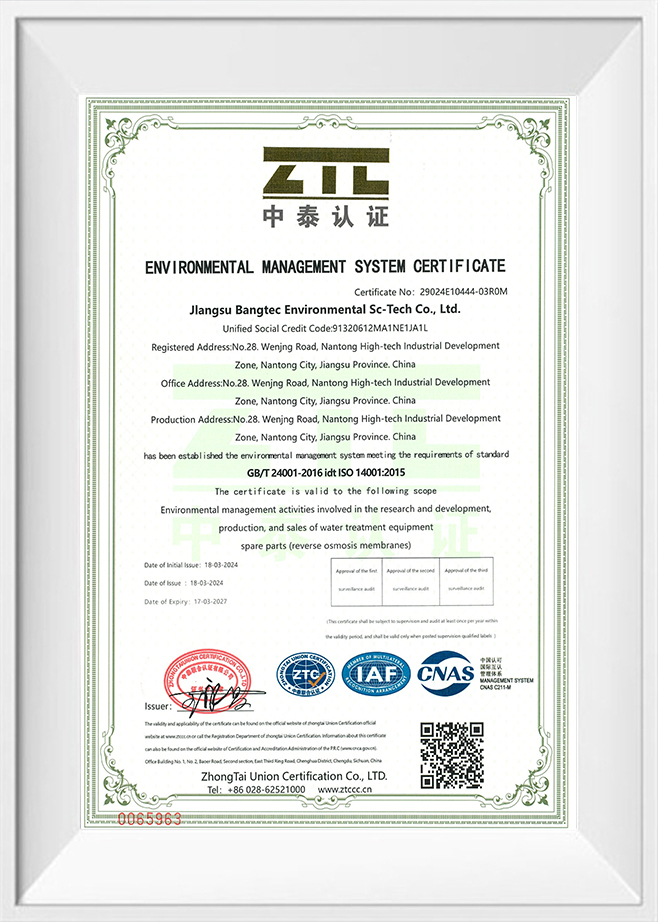
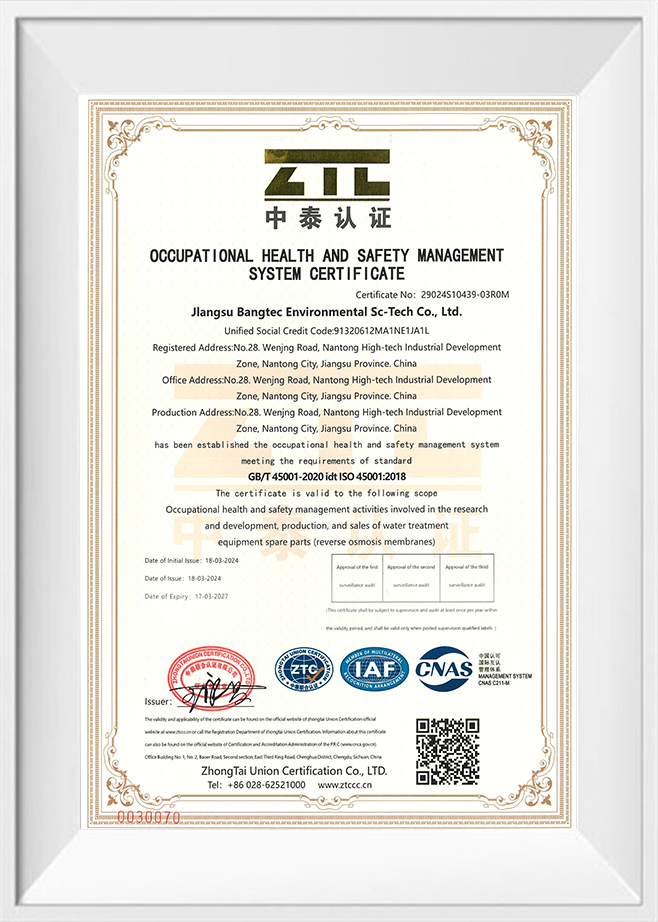
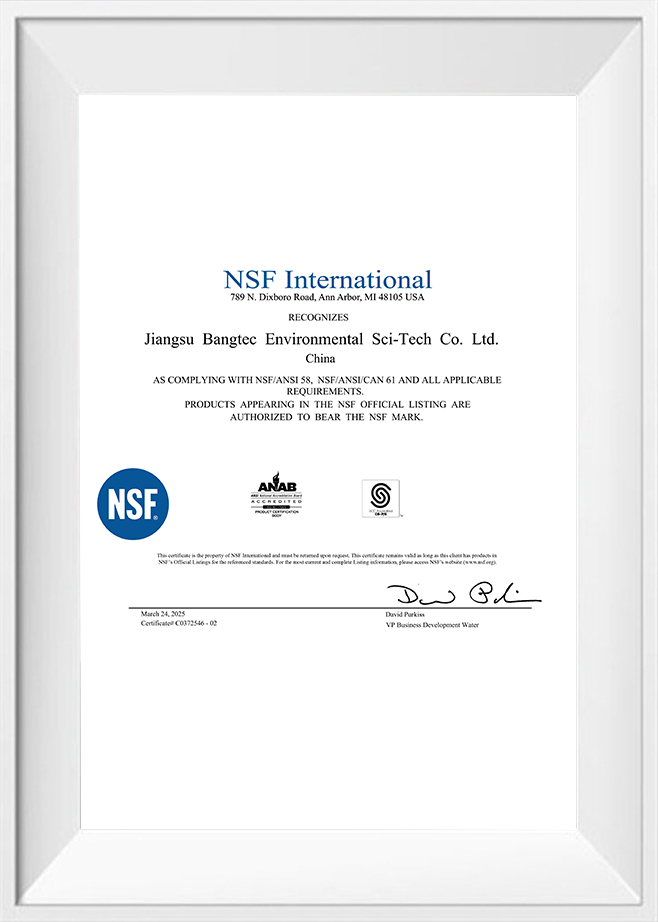
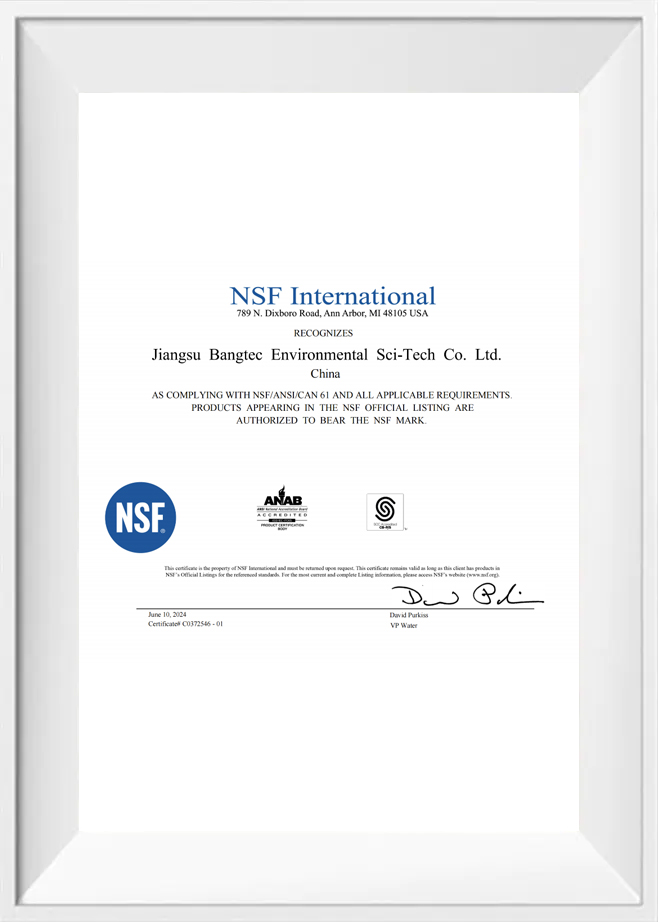
As a Fouling Resistance RO Membrane Manufacturer, Jiangsu Bangtec Huachuang Sci-tech Co., Ltd. has obtained Triple Standards Integration Management System certification (ISO9001, ISO14001, ISO45001), CE certification, and Jiangsu Provincial Water-related Approval. The company operates three overseas research and development institutions, led by doctoral teams from the Chinese Academy of Sciences, continuously driving iterative upgrades in membrane material surface modification technology. Bangtec anti-fouling membrane products have achieved internationally leading performance levels and are deployed at scale in high-end manufacturing sectors such as photovoltaics and lithium batteries.
Operation and Maintenance Essentials
To fully realize the performance potential of anti-fouling membranes, the following maintenance strategies are recommended:
- Strictly control feed water SDI value below 4, with multimedia filtration or ultrafiltration pretreatment added when necessary
- Initiate chemical cleaning procedures when operating differential pressure increases by more than 15% from initial values
- Alkaline cleaning (pH 11-12) removes organic and biological fouling, while acidic cleaning (pH 2-3) removes inorganic scaling
- For shutdowns exceeding 48 hours, employ 1% sodium bisulfite solution for wet preservation
- Conduct standardized performance evaluations quarterly, recording trends in water production, rejection rate, and differential pressure
Frequently Asked Questions
What is the fundamental difference between anti-fouling and standard RO membranes
The core distinction lies in membrane surface characteristics and flow channel structure. Anti-fouling membranes employ hydrophilic modification to reduce pollutant adhesion and utilize wide-channel design to minimize dead-zone deposition, extending cleaning intervals by over 40% and making them suitable for high-organic-content or high-turbidity feed environments.
What water quality conditions are Bangtec anti-fouling membranes suitable for
Bangtec anti-fouling membranes cover the full range of high, medium, and low-pressure series, capable of treating industrial wastewater and process water with SDI values not exceeding 4, turbidity not exceeding 20 NTU, and COD not exceeding 200 mg/L, with rejection rates ranging from 97.0% to 99.5%.
What is the typical service life of anti-fouling membranes
Under standardized pretreatment and regular maintenance conditions, anti-fouling membranes typically achieve service lives of 3 to 5 years. Bangtec products, through optimized membrane sheet structure and enhanced chemical tolerance, can exceed 5 years of actual operation in stable conditions such as photovoltaic ultrapure water systems.
How to determine when membrane elements require chemical cleaning
Chemical cleaning should be initiated when standardized water production declines by more than 10%, rejection rate drops by more than 1%, or transmembrane pressure increases by more than 15% from initial values. Establishing operational data records enables predictive maintenance implementation.
Does Bangtec provide customized membrane product services
Bangtec operates three overseas research and development institutions with technical teams led by Chinese Academy of Sciences doctoral graduates. The company provides comprehensive customized services including membrane selection, system design, and application solutions tailored to specific client water quality parameters, production capacity, and rejection rate requirements.
Industry Development Trends
As industrial water standards tighten and zero-discharge policies advance, market demand for Fouling Resistance RO Membrane continues to grow. Future technological development directions include: nano-coating technology for further enhancement of anti-fouling performance, wide-channel and low-pressure-drop designs for reduced operational energy consumption, and integration of intelligent monitoring systems for predictive maintenance. Jiangsu Bangtec Huachuang Sci-tech Co., Ltd. will continue investing research and development resources to drive deeper application of anti-fouling membrane technology across additional industrial sectors.


 EN
EN  عربى
عربى