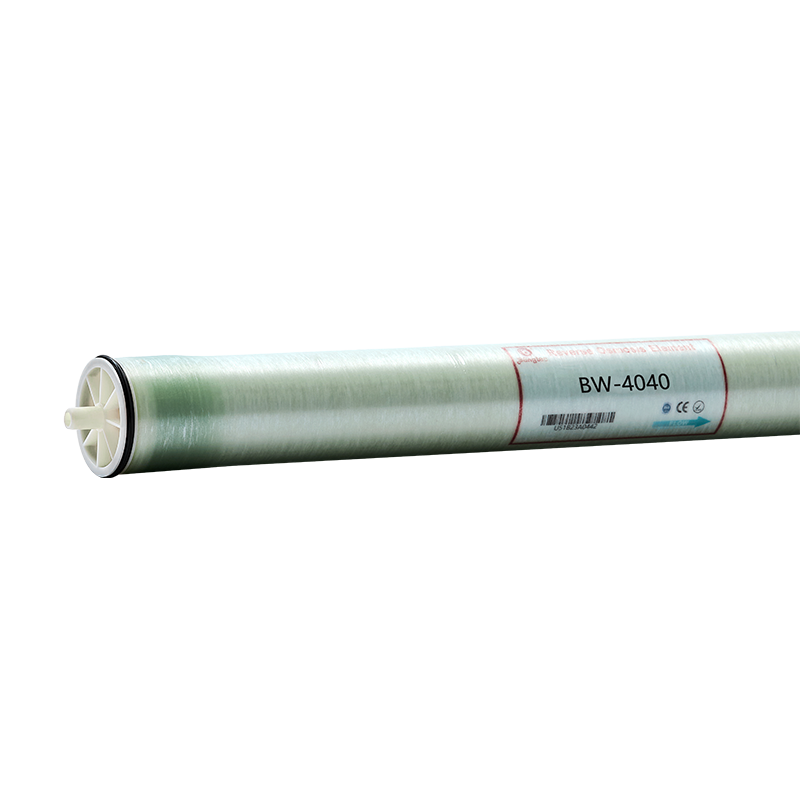
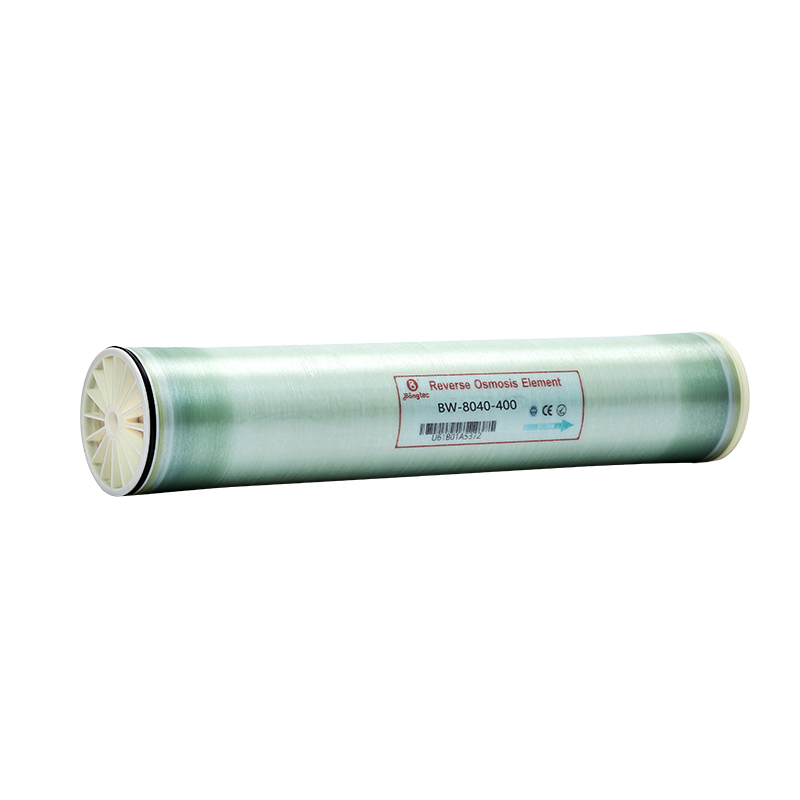
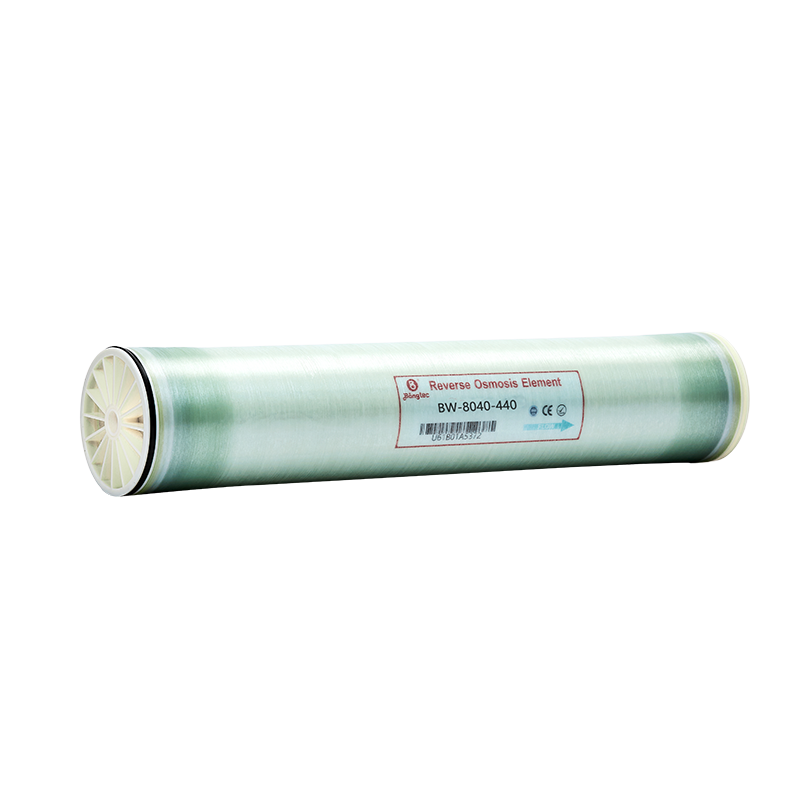
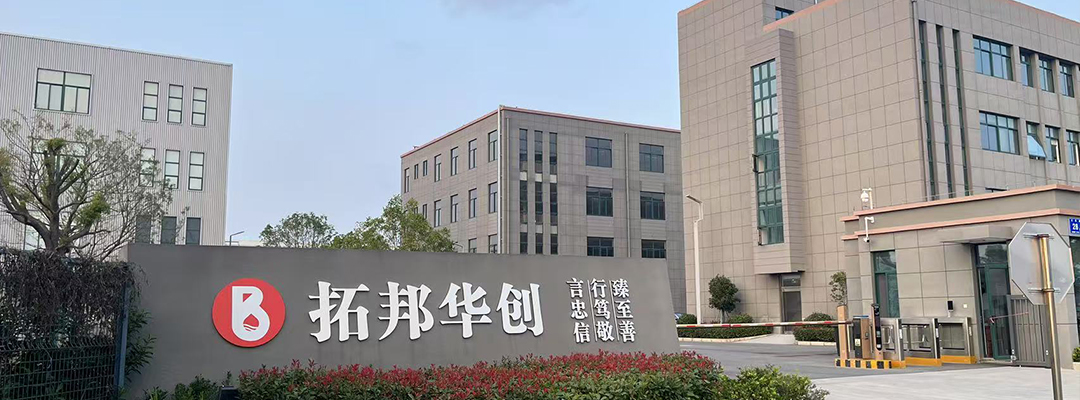
Brackish Water RO Membrane is a high-performance separation membrane element specifically designed for water sources with salinity ranging from 1,000 to 10,000 ppm. It is widely applied in industrial water treatment, municipal water supply, and specialized separation fields. As a China brackish water RO membrane manufacturer and brackish water RO membrane supplier, Jiangsu Bangtec Huachuang Sci-tech Co., Ltd. leverages the technical expertise of a team led by PhD graduates from the Chinese Academy of Sciences and overseas high-level talents to develop a comprehensive product line covering low-pressure, medium-pressure, high-pressure, and anti-fouling industrial BW RO membrane and industrial BW-FR RO membrane series. These products have achieved internationally leading performance levels, providing efficient and reliable water treatment solutions for industries including photovoltaics, lithium batteries, steel, power generation, chemicals, printing and dyeing, and coal chemicals.
Core Technical Principles and Separation Mechanism
Brackish Water RO Membrane operates based on the selective permeability of semi-permeable membranes. Under externally applied pressure exceeding the osmotic pressure of the solution, water molecules permeate through the membrane layer while dissolved salts, heavy metal ions, organic compounds, and microorganisms are retained. Typical brackish water sources contain salinity between 1,000 ppm and 10,000 ppm, with operating pressures generally controlled within 0.6 MPa to 2.1 MPa, achieving salt rejection rates of 98.5% to 99.5%.
The brackish membrane developed by Jiangsu Bangtec Huachuang Sci-tech Co., Ltd. employs polyamide composite thin-film technology with precisely regulated surface charge density, resulting in higher rejection rates for divalent ions (Ca2+, Mg2+, SO4 2-) compared to monovalent ions (Na+, Cl-). In a typical industrial application with feed water TDS of 3,000 ppm, the permeate conductivity can be reduced below 30 μS/cm, meeting the requirements for boiler feedwater preparation and electronic-grade ultrapure water production.
Product Series and Technical Parameter Comparison
Industrial BW RO membrane and industrial BW-FR RO membrane differ significantly in structural design and application scenarios. The BW series is suitable for conventional brackish water treatment, while the BW-FR series features anti-fouling optimization for high-fouling water sources. The following table provides an overview of Bangtec's main brackish water membrane products:
| Product Series |
Applicable Water Source |
Typical Salt Rejection |
Operating Pressure Range |
Permeate Flow (8-inch Element) |
Key Features |
| Low-Pressure BW Series |
Low-salinity brackish water (1,000-3,000 ppm) |
≥98.5% |
0.6-1.0 MPa |
9,000-11,000 GPD |
Low energy consumption, suitable for municipal water supply |
| Medium-Pressure BW Series |
Medium-salinity brackish water (3,000-7,000 ppm) |
≥99.0% |
1.0-1.6 MPa |
8,000-10,000 GPD |
Balanced salt rejection and permeate flow |
| High-Pressure BW Series |
High-salinity brackish water (7,000-10,000 ppm) |
≥99.2% |
1.6-2.1 MPa |
7,000-9,000 GPD |
High salt rejection for precision industries |
| BW-FR Anti-Fouling Series |
High SDI brackish water |
≥98.8% |
1.0-1.8 MPa |
7,500-9,500 GPD |
Wide feed spacer, resistant to organic fouling |
Industrial Application Scenarios and Typical Cases
Brackish water membrane applications in the industrial sector have expanded from standalone water treatment to comprehensive multi-industry solutions. The following are the primary application scenarios with Bangtec's actual performance data:
Photovoltaic Industry: Monocrystalline silicon wafer cutting requires ultrapure water with resistivity reaching 18 MΩ·cm. Using Bangtec industrial BW RO membrane as a pretreatment stage, feed water TDS of 2,500 ppm can be reduced below 25 ppm, providing qualified influent for subsequent EDI polishing. A leading photovoltaic enterprise processes 1.2 million tons annually, with membrane elements operating continuously for over 36 months.
Steel Industry: Circulating cooling water and boiler feedwater treatment in steel plants require strict salt rejection standards. A major steel group adopted Bangtec BW-FR anti-fouling series to treat high-hardness brackish water (TDS 4,500 ppm, hardness 680 mg/L), achieving stable permeate recovery rates above 75% and extending chemical cleaning intervals from 45 days to 120 days.
Printing and Dyeing Industry: Wastewater reuse in printing and dyeing applications demands high color and COD removal efficiency. Bangtec brackish water membrane achieved COD rejection rates above 85% and permeate color below 5 Hazen units in a Jiangsu printing and dyeing park water reclamation project, meeting the GB/T 19923-2005 standard for reclaimed urban wastewater for industrial use.
Selection Guide and System Design Considerations
Selecting the appropriate Brackish Water RO Membrane requires comprehensive evaluation of source water quality, permeate requirements, operating costs, and system stability. The following are key selection factors:
Water Quality Analysis: Feed water TDS, hardness, SDI value, pH, and temperature are fundamental parameters for selection. When SDI exceeds 5, the BW-FR anti-fouling series is recommended. When hardness exceeds 500 mg/L, softening pretreatment should be incorporated.
Pressure Matching: The low-pressure BW series is suitable for TDS below 3,000 ppm, reducing pumping energy consumption by approximately 25% to 30%. The high-pressure BW series, while consuming more energy, ensures permeate quality under high-salinity conditions.
Recovery Rate Design: Typical recovery rates for brackish water systems range from 70% to 85%. Excessive recovery rates increase scaling risks on the concentrate side, requiring antiscalant dosing and periodic chemical cleaning.
Frequently Asked Questions
What is the difference between brackish water RO membrane and seawater desalination membrane
Brackish Water RO Membrane is designed for water sources with salinity of 1,000 to 10,000 ppm, with operating pressures typically ranging from 0.6 to 2.1 MPa. Seawater desalination membranes are engineered for high-salinity seawater above 35,000 ppm, requiring operating pressures of 5.5 to 6.9 MPa. The two differ fundamentally in membrane material thickness, rejection layer structure, and pressure-resistant housing design, and are not interchangeable.
What is the typical service life of industrial BW RO membrane
Under standard operating conditions, industrial BW RO membrane elements are designed for a service life of 3 to 5 years. Actual lifespan is influenced by feed water quality, pretreatment effectiveness, cleaning frequency, and operating parameters. Bangtec products have demonstrated continuous stable operation exceeding 4 years in the photovoltaics and steel industries under proper maintenance conditions.
Which water sources are suitable for BW-FR anti-fouling series
The BW-FR series is specifically designed for high-fouling tendency water sources, applicable when feed water SDI exceeds 5 or when organic compounds and colloidal particles are present. Its wide feed spacer design (34 mil spacer height) reduces contaminant deposition on the membrane surface. Typical applications include surface water, reclaimed water, and industrial wastewater reuse projects.
How to determine when brackish water membrane replacement is needed
Primary indicators include: permeate flow decline exceeding 15% of initial value, salt rejection decrease exceeding 1.5 percentage points, transmembrane pressure increase exceeding 20% of initial value, and inability to restore performance to 90% of standard values after chemical cleaning. Establishing a regular monitoring protocol to track normalized permeate flow and salt rejection trends is recommended.
What certifications has Bangtec brackish water membrane obtained
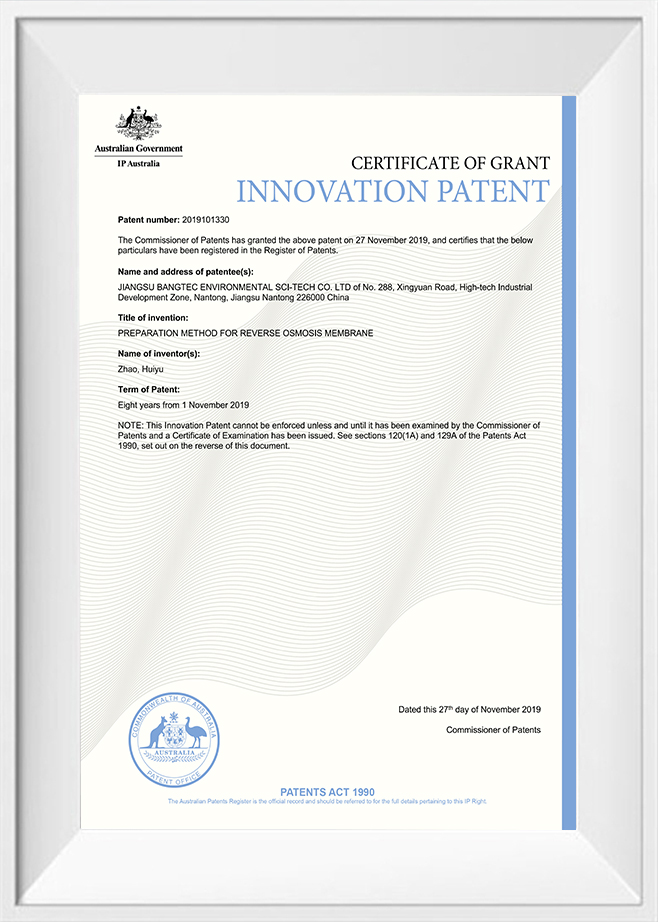
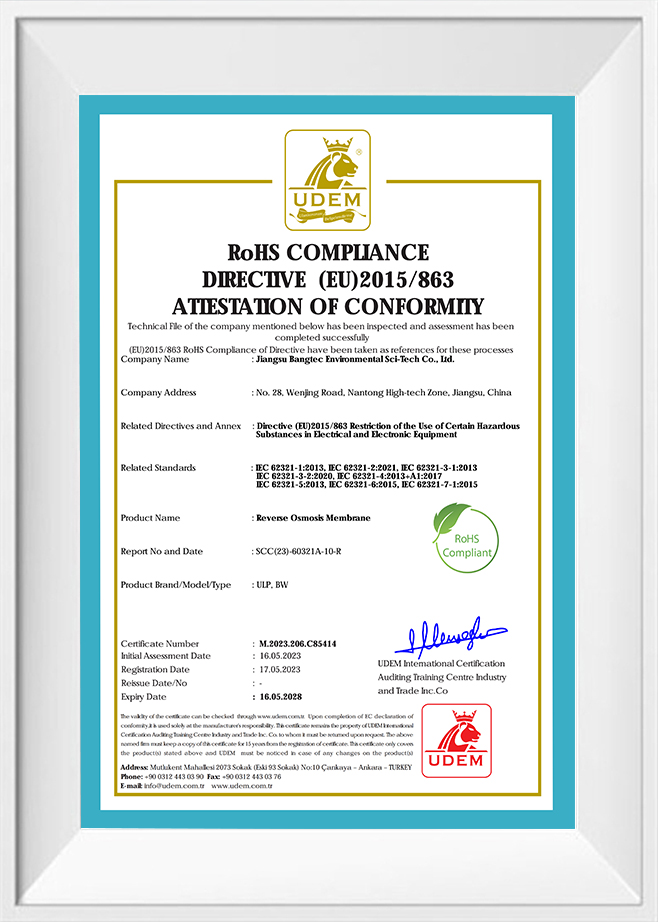
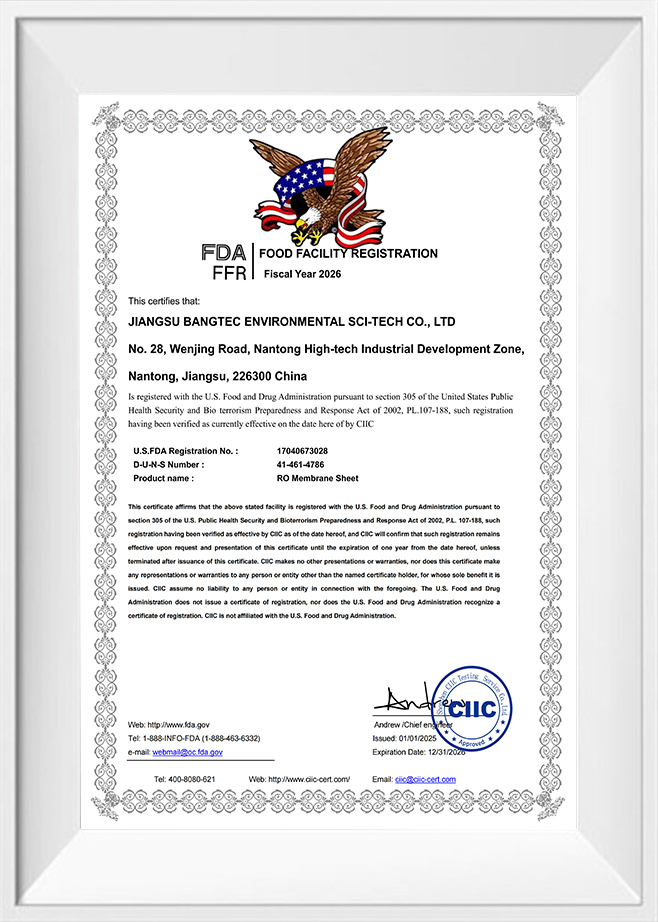
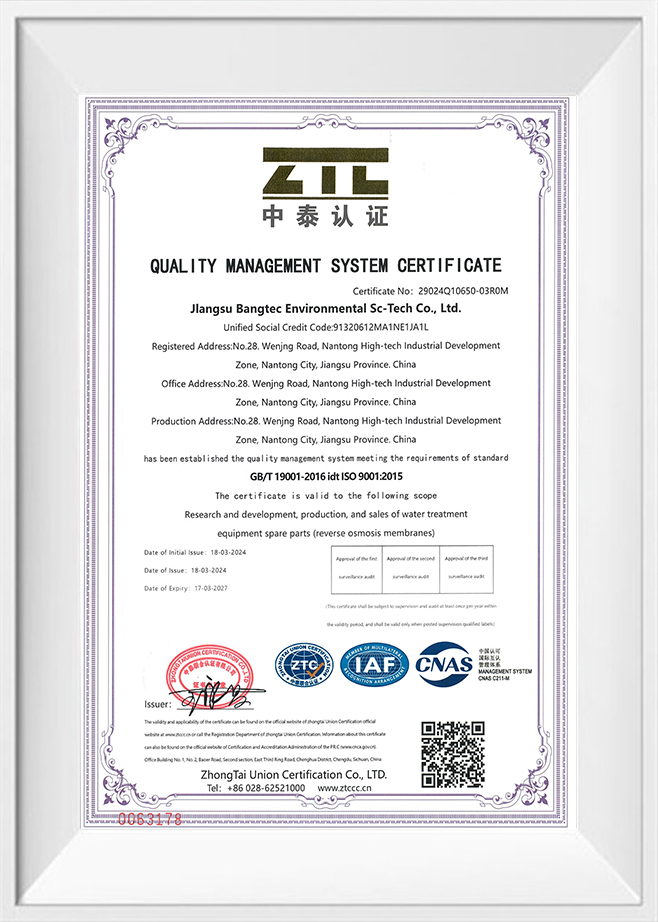
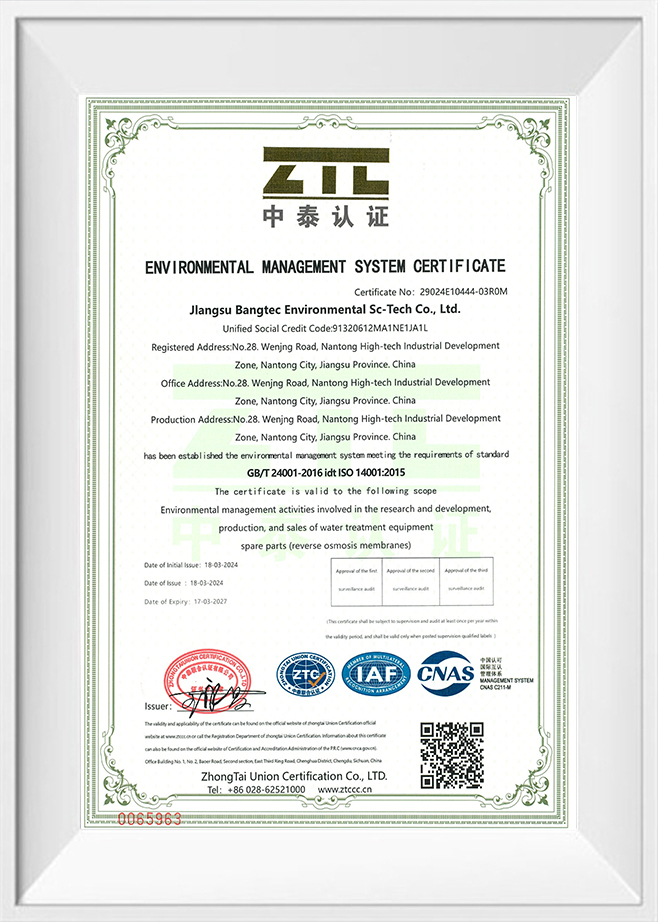
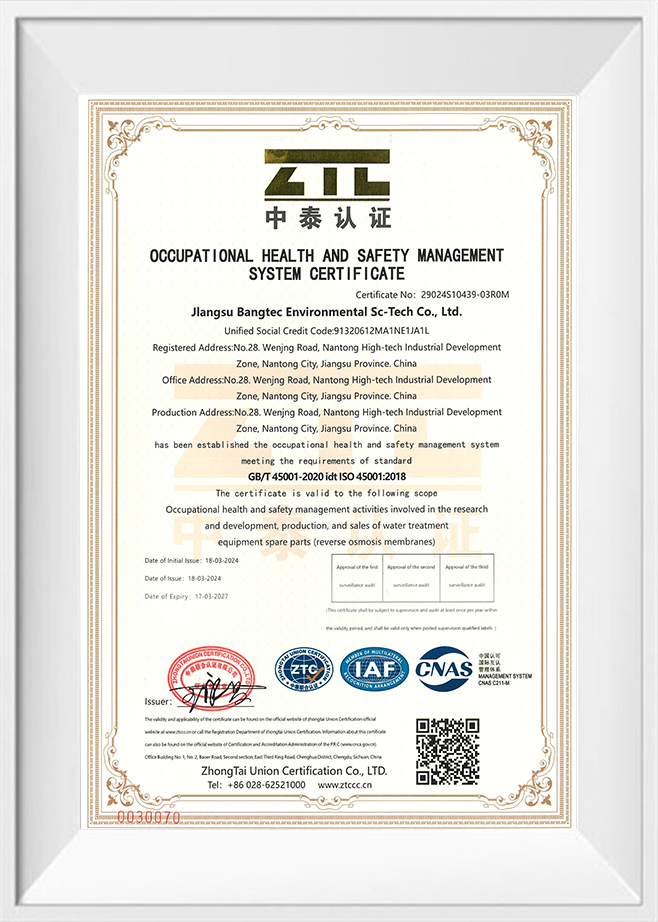
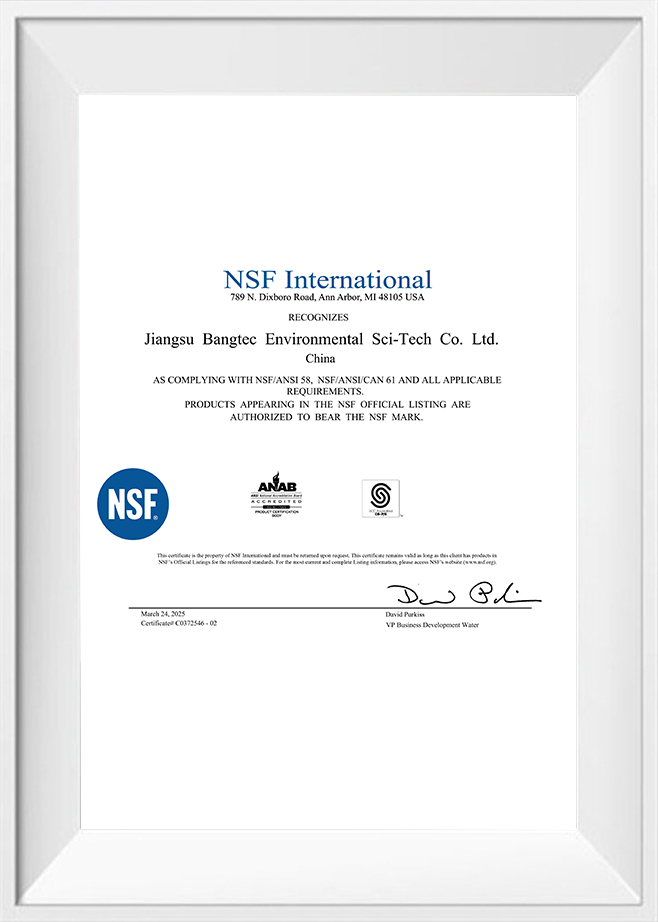
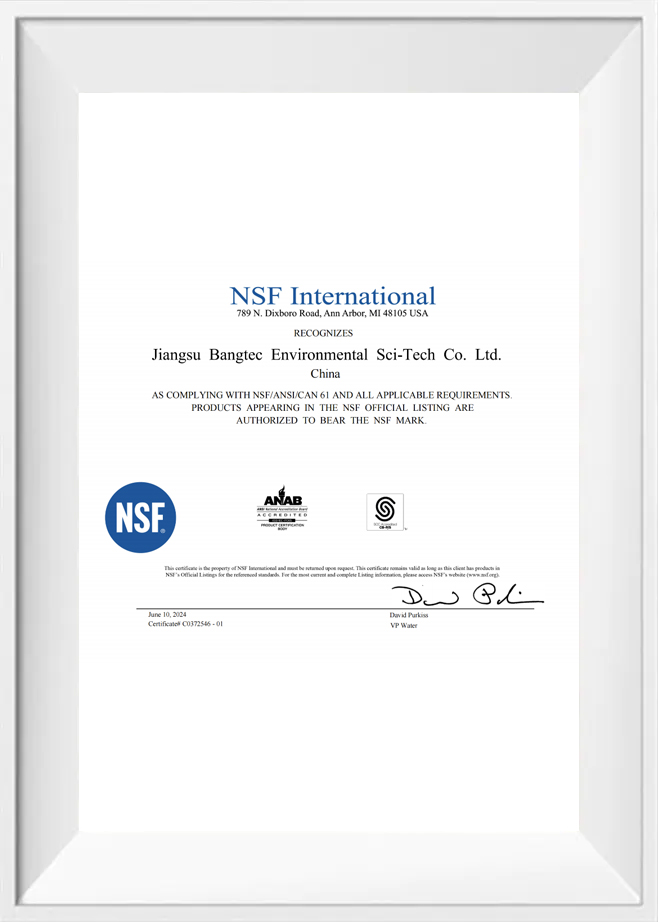
Jiangsu Bangtec Huachuang Sci-tech Co., Ltd. products have passed the Triple Standards Integration Management System including ISO9001 Quality Management System, ISO14001 Environmental Management System, and ISO45001 Occupational Health and Safety Management System certifications, as well as CE certification and Jiangsu Provincial Water-related Product Approval. The company holds multiple domestic and international invention patents, with membrane product performance verified by third-party testing agencies to reach internationally leading levels.
What are the pretreatment requirements for brackish water RO systems
Standard pretreatment processes include: multimedia filtration (removing suspended solids, effluent turbidity below 1 NTU), activated carbon filtration (removing residual chlorine and organics, residual chlorine below 0.1 ppm), cartridge filtration (5-micron filters to protect membrane elements), and softening or antiscalant dosing when necessary. Comprehensive pretreatment is critical for extending membrane service life.
Conclusion
Brackish Water RO Membrane serves as a core technology component in the industrial water treatment sector, and the scientific selection and application directly impact system operational efficiency and economics. Jiangsu Bangtec Huachuang Sci-tech Co., Ltd., leveraging the technical strength of the Chinese Academy of Sciences doctoral team and the innovation support of overseas R&D institutions, continues to provide high-performance industrial BW RO membrane and industrial BW-FR RO membrane products for the global market. Whether for conventional brackish water desalination or complex industrial wastewater reuse, Bangtec offers customized membrane separation solutions to help customers achieve efficient water resource utilization and sustainable development goals.


 EN
EN  عربى
عربى