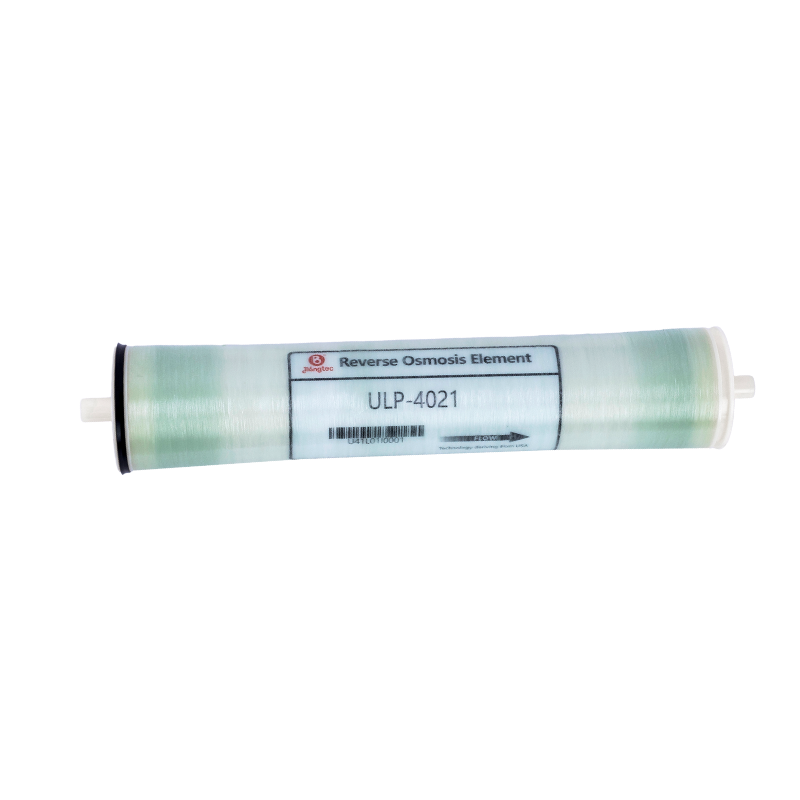
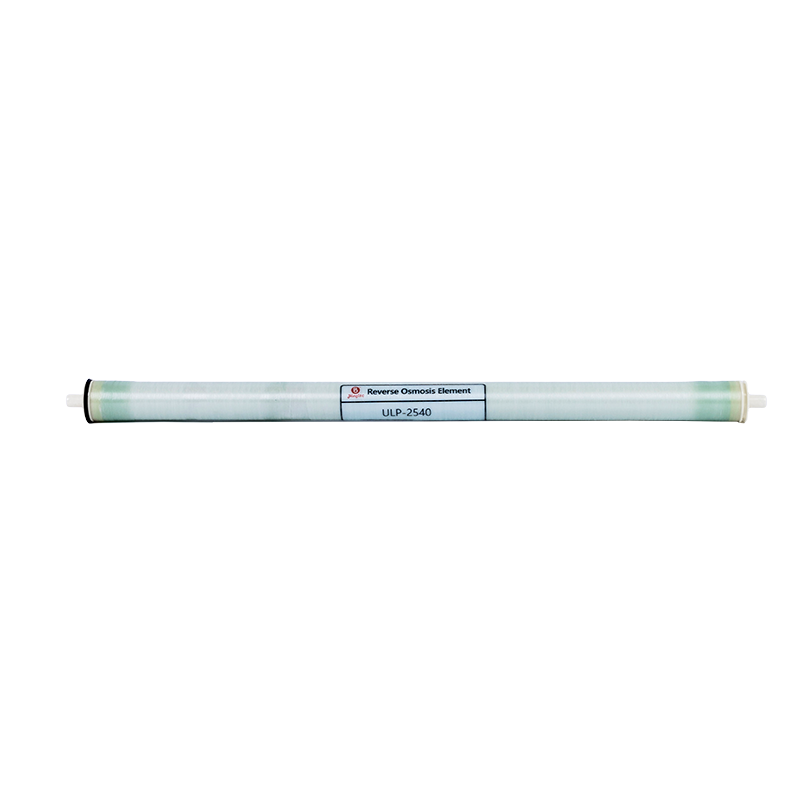
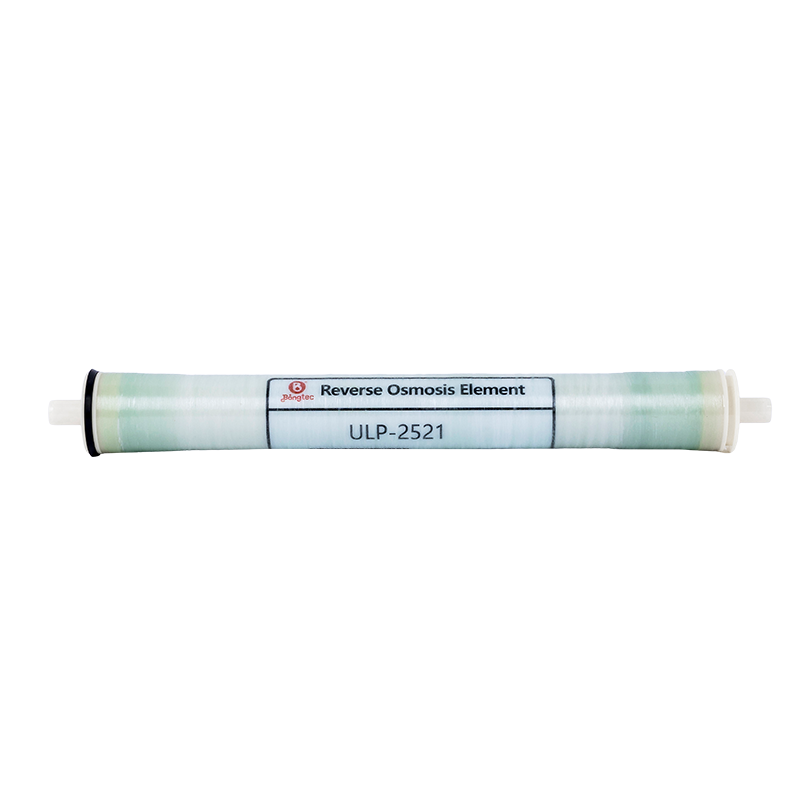
Ultra Low Pressure RO Membrane For Commercial is a high-efficiency energy-saving reverse osmosis membrane element developed for commercial water treatment scenarios. Designed specifically for low-salinity water sources, it achieves high salt rejection and high water flux at extremely low operating pressures. As the core filtration component of commercial water purification systems, this series of membrane elements is suitable for deep purification of municipal tap water, surface water, and low-salinity groundwater. It is widely used in catering chains, hotels, office buildings, schools, hospitals, and small-to-medium industrial water production applications. Jiangsu Bangtec Huachuang Sci-tech Co., Ltd., as a China ultra low pressure RO membrane for commercial manufacturer, leverages a research and development team led by doctoral graduates from the Chinese Academy of Sciences and overseas high-level talents to continuously drive technological upgrades and industrialization in this field.
Core Performance Advantages
The core value of ultra low pressure commercial reverse osmosis membranes lies in achieving salt rejection performance comparable to conventional low-pressure membranes at significantly reduced energy consumption. Under standard test conditions, this series operates at pressures as low as 150 psi (approximately 1.03 MPa), about two-thirds that of standard brackish water membranes, while maintaining stable salt rejection above 99.0%. Taking the 4040 specification as an example, a single membrane element delivers a permeate flow rate of 2,000-2,600 GPD (7.6-9.8 m³/d), while the 8040 specification achieves 10,500-11,000 GPD (39.7-41.6 m³/d), with effective membrane areas of 85 ft² (7.9 m²) and 400 ft² (37.2 m²) respectively. This combination of high flux and low operating pressure significantly reduces selection costs for high-pressure pumps, piping, and pressure vessels, while decreasing long-term electricity consumption.
Typical Application Scenarios
These membrane elements are suitable for feed water with TDS below 2,000 ppm. Specific application scenarios include:
- Commercial Drinking Water Systems: Providing stable high-quality water for chain restaurants, hotel rooms, and office direct-drinking applications
- Food Processing Water: Meeting safety requirements for beverage blending, ingredient washing, and other processes
- Boiler Feed Water Pretreatment: Reducing feed water hardness and salinity to extend boiler service life
- Laboratory and Medical Water: Serving as pretreatment for pure water systems to ensure feed water quality for subsequent polishing units
- Municipal Tap Water Deep Purification: Providing terminal purification for pipeline end-points or secondary water supply systems
Main Model Specification Comparison
| Model |
Active Membrane Area |
Permeate Flow Rate |
Stabilized Salt Rejection |
Operating Pressure |
Recovery Rate |
| ULP-4040 |
85 ft² (7.9 m²) |
2,000 GPD (7.6 m³/d) |
99.0% |
150 psi (1.03 MPa) |
15% |
| ULP-8040 |
400 ft² (37.2 m²) |
10,500 GPD (39.7 m³/d) |
99.0% |
150 psi (1.03 MPa) |
15% |
| ULP-4021 |
36 ft² (3.3 m²) |
950 GPD (3.6 m³/d) |
99.0% |
150 psi (1.03 MPa) |
8% |
| ULP-2540 |
28 ft² (2.6 m²) |
750 GPD (2.8 m³/d) |
99.0% |
150 psi (1.03 MPa) |
8% |
Operating Parameters and Limits
To ensure long-term stable operation of membrane elements, the following conditions must be strictly controlled:
- Maximum Operating Pressure: 600 psi (4.14 MPa)
- Maximum Feed Water Temperature: 45°C
- Continuous Operation pH Range: 2-11
- Chemical Cleaning pH Range: 1-13
- Maximum Feed Water SDI15: 5.0
- Free Chlorine Tolerance: Below 0.1 ppm
- Maximum Pressure Drop Per Element: 15 psi (0.1 MPa)
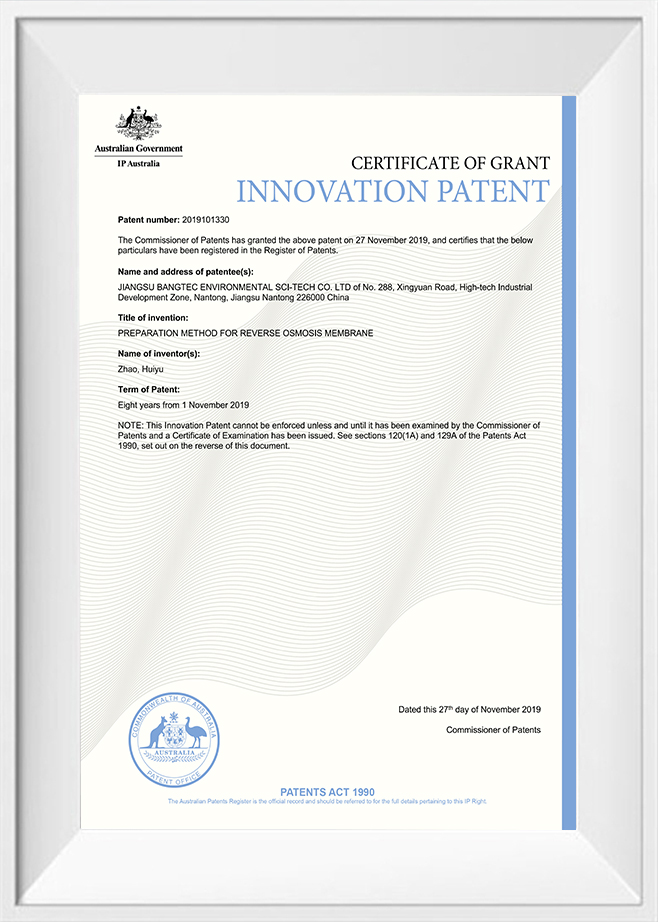
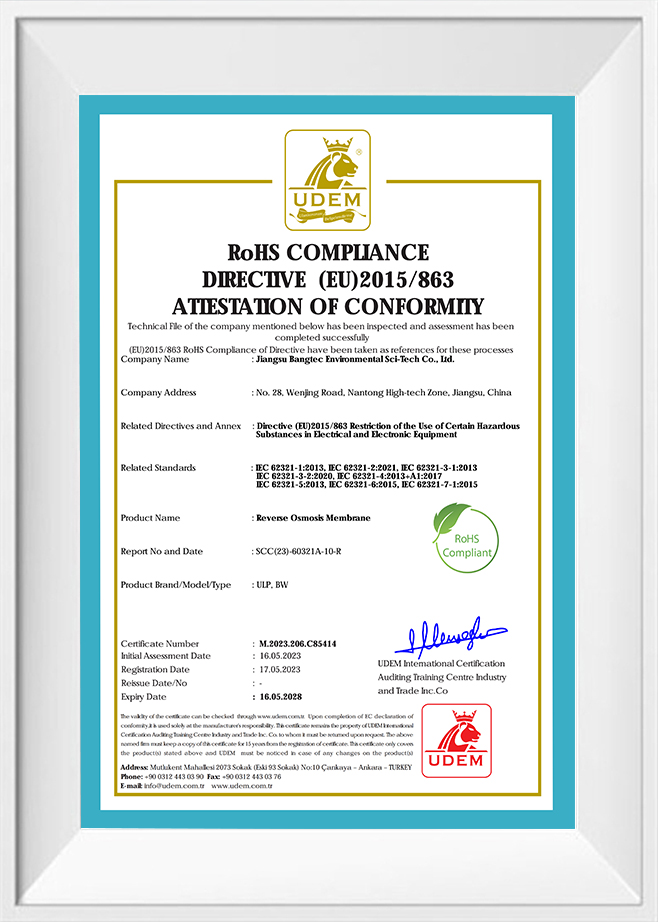
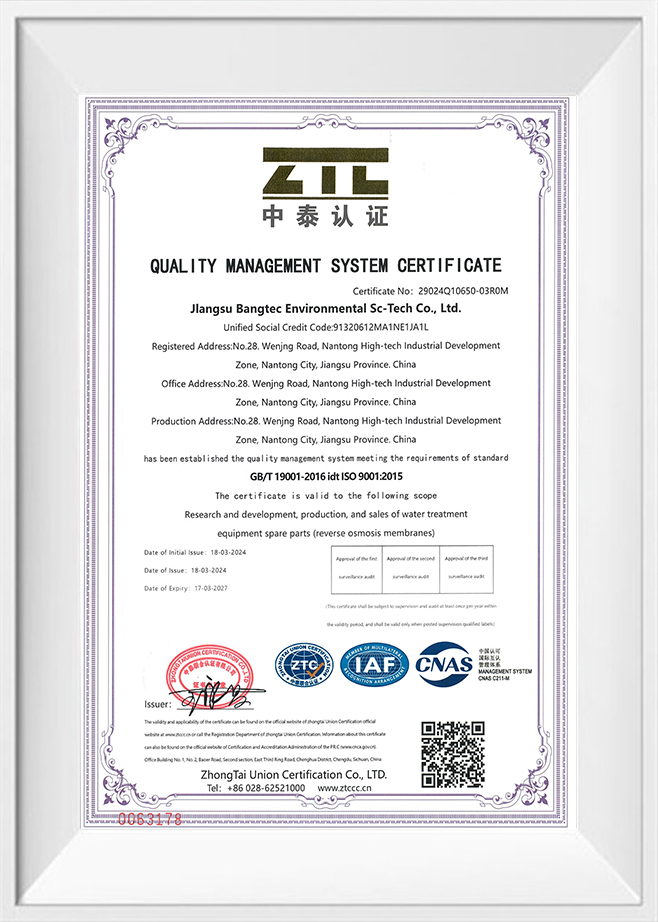
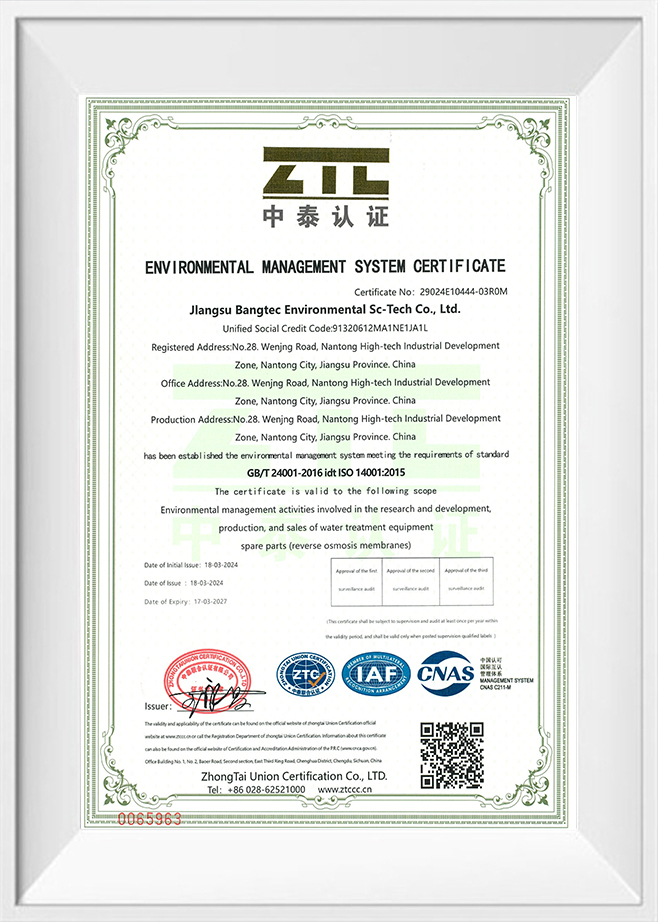
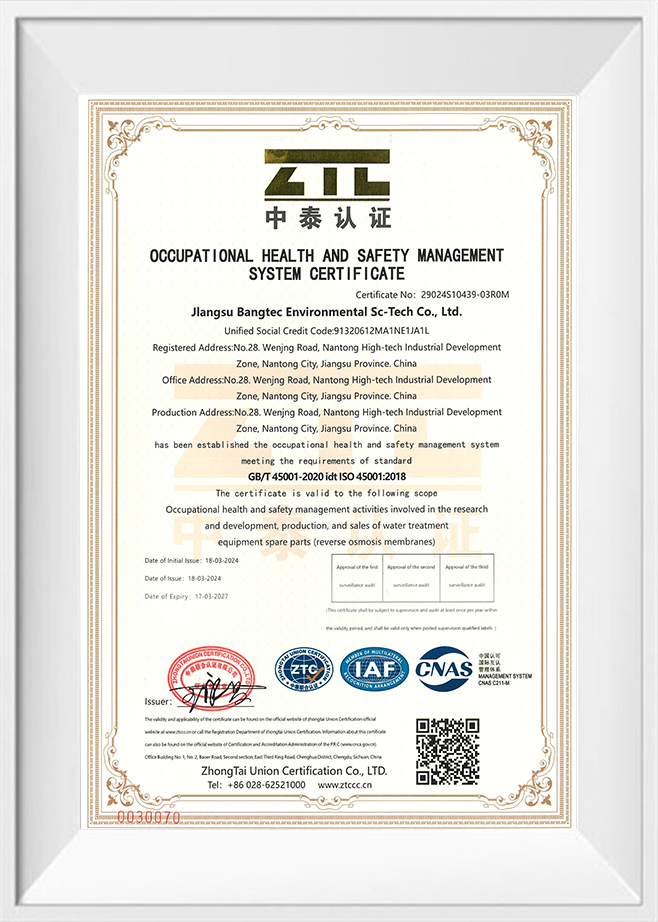
Bangtec products have obtained ISO9001 Quality Management System, ISO14001 Environmental Management System, ISO45001 Occupational Health and Safety Management System, and CE certifications. The membrane elements utilize polyamide composite membrane materials with automated rolling technology to ensure consistent performance and reliability.
System Design and Selection Recommendations
During the system design phase, proper model selection should be based on actual feed water quality and production capacity requirements. For commercial scenarios with daily treatment capacity below 10 m³, 4040 specification membrane elements paired with standard 4-inch pressure vessels are sufficient, offering advantages of compact footprint and easy replacement. For medium-scale commercial or light industrial projects exceeding 50 m³ daily capacity, 8040 specification membrane elements with 8-inch pressure vessels significantly reduce unit water production costs. Bangtec engineering team can provide selection proposals and energy optimization recommendations within 24 hours based on customer water analysis reports, target permeate capacity, and recovery rate requirements.
Frequently Asked Questions
What is the main difference between ultra low pressure and low pressure membranes
Ultra low pressure membranes operate at approximately two-thirds the pressure of conventional low-pressure membranes, making them suitable for low-salinity water sources with TDS below 2,000 ppm. They maintain salt rejection above 99.0% while significantly reducing pumping energy consumption and equipment investment.
Can these membranes directly replace existing standard membranes
In most cases, direct replacement is possible. However, system pressure settings, piping pressure ratings, and pretreatment configurations must be reviewed to ensure existing pump sets can operate stably under ultra-low pressure conditions.
What is the expected service life of membrane elements
Under proper pretreatment and operating conditions, commercial ultra low pressure reverse osmosis membranes typically last 3 to 5 years. Regular monitoring of permeate flow and salt rejection trends helps determine optimal replacement timing.
What are the pretreatment requirements
Feed water must meet SDI15 not exceeding 5.0, turbidity below 1 NTU, and zero free chlorine residual. Standard pretreatment includes multimedia filtration, activated carbon filtration, and cartridge security filtration.
Which water sources are suitable for these membranes
These membranes are primarily suitable for municipal tap water, surface water, and groundwater with low salinity. Feed water TDS should be controlled within 200-2,000 ppm. Beyond this range, brackish water membranes or seawater desalination membranes are recommended.
How can energy savings be quantified
For 8040 specification continuous operation systems, reducing operating pressure from 225 psi to 150 psi can decrease pumping energy consumption by approximately 30%. Over a 3 to 5 year operating cycle, electricity savings can offset the initial membrane investment.


 EN
EN  عربى
عربى