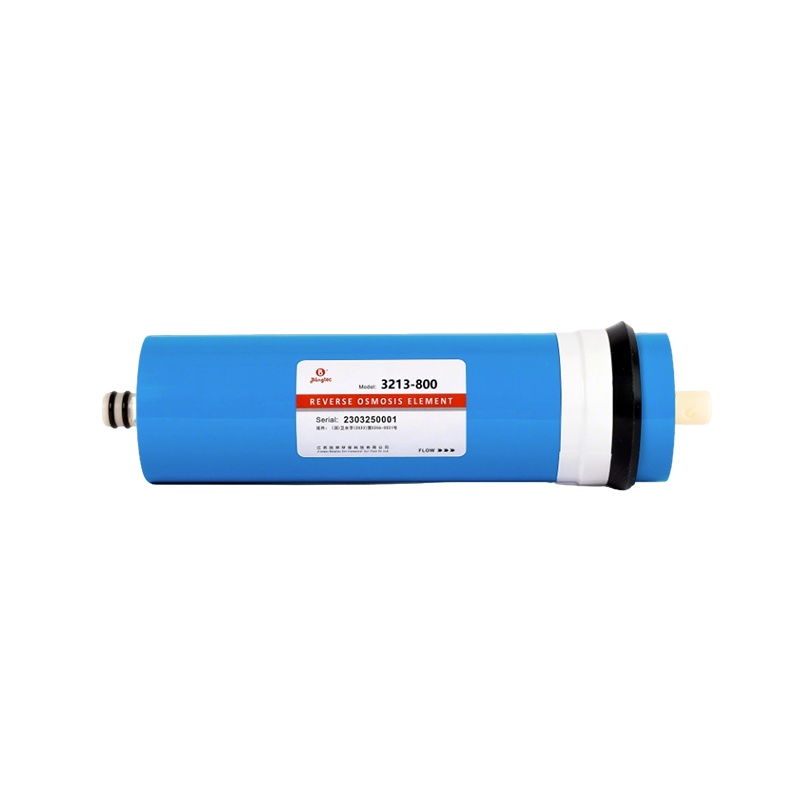
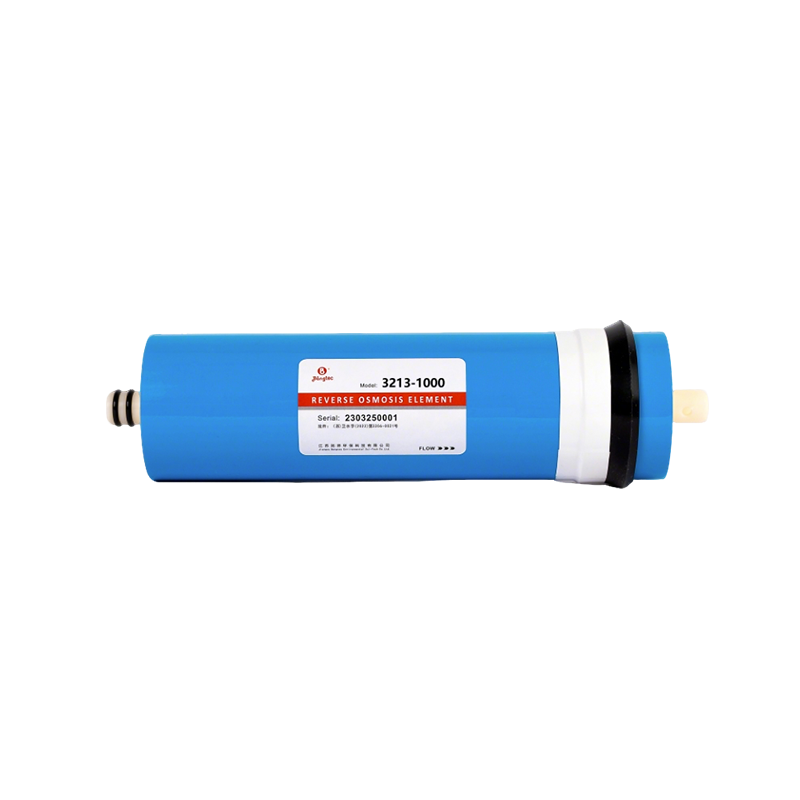
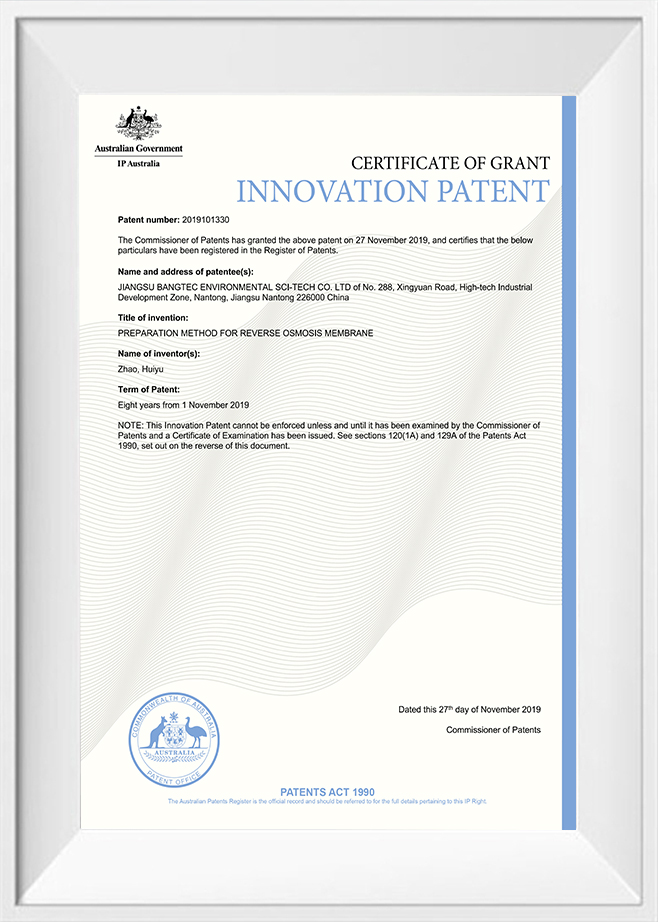
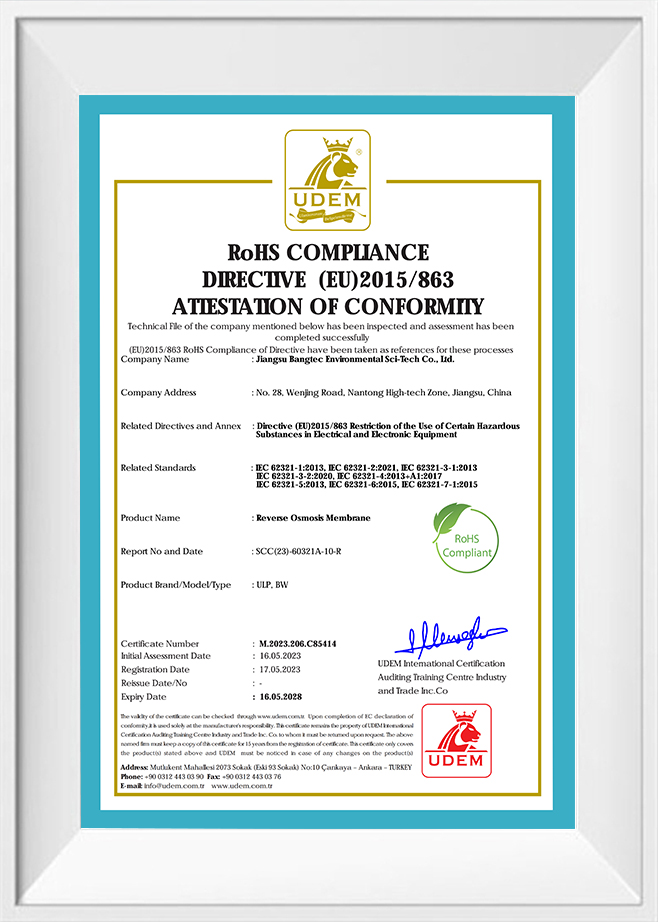
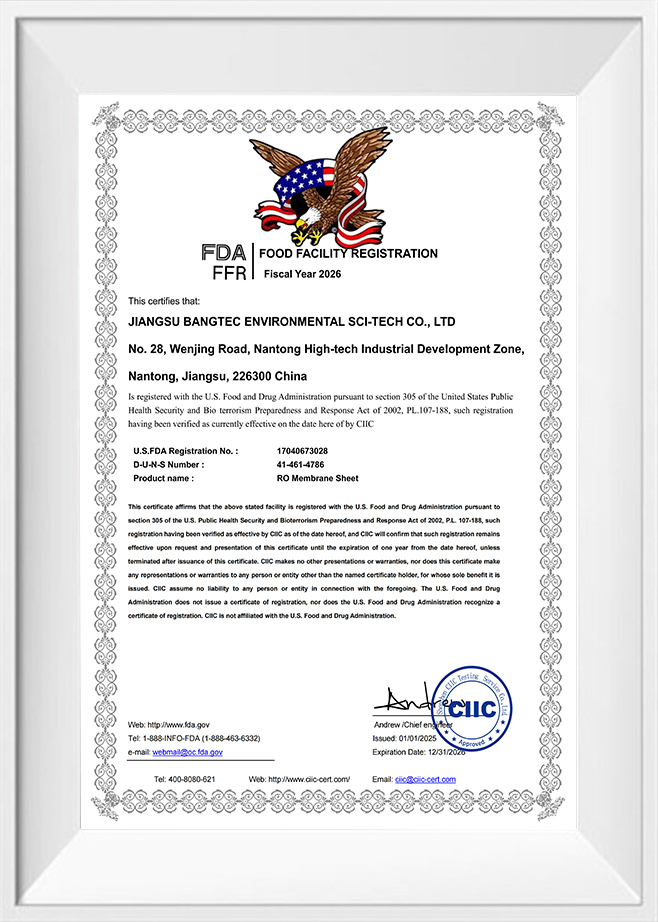
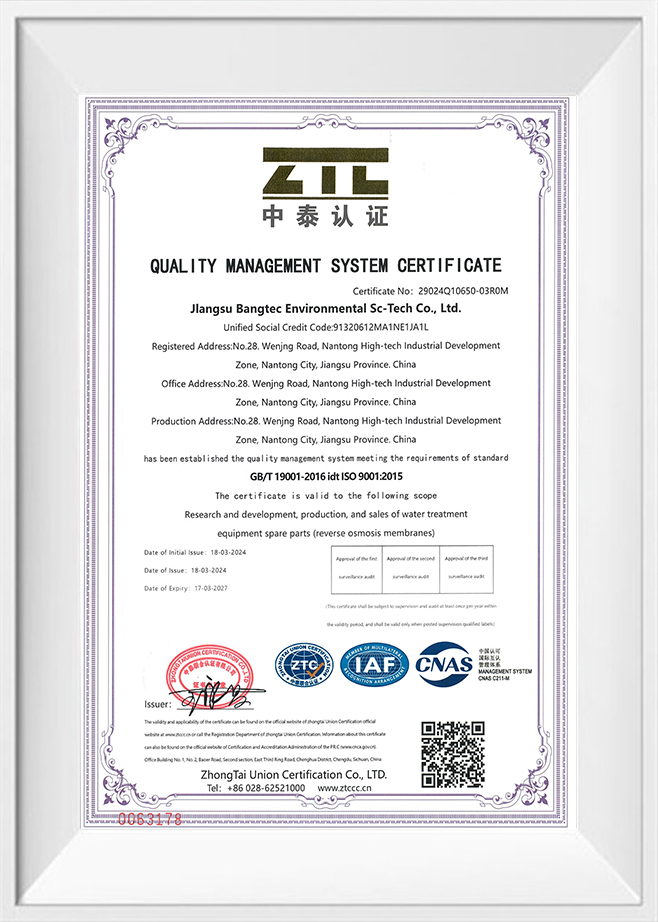
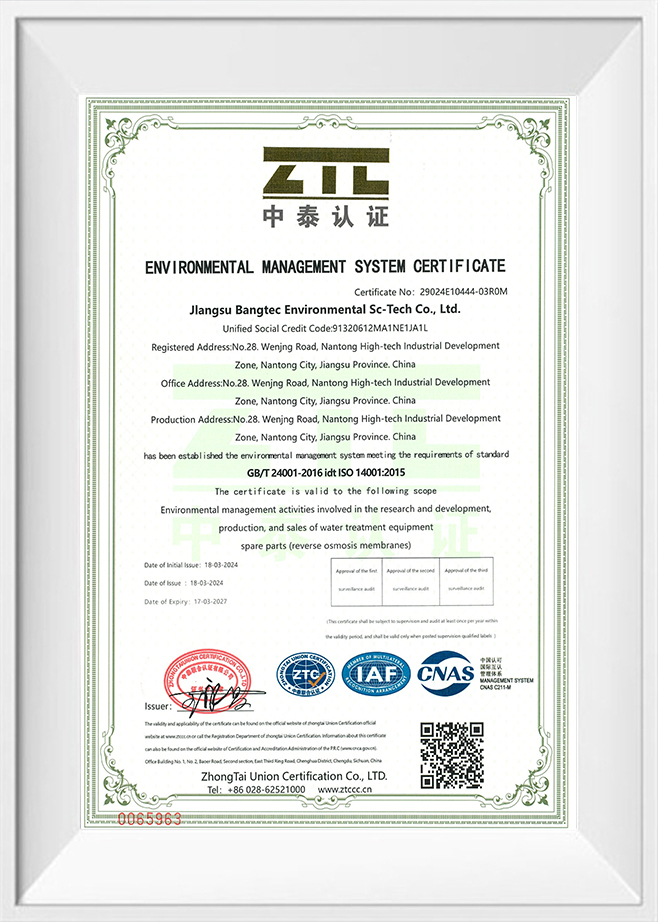
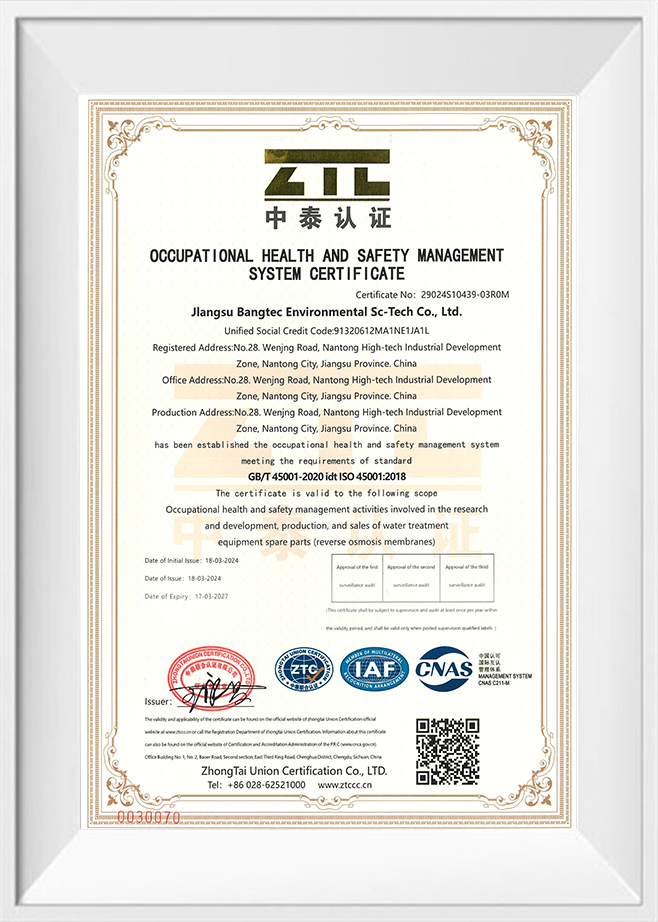
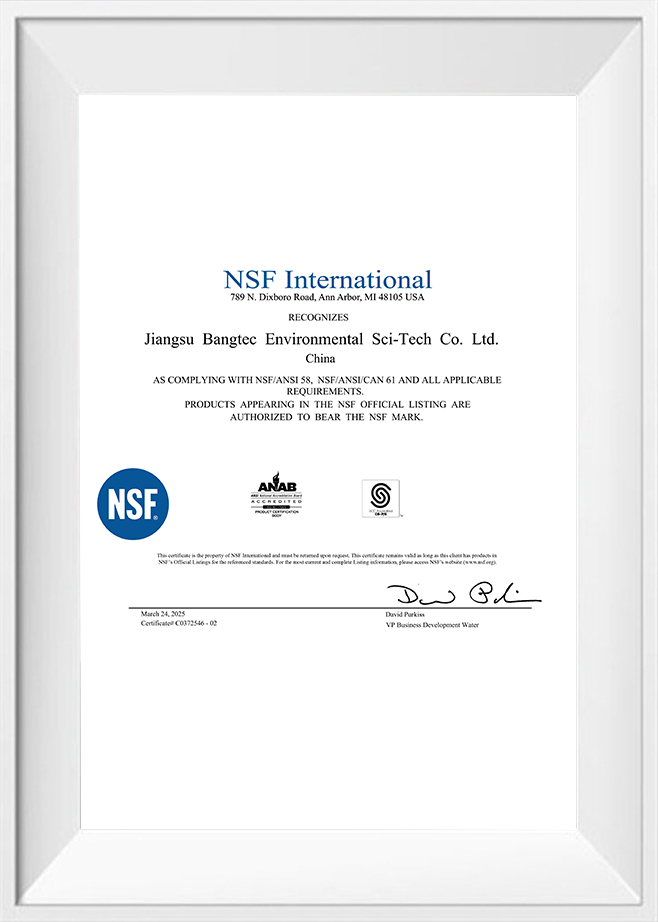
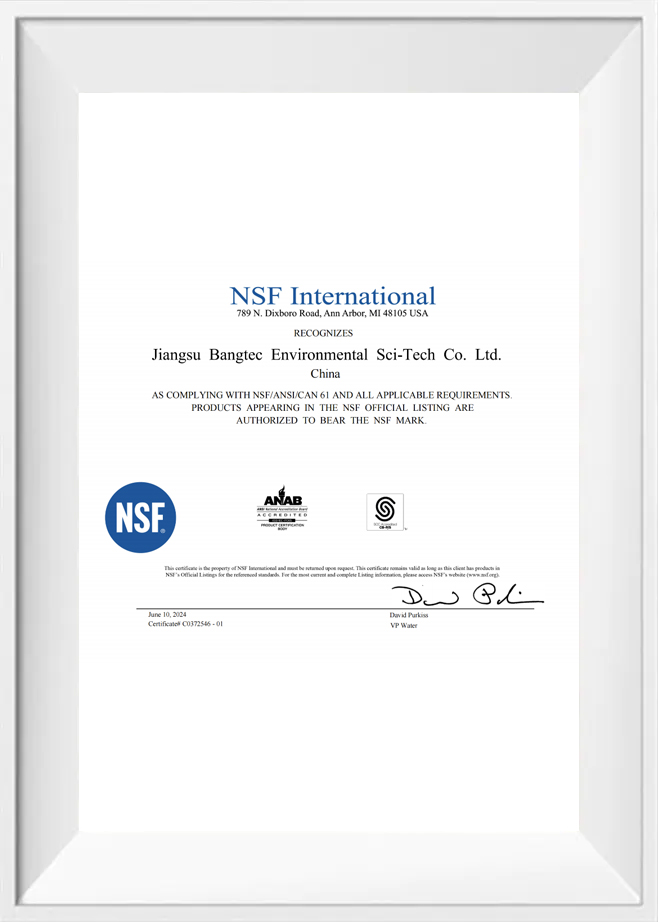
Domestic RO Membrane 3213 is a reverse osmosis membrane element specifically engineered for residential water purification systems. It employs a spiral-wound composite membrane structure, with the core function of physically separating dissolved salts, heavy metal ions, organic compounds, and microorganisms from feed water to produce purified water meeting direct drinking standards. This model covers a wide range of household applications including under-sink reverse osmosis units, countertop water dispensers, and wall-mounted pipeline machines, with flux specifications tailored to varying household water demands. Jiangsu Bangtec Huachuang Sci-tech Co., Ltd., as a professional Domestic RO Membrane 3213 Manufacturer, holds multiple invention patents in membrane separation technology. The Domestic RO Membrane 3213 series produced by Bangtec has passed ISO9001, ISO14001, ISO45001 integrated management system certifications and CE international certification, achieving a stable salt rejection rate above 96% and serving residential water purification terminals across global markets.
Core Performance Parameters
Under standard test conditions (25°C, 2000 ppm NaCl solution, operating pressure 60 psi, recovery rate 15%), Domestic RO Membrane 3213 demonstrates excellent separation performance. The following parameters are based on Bangtec laboratory test data:
| Parameter |
Specification |
Test Condition |
| Stable Salt Rejection |
≥ 96% |
2000 ppm NaCl, 60 psi |
| Permeate Flow Rate |
50 / 75 / 100 GPD |
25°C, Standard Condition |
| Effective Membrane Area |
Approx. 3.2 sq ft |
Nominal Value |
| Maximum Operating Pressure |
300 psi (2.07 MPa) |
Continuous Operation |
| Maximum Inlet Temperature |
45°C |
Short-term Peak |
| pH Operating Range |
2 - 11 |
Cleaning Condition |
| Maximum Feed Water SDI |
5 |
Pretreatment Requirement |
| Element Length |
Approx. 300 mm (12 in) |
Including End Caps |
| Element Outer Diameter |
Approx. 50 mm (2 in) |
Nominal Value |
Structural Design and Material Advantages
Domestic RO Membrane 3213 adopts a multi-layer composite structure consisting of a polyamide ultra-thin separation layer, a polysulfone porous support layer, and a polyester non-woven fabric reinforcement layer. This sandwich configuration balances high selectivity permeability with mechanical strength. The Bangtec R&D team has introduced cross-linking modification technology into the polyamide layer, optimizing the surface charge density and effectively reducing the probability of organic fouling adsorption. The membrane element housing is made of food-grade ABS material, and the end cap sealing adopts a dual O-ring design, ensuring zero leakage risk within the operating pressure range of 0.1 to 0.4 MPa.
Compared with conventional membrane elements, Domestic RO Membrane 3213 offers significant advantages in the following dimensions:
- Flux Stability: After 2000 hours of continuous operation, permeate flow decay rate remains below 8%
- Fouling Resistance: Surface contact angle optimized below 35 degrees, enhancing hydrophilicity
- Chemical Tolerance: Capable of withstanding over 50 cleaning cycles each with citric acid and sodium hydroxide
- Compatibility: Universal fit for standard 3012 / 3213 housings, enabling zero-barrier replacement and upgrade
Typical Application Scenarios
Domestic RO Membrane 3213 covers the full spectrum of residential water purification applications. In under-sink reverse osmosis systems, this membrane element serves as the fourth-stage core filtration unit, receiving pretreated water from the preceding PP sediment, granular activated carbon, and compressed carbon filters, reducing TDS values from 200 to 500 ppm down to below 10 ppm. In countertop water dispensers, it integrates with instant heating modules to achieve filtration and heating in one unit, meeting on-demand needs for tea brewing and milk preparation. In wall-mounted pipeline machines, it works in conjunction with pressure tanks to enable multi-point water supply, accommodating daily drinking and cooking water for households of 3 to 5 members.
| Application |
Compatible Model |
Daily Treatment Volume |
Recommended Replacement |
| Under-sink RO System |
50 / 75 GPD Units |
100 - 200 L |
18 - 24 Months |
| Countertop Dispenser |
Compact 50 GPD |
20 - 50 L |
12 - 18 Months |
| Wall-mounted Pipeline |
75 / 100 GPD Units |
150 - 300 L |
18 - 24 Months |
| Small Commercial Station |
100 GPD Parallel Array |
300 - 500 L |
12 - 18 Months |
Installation and Maintenance Guidelines
Proper installation and regular maintenance are essential for ensuring the long-term stable operation of Domestic RO Membrane 3213. Before installation, confirm that the feed water pressure falls within the 0.1 to 0.4 MPa range. If municipal water pressure is insufficient, a booster pump should be installed; if pressure is excessive, a pressure reducing valve is required. When inserting the membrane element into the housing, maintain vertical alignment to prevent seal twisting. Hand-tighten the end cap to moderate tightness only, as excessive force may cause housing cracks.
For maintenance, it is recommended to test the permeate TDS value every 3 months. When the salt rejection rate drops below 90% or the permeate flow decreases by more than 30%, membrane replacement should be considered. The Bangtec technical team recommends performing chemical cleaning every 6 months, with cleaning solution concentration controlled at 2% citric acid or 0.1% sodium hydroxide, and immersion time of 30 to 60 minutes, which can effectively restore membrane flux.
Purchase Recommendations and Quality Verification
When selecting from the wide range of Domestic RO Membrane 3213 products on the market, consumers can verify quality through the following criteria: First, check whether the product carries NSF/ANSI 58 or CE certification marks. Second, inspect the membrane element appearance; premium products should have a flat surface free of bubbles and wrinkles, with uniform injection molding traces on the end caps. Finally, verify through flux testing that the permeate flow under standard conditions reaches at least 90% of the rated value.
As a dedicated Domestic RO Membrane 3213 Manufacturer, Jiangsu Bangtec Huachuang Sci-tech Co., Ltd. subjects its products to 12 quality inspection stages from raw material procurement to finished product dispatch, including membrane integrity testing, airtightness testing, flux calibration, and salt rejection sampling. This ensures that every membrane element meets the company's internal control standards. Leveraging technical support from a doctoral team affiliated with the Chinese Academy of Sciences, Bangtec continues to invest in research and development in membrane material modification and winding process optimization, with product performance reaching the advanced level of international equivalents.
Frequently Asked Questions
What does 3213 signify in Domestic RO Membrane 3213
3213 is the specification code for the membrane element, where 32 indicates an outer diameter of approximately 2 inches (50 mm), and 13 indicates an element length of approximately 13 inches (about 300 mm). This specification represents a mainstream size in the residential water purification sector and is fully compatible with 3012 and 3212 series housings.
What is the difference between 50 GPD and 75 GPD permeate flow
GPD stands for Gallons Per Day. 50 GPD equals approximately 189 liters per day, suitable for households of 2 to 3 people. 75 GPD equals approximately 284 liters per day, suitable for households of 3 to 5 people. Higher flux means greater water output per unit time, but also requires correspondingly higher feed pressure and pretreatment standards.
Can a fouled membrane element be restored through cleaning
Inorganic scaling (such as calcium carbonate and calcium sulfate) and mild organic fouling can typically be restored to over 80% of original flux through chemical cleaning. However, if the membrane surface suffers oxidative damage or deep biological film attachment, cleaning effectiveness is limited and replacement with a new element is recommended. Bangtec recommends preventive cleaning every 6 months.
How to determine when a membrane element needs replacement
Three core indicators: permeate TDS value increases by more than 50% compared to new condition; permeate flow decreases by more than 30% from initial value; the ratio of purified water to wastewater becomes significantly imbalanced (normal range is approximately 1:1 to 1:2). Replacement is recommended when any one of these conditions occurs.
What are the feed water quality requirements for Domestic RO Membrane 3213
Feed water turbidity should be below 1 NTU, residual chlorine content below 0.1 ppm, and SDI value below 5. If source water hardness exceeds 300 ppm, a pre-treatment water softener is recommended. If residual chlorine exceeds the limit, ensure the pre-treatment activated carbon filter remains effective. Bangtec product manuals provide detailed pre-treatment configuration guidelines.
What advantages do Bangtec membrane elements offer compared to imported brands
Bangtec products have reached the level of international equivalents in core indicators such as salt rejection rate and flux stability, while offering advantages including faster supply chain response, flexible customization options, and timely after-sales technical support. The company holds Jiangsu Provincial Water-related Approval and multiple invention patents, with products certified under ISO integrated management systems and CE standards, delivering outstanding cost-effectiveness.


 EN
EN  عربى
عربى