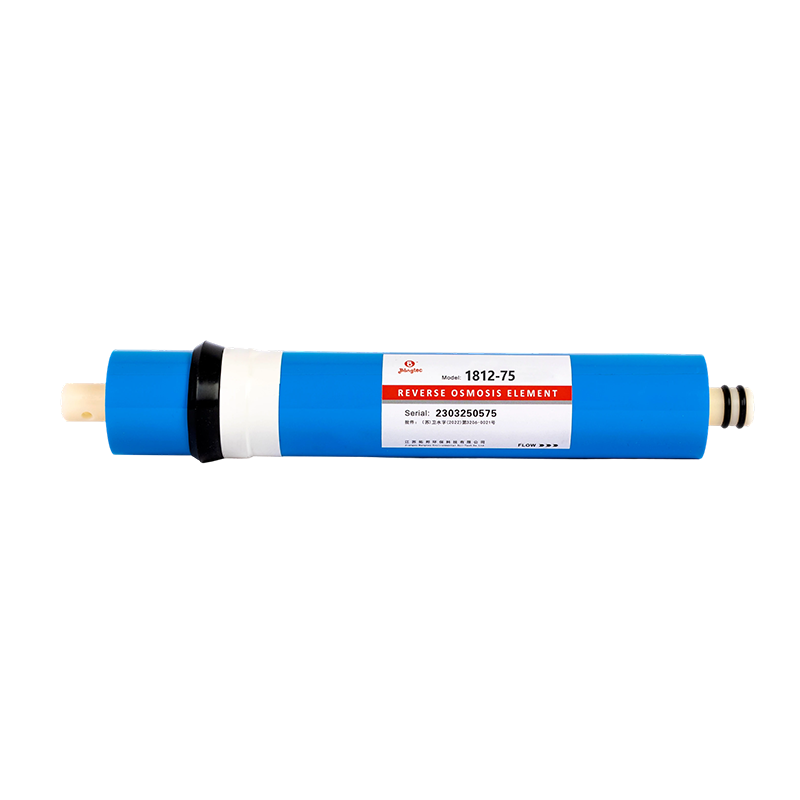
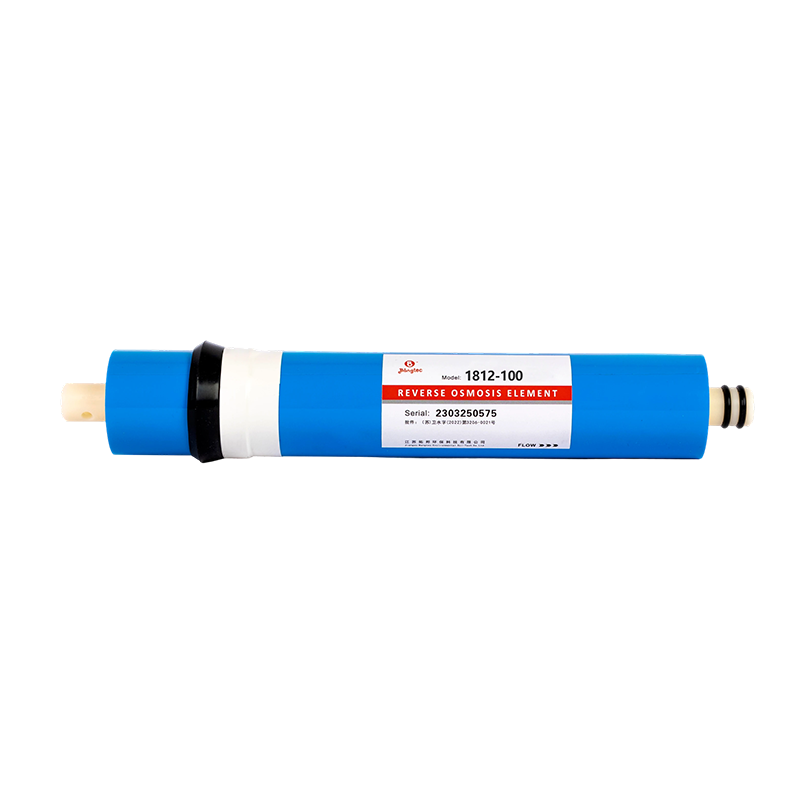
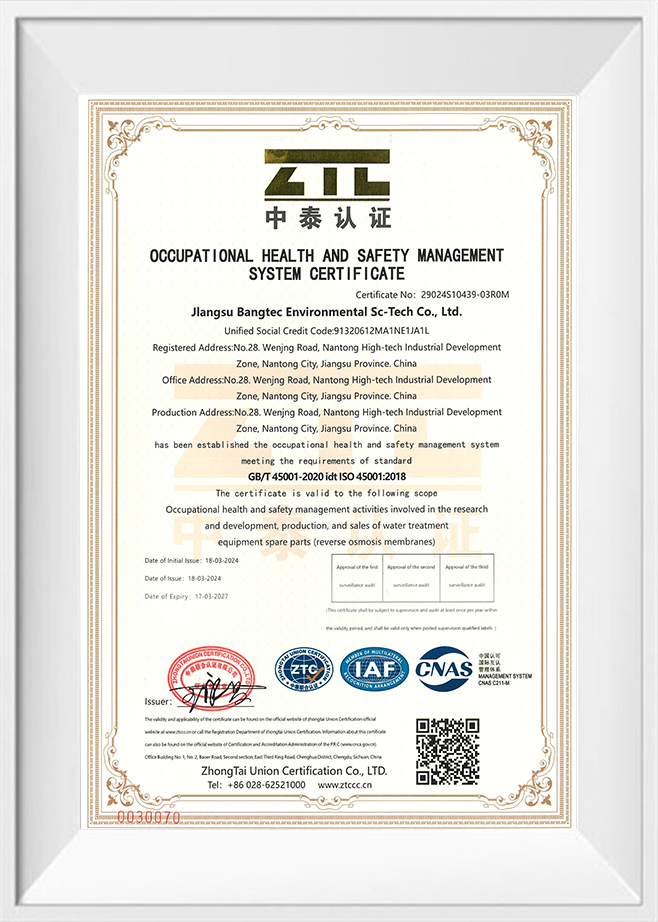
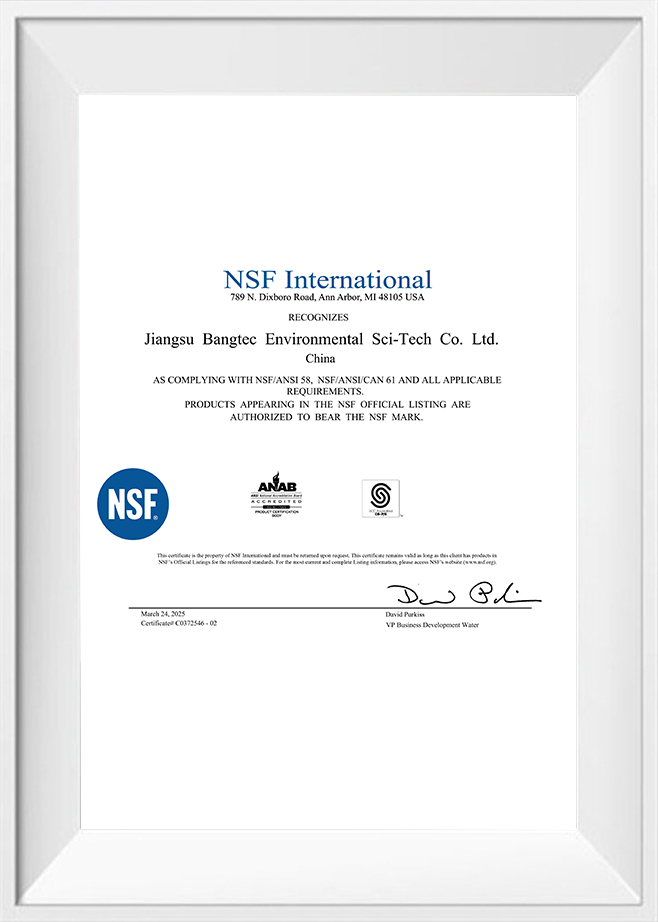
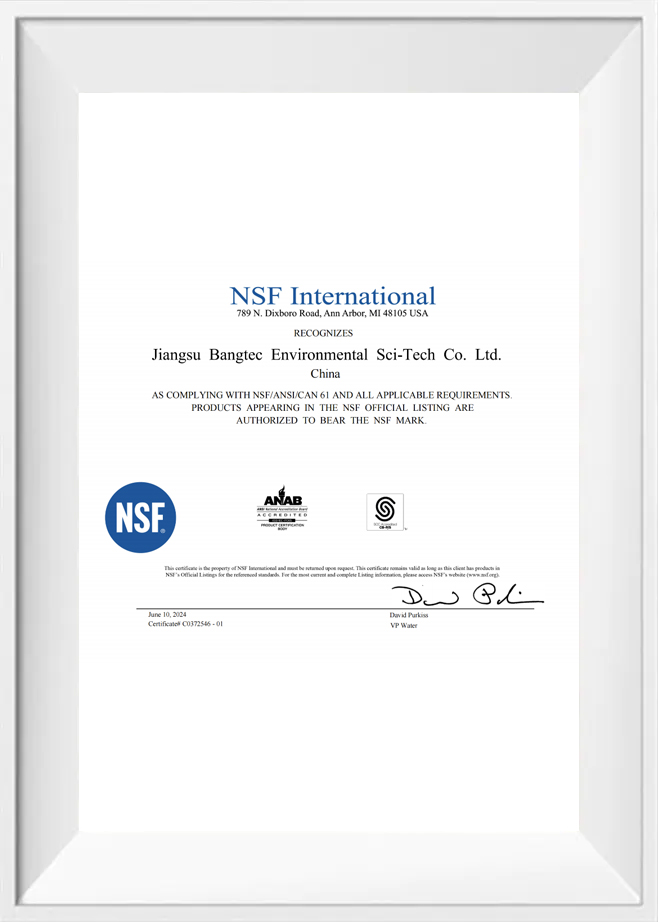
Domestic RO Membrane 1812 serves as the core filtration element in residential reverse osmosis water purification systems, utilizing thin-film composite (TFC) polyamide technology with a pore size of approximately 0.0001 microns. This membrane effectively rejects over 99% of dissolved solids, heavy metal ions, bacteria, and viruses from feed water. The designation "1812" follows the industry standard sizing convention, where "18" indicates a membrane diameter of 1.8 inches and "12" represents an element length of 12 inches. This standardized dimension ensures compatibility with the vast majority of residential RO systems available on the market. Daily production capacity spans from 50 to 100 gallons per day (approximately 190 to 380 liters), accommodating diverse household sizes and consumption patterns. As a significant contributor in the China Domestic RO Membrane 1812 sector, Jiangsu Bangtec Huachuang Sci-tech Co., Ltd. leverages a research team led by doctoral graduates from the Chinese Academy of Sciences and overseas high-level talents to drive the industrialization of advanced nanofiltration membrane products. The company's 1812 RO membrane series achieves industry-leading performance in salt rejection, permeate flow, and anti-fouling characteristics.
Core Performance Metrics and Selection Guide
The performance of 1812 RO membrane is primarily defined by three critical parameters: salt rejection rate, permeate flow rate, and operating pressure. Under standard test conditions (500 ppm NaCl solution, 25 degrees Celsius water temperature, 65 psi operating pressure, 15% recovery rate), the 50 GPD model delivers a stable salt rejection of 97% or higher with a daily pure water output of approximately 50 gallons (190 liters). The 75 GPD model increases production to 75 gallons (284 liters) per day while maintaining salt rejection between 97% and 98.5%. The 100 GPD variant further optimizes membrane area and feed channel geometry, achieving 100 gallons (379 liters) daily output at a reduced operating pressure of 50 psi, with stabilized salt rejection reaching 98%. These specifications demonstrate that 1812 RO membrane maintains exceptional ion retention capability even under low-pressure operation, significantly reducing energy consumption and pump noise for residential users.
| Model Specification |
Permeate Flow (GPD) |
Stable Salt Rejection |
Test Pressure |
Active Membrane Area |
Application Scenario |
| 1812-50 |
50 (190L/d) |
97% - 98% |
65 psi / 80 psi |
3.5 - 4.2 ft2 |
1-2 person household |
| 1812-75 |
75 (284L/d) |
97% - 98.5% |
65 psi / 80 psi |
4.2 ft2 |
3-4 person standard family |
| 1812-100 |
100 (379L/d) |
98% - 99% |
50 psi |
5.0 ft2 |
5+ person large household |
Structural Features and Material Composition
Domestic RO Membrane 1812 employs a spiral-wound configuration composed of three precisely laminated layers. The innermost layer consists of a cross-linked fully aromatic polyamide active separation film with a thickness of merely 0.2 microns, responsible for primary solute rejection. The intermediate layer comprises a polysulfone microporous support structure approximately 40 microns thick, providing mechanical reinforcement for the active layer while optimizing water distribution. The outermost layer utilizes a polyester non-woven fabric substrate around 120 microns thick, contributing overall structural integrity and durability. EPDM mesh spacers separate adjacent membrane sheets, creating independent flow channels for concentrate and permeate streams. This sandwich composite architecture enables 1812 RO membrane to maintain high selectivity while withstanding maximum operating pressures up to 200 psi (approximately 1.38 MPa). The continuous operation pH range extends from 3 to 10, with short-term cleaning tolerance spanning pH 2 to 11.
Primary Contaminant Rejection Capabilities
Based on the dual mechanisms of charge repulsion and size exclusion inherent to thin-film composite polyamide membranes, Domestic RO Membrane 1812 demonstrates differentiated rejection efficiencies across various water contaminants. For divalent and multivalent metal ions including calcium, magnesium, iron, aluminum, copper, nickel, and zinc, rejection rates typically range from 93% to 98%. Heavy metal pollutants such as lead, cadmium, and chromium achieve rejection rates of 95% to 98%. Anions including sulfate, phosphate, and thiosulfate exhibit rejection rates between 96% and 98%. Common anions such as fluoride, nitrate, and chloride show rejection rates of 90% to 95%. Microbial contaminants including viruses and bacteria are rejected at rates exceeding 99%. It is noteworthy that boron and borate exhibit relatively lower rejection rates of approximately 30% to 70%, primarily attributable to the weak ionization characteristics and small molecular size of boric acid. For applications requiring deep boron removal, supplementary post-treatment processes are recommended.
| Contaminant Category |
Typical Representatives |
Rejection Rate Range |
| Divalent metal ions |
Calcium, Magnesium, Iron, Copper, Zinc |
93% - 98% |
| Heavy metal ions |
Lead, Cadmium, Chromium, Mercury, Nickel |
94% - 98% |
| Common anions |
Sulfate, Phosphate, Fluoride |
92% - 98% |
| Monovalent ions |
Sodium, Potassium, Chloride, Nitrate |
90% - 96% |
| Microorganisms |
Viruses, Bacteria |
Greater than 99% |
Operating Conditions and Lifecycle Management
To ensure long-term stable operation of China Domestic RO Membrane 1812, strict control of feed water quality and operational parameters is essential. Feed water turbidity should remain below 1 NTU, with a Silt Density Index (SDI) not exceeding 5. Free residual chlorine concentration must be maintained below 0.1 ppm, as polyamide materials are sensitive to oxidizing agents. Continuous exposure to chlorine causes oxidative degradation of membrane polymer chains, resulting in irreversible salt rejection decline and permeate flow reduction. The optimal operating temperature is 25 degrees Celsius. For each 1 degree Celsius decrease in temperature, permeate flow decreases by approximately 2% to 3%, while salt rejection correspondingly improves. Conversely, elevated temperatures increase permeate flow but reduce salt rejection. Under standard municipal tap water conditions, the recommended replacement interval for 1812 RO membrane is 24 months or when permeate flow significantly declines, whichever occurs first. Bangtec's research and development team has optimized membrane coating processes and cross-linking density control, enabling their products to outperform industry averages in anti-fouling performance and service life, particularly in high-hardness water regions.
Application Scenarios and System Compatibility
Domestic RO Membrane 1812 is primarily deployed in the following applications: under-sink reverse osmosis purification systems providing drinking water quality for residential use; countertop instant-heating water dispensers serving office environments and small commercial premises; portable outdoor water purification devices compatible with recreational vehicles and camping equipment; and aquarium water treatment systems supplying low-TDS water for ornamental fish cultivation. The membrane element features a standard 2-inch inner diameter seal design, enabling direct installation in the majority of 1812 specification housings without additional adapters. As a professional manufacturer of 1812 RO membrane, Bangtec offers a comprehensive product portfolio covering 50 GPD through 100 GPD specifications, along with OEM and ODM customization services including brand logo printing, specialized feed channel design, and performance parameter calibration to meet the differentiated requirements of various water purification equipment manufacturers.
Frequently Asked Questions
What do the numbers in model 1812 represent
The number "18" indicates a membrane element outer diameter of 1.8 inches (approximately 46 mm), while "12" represents an element length of 12 inches (approximately 298 mm). This naming convention is an industry-wide standard that enables users to quickly identify physical dimensions and housing compatibility.
How to determine when membrane replacement is needed
Replacement is recommended when any of the following conditions occur: permeate flow decreases by more than 20% from initial values; product water TDS increases noticeably or taste deteriorates; the manufacturer-recommended 24-month service life is reached; or system pressure rises abnormally without corresponding flow increase. Bangtec recommends users test product water quality with a TDS meter every six months and maintain a service log.
What impact does chlorine in feed water have on the membrane
Thin-film composite polyamide membranes have a chlorine tolerance limit of 0.1 ppm. Continuous exposure to chlorine destroys amide bond structures in the membrane sheet, causing irreversible salt rejection decline. It is recommended to install activated carbon pre-filters or sodium bisulfite dosing systems upstream of the RO unit for dechlorination pretreatment. Bangtec's technical team provides comprehensive pretreatment solution design support for clients.
Can different GPD specifications be interchanged
All 1812 series GPD specifications share identical outer diameters and lengths, permitting physical installation in the same housing. However, higher GPD models typically require greater wastewater ratios to maintain adequate membrane surface flow velocity. Direct substitution without adjustment may cause increased concentration polarization and scaling risk. It is advisable to adjust the wastewater ratio accordingly or consult the equipment manufacturer when replacing membranes.
Is reduced permeate flow during winter normal
This is entirely normal. When water temperature drops from 25 degrees Celsius to 10 degrees Celsius, permeate flow may decrease by 40% to 50%, which is a physical characteristic of reverse osmosis membranes and does not indicate element failure. If winter production capacity becomes insufficient, consider upgrading to a higher GPD specification or installing a booster pump. Bangtec's 75 GPD and 100 GPD models maintain relatively stable performance in low-temperature environments.
Why is flushing required before first use
New membrane elements may retain trace amounts of protective solution, typically glycerin or food-grade preservatives. The initial permeate is not recommended for direct consumption. It is advised to operate the system continuously for 24 hours or discharge at least 3 to 5 tanks of water before connecting to the drinking water circuit, ensuring water safety and allowing the membrane to reach optimal stabilized condition.


 EN
EN  عربى
عربى