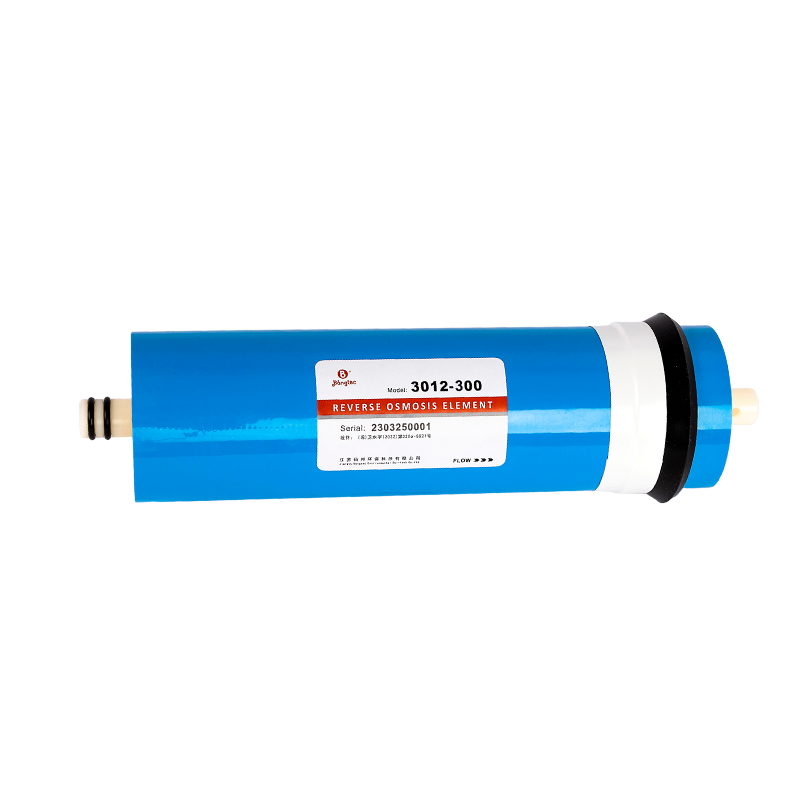
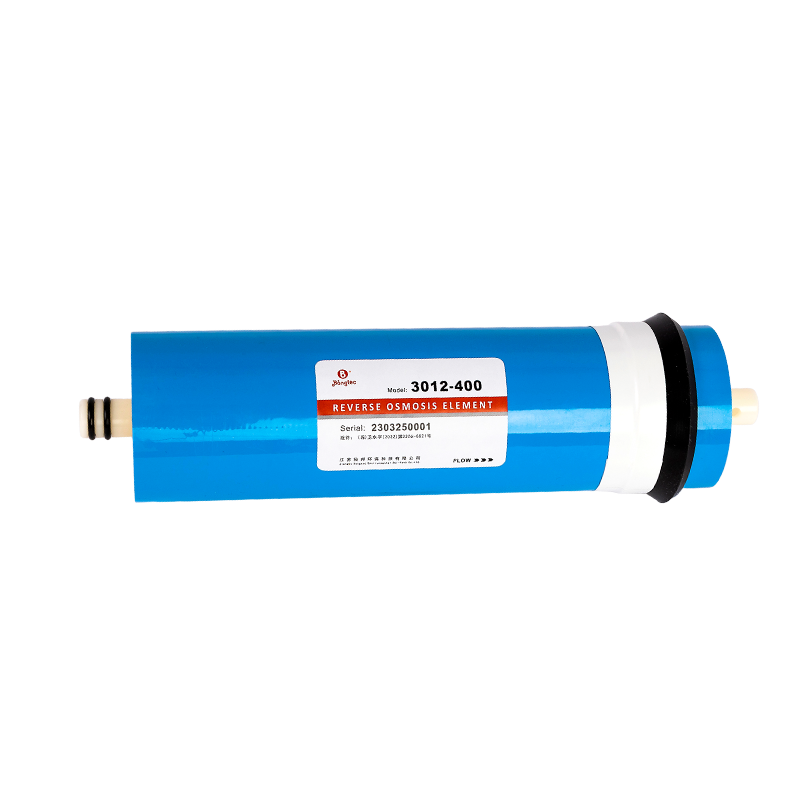
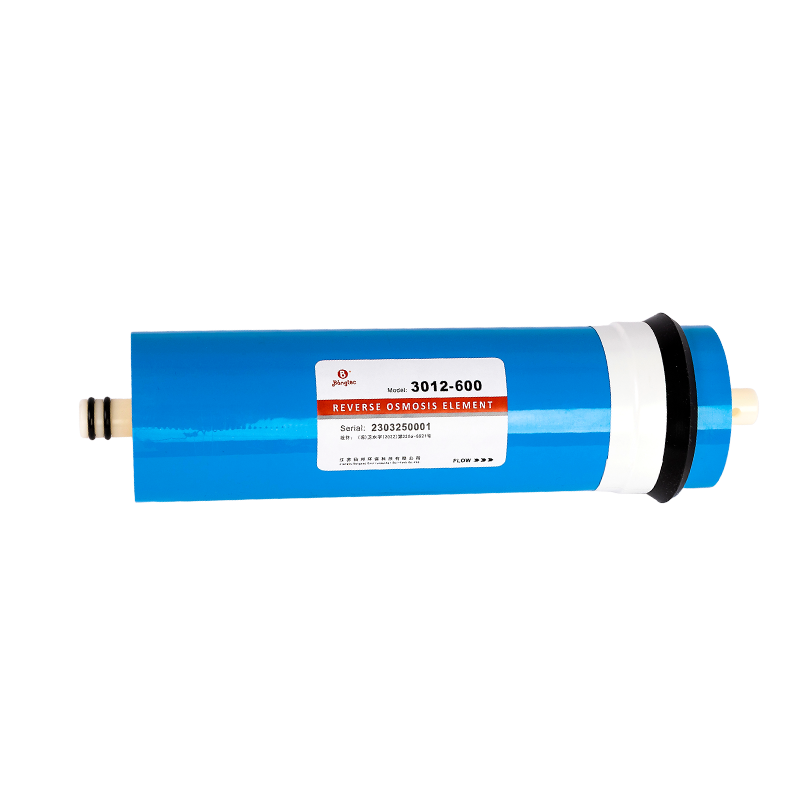
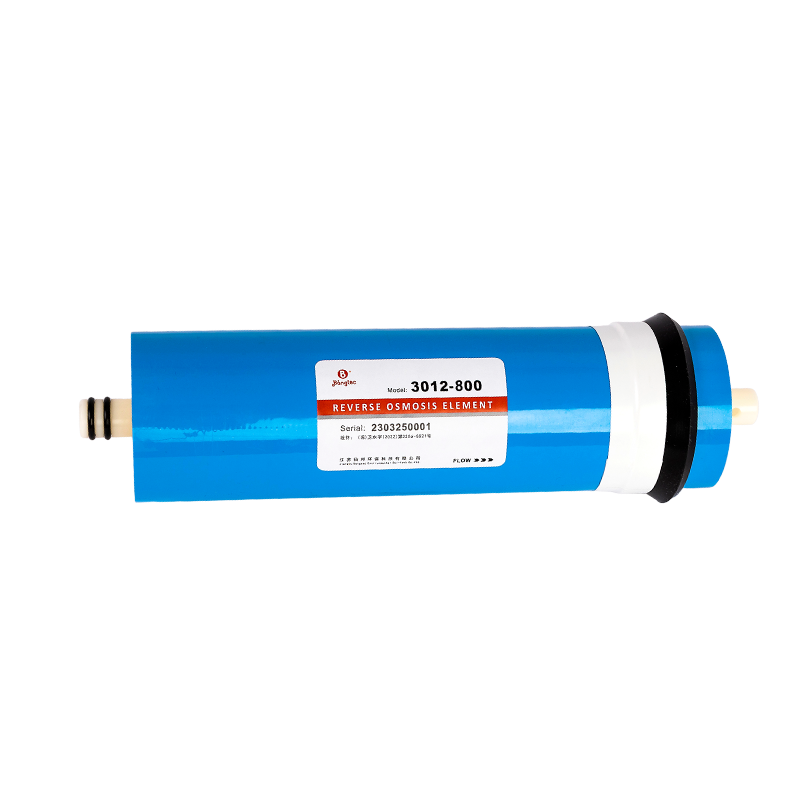
Domestic RO Membrane 3012 serves as the core filtration element in residential and light commercial reverse osmosis water purification systems. Utilizing thin-film composite (TFC) membrane technology, this element series offers rated permeate flow capacities ranging from 300 GPD to 800 GPD, making it suitable for large households, small restaurants, and office drinking water applications. Its standardized 3.0-inch outer diameter and 12-inch length design ensures compatibility with the vast majority of 3012-specification membrane housings available on the market, enabling straightforward installation and replacement. As the critical barrier in the reverse osmosis purification process, this membrane element effectively rejects dissolved salts, heavy metal ions, organic contaminants, and microorganisms from feed water, significantly reducing permeate conductivity and delivering safe, reliable drinking water for end users.
Core Performance Parameters and Specification Comparison
The Domestic RO Membrane 3012 series provides multiple flow rate options, allowing users to select the appropriate model based on actual water demand and source water conditions. The following table summarizes the performance parameters of mainstream models in this series, with data based on standard test conditions (NaCl concentration 250 ppm, temperature 25 degrees Celsius, pH 7.5, recovery rate 15%).
| Model |
Active Membrane Area |
Rated Permeate Flow |
Stable Rejection Rate |
Test Pressure |
| 3012-300 |
14 ft2 (1.30 m2) |
300 GPD (1.14 m3/d) |
97% - 98% |
100 psi (0.69 MPa) |
| 3012-400 |
Approx. 14 ft2 |
400 GPD (1.52 m3/d) |
97% - 99% |
100 psi (0.69 MPa) |
| 3012-500 |
Approx. 14 ft2 |
500 GPD (1.90 m3/d) |
97% - 98% |
100 psi (0.69 MPa) |
| 3012-600 |
Approx. 16 ft2 |
600 GPD |
96% - 98% |
100 psi (0.69 MPa) |
| 3012-800 |
Approx. 16 ft2 |
800 GPD |
96% - 98% |
100 psi (0.69 MPa) |
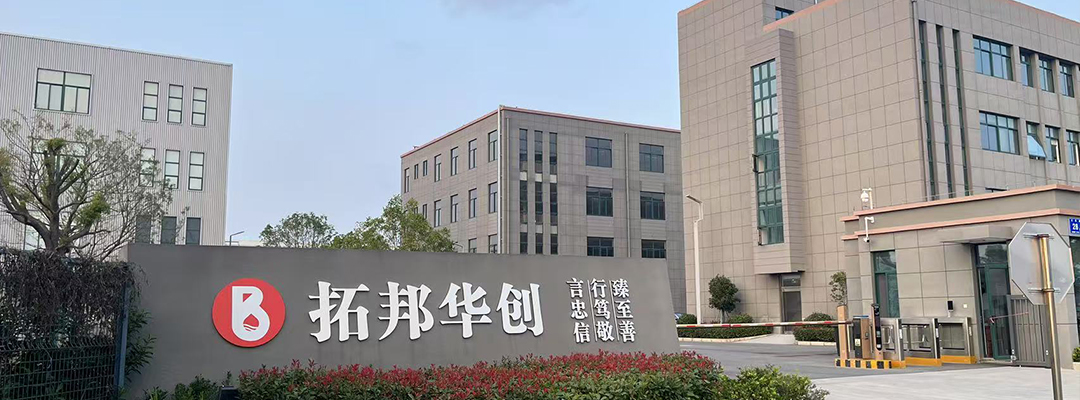
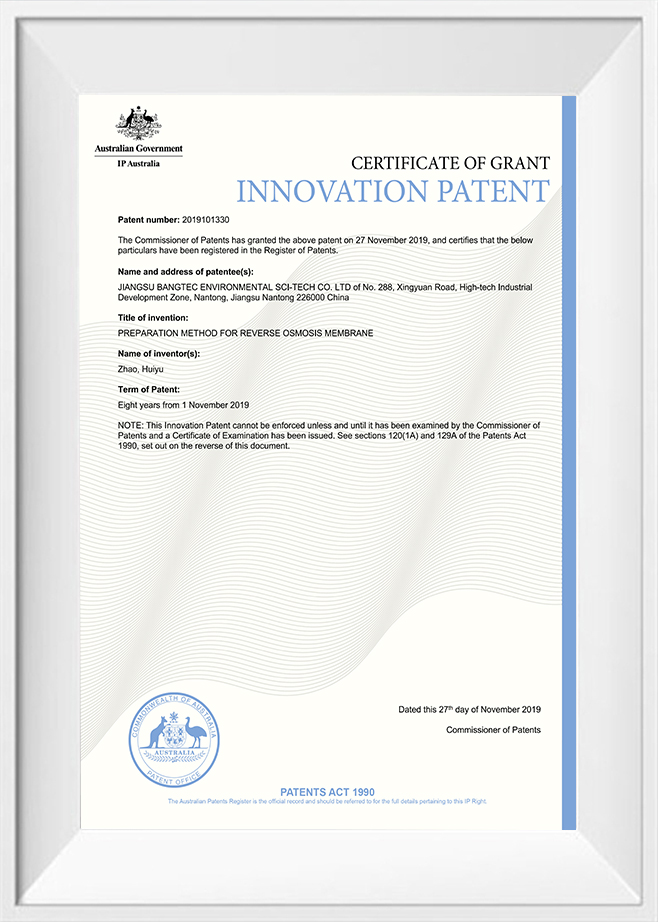
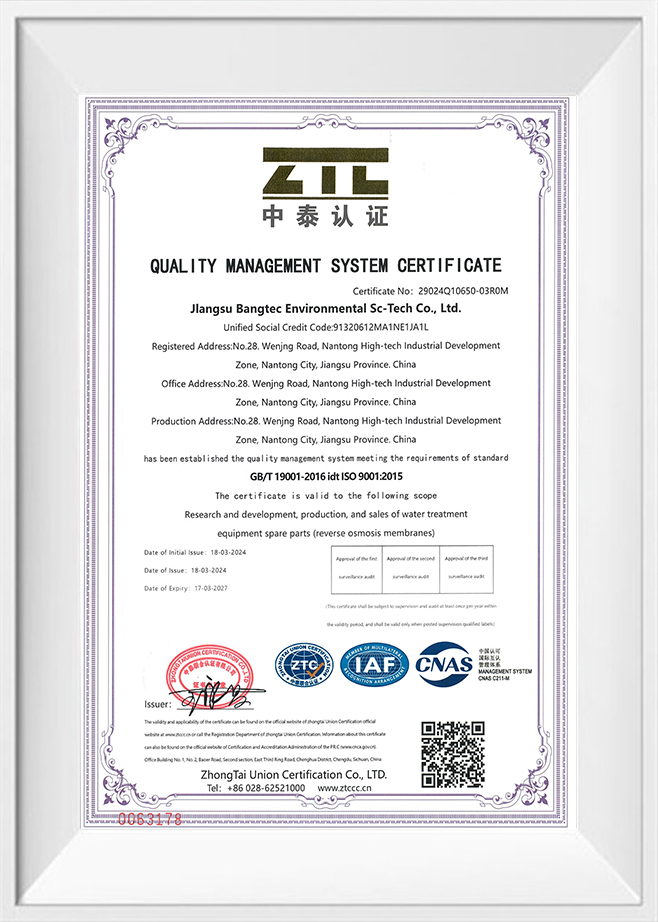
It should be noted that the actual permeate flow of a single membrane element may vary within plus or minus 15% of the rated value, which falls within the normal industry tolerance range. Jiangsu Bangtec Huachuang Sci-tech Co., Ltd. strictly implements ISO quality management systems during production to ensure performance consistency across every membrane element.
Applicable Water Sources and Operating Conditions
Properly matching source water conditions with membrane element operating parameters is essential for ensuring long-term stable system performance. The Domestic RO Membrane 3012 has specific requirements for feed water quality, and exceeding the defined limits will accelerate membrane fouling or cause irreversible damage.
| Operating Parameter |
Limit Range |
Notes |
| Maximum Feedwater Temperature |
45 degrees Celsius (113 degrees Fahrenheit) |
Exceeding this temperature will damage the membrane sheet structure |
| Maximum Working Pressure |
300 psi (2.07 MPa) |
Long-term overpressure operation shortens membrane lifespan |
| Continuous Operation pH Range |
3 - 10 |
Outside this range requires acid/alkali-resistant membrane models |
| Chemical Cleaning pH Range |
2 - 12 |
For periodic maintenance cleaning only |
| Feedwater Residual Chlorine |
Less than or equal to 0.1 ppm |
TFC membranes are chlorine-sensitive; activated carbon pre-treatment is required |
| Feedwater SDI15 |
Less than or equal to 5.0 |
High SDI causes rapid membrane surface scaling |
| Maximum Pressure Drop per Element |
10 psi (0.07 MPa) |
Abnormal pressure drop indicates flow channel blockage |
In practical applications, when raw water TDS concentration ranges between 500 ppm and 2500 ppm, the 3012 series membrane elements can maintain stable salt rejection performance. For high-hardness water sources with TDS exceeding 2000 ppm, it is recommended to combine the system with pre-treatment softening or antiscalant dosing to extend the membrane element replacement cycle.
Typical Application Scenarios
The Domestic RO Membrane 3012, with its large effective membrane area and high permeate flow characteristics, performs exceptionally well in the following scenarios:
- Large Household Direct Drinking Water Systems: Meeting the daily drinking, cooking, and washing water needs of 5 to 8 person households, with daily pure water production reaching 1.1 to 3.0 cubic meters.
- Small Restaurants and Coffee Shops: Providing low-TDS purified water for espresso machines, ice makers, and direct drinking faucets, preventing scale deposition from affecting equipment performance.
- Office Pantry Water Purification: Supporting office environments with 20 to 50 employees, reducing bottled water procurement and storage costs.
- Aquarium and Laboratory Water: Delivering low-ion-concentration water sources to meet the water purity requirements for ornamental fish breeding and basic laboratory applications.
Taking the 3012-400 model as an example, under standard test conditions it produces approximately 1.52 cubic meters of pure water daily. Calculated at 5 liters per person per day for drinking and cooking, it can easily cover peak daily water demand for over 300 people, with redundant design effectively handling holidays or gathering occasions.
Installation and Maintenance Guidelines
The service life of membrane elements is closely related to installation standards and routine maintenance. The following guidelines can help users maximize the economic benefits of membrane elements:
- Initial Flush: When installing a new membrane element or restarting after extended downtime, it is recommended to continuously discharge the first tank of permeate for at least one hour to remove protective solution and manufacturing residues from the membrane surface.
- Maintain Membrane Hydration: Once wetted, membrane elements must remain continuously hydrated; drying will cause permanent flux decline. If the system must be shut down for more than 7 days, membrane elements should be immersed in food-grade preservative solution for storage.
- Avoid Chlorine Exposure: TFC membrane sheets are extremely sensitive to free chlorine, and continuous exposure will cause irreversible salt rejection decline. Ensure activated carbon filtration or sodium bisulfite dosing is installed upstream of the RO membrane to maintain feedwater residual chlorine below 0.1 ppm.
- Periodic Chemical Cleaning: When permeate flow declines by 10% to 15%, or operating differential pressure increases by more than 15%, this indicates inorganic scaling or organic fouling on the membrane surface, requiring acid or alkaline cleaning according to established protocols.
- Replacement Interval Recommendation: Under municipal tap water sources with proper maintenance, the recommended replacement interval for Domestic RO Membrane 3012 is 18 to 24 months. For high-TDS or high-fouling water sources, this should be shortened to 12 to 18 months.
Purchasing Recommendations
As a Domestic RO Membrane 3012 Supplier, Jiangsu Bangtec Huachuang Sci-tech Co., Ltd. recommends that buyers focus on the following dimensions when selecting membrane elements:
| Selection Dimension |
Recommended Standard |
| Flow Rate Matching |
Calculate based on household population times 5 liters per person per day, plus 30% peak margin |
| Rejection Rate Verification |
Request third-party test reports from suppliers with stable rejection rate no less than 96% |
| Membrane Sheet Material |
Prioritize TFC polyamide composite membranes for superior rejection and chemical stability over cellulose acetate |
| Dimensional Compatibility |
Confirm housing inner diameter of 3.0 inches and length of 12 inches to avoid model mismatch |
| Certification Credentials |
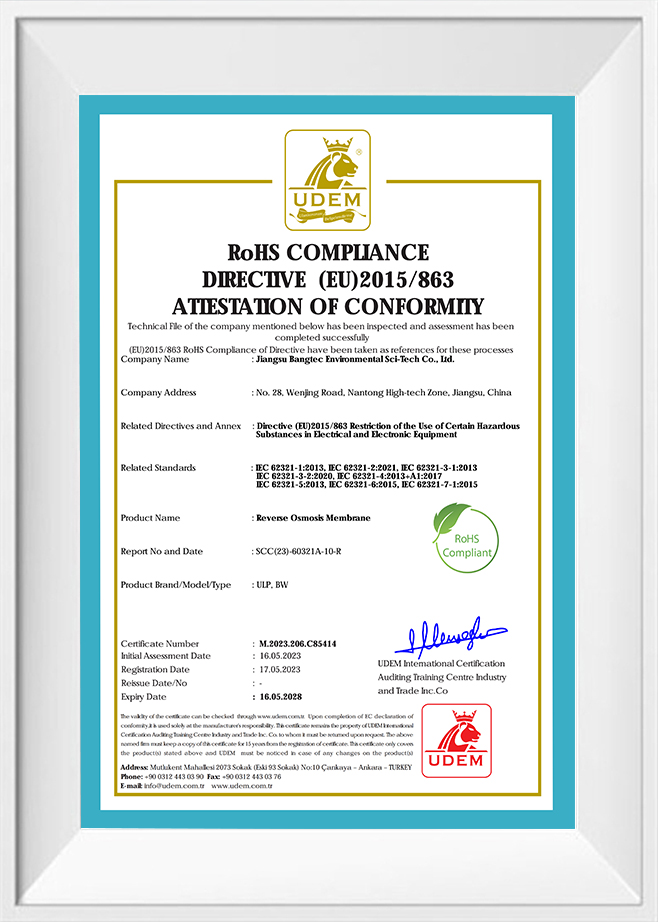
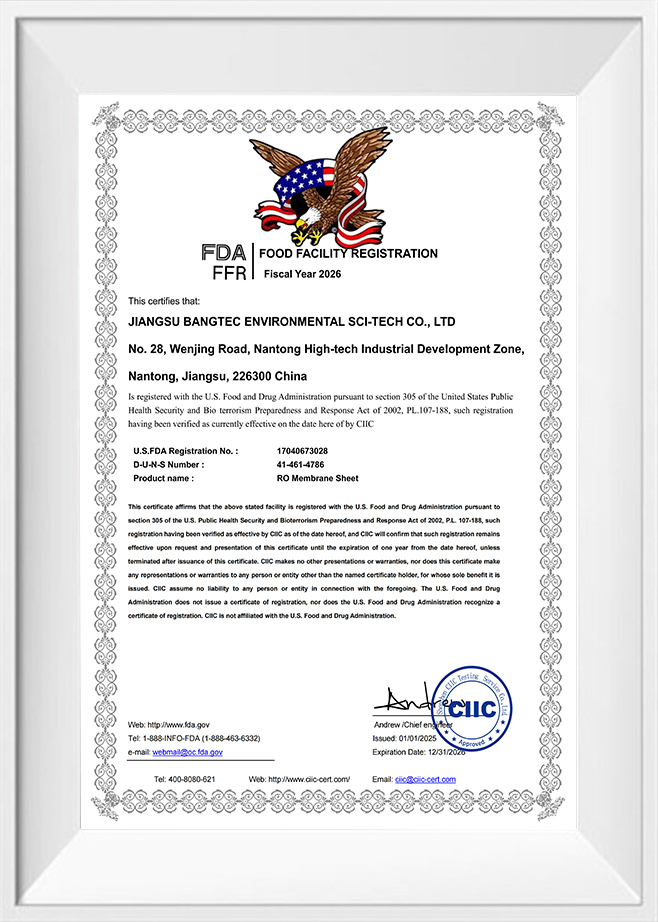
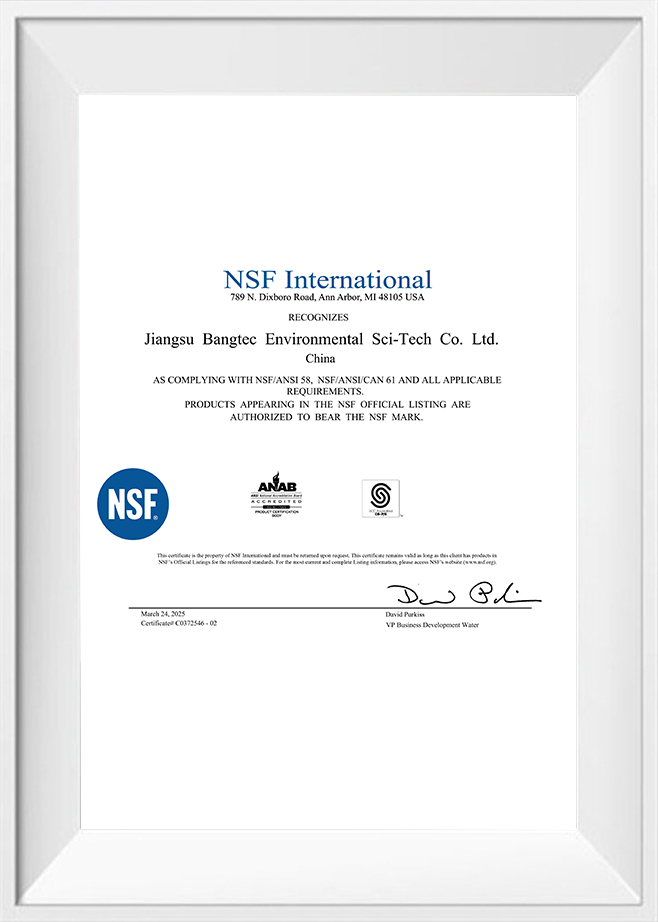
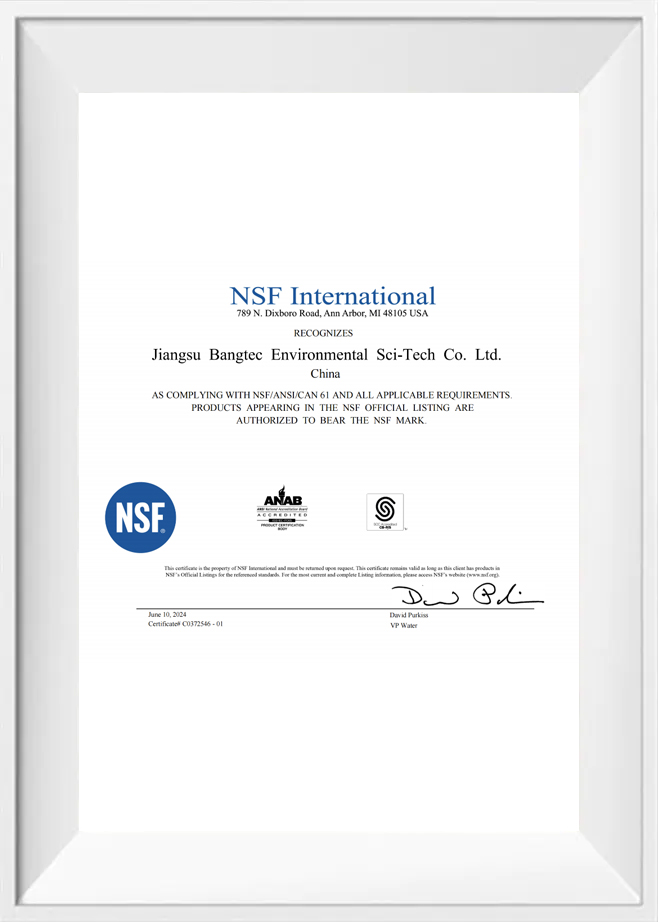
Look for NSF/ANSI 58 material safety certification and ISO 9001 quality management system certification |
Additionally, it is advisable to prioritize brands that provide complete technical parameter sheets and after-sales technical support, enabling rapid access to professional guidance when operational anomalies occur.
Frequently Asked Questions
What does the 3012 designation in Domestic RO Membrane 3012 represent?
3012 is an industry-standard size code, where "30" indicates the membrane element outer diameter of 3.0 inches (approximately 76.2 millimeters), and "12" indicates the membrane element length of 12 inches (approximately 298 millimeters). This standardized sizing ensures compatibility with the vast majority of 3012-specification membrane housings.
What are the differences between the 3012 series and 1812 series membrane elements?
The 1812 series has an outer diameter of 1.8 inches with permeate flow typically ranging from 50 to 100 GPD, suitable for small households or single-person use. The 3012 series has an outer diameter of 3.0 inches with a larger effective membrane area, offering flow capacities from 300 to 800 GPD, making it better suited for large households and light commercial applications.
How can I determine if a membrane element needs replacement?
Replacement is recommended when any of the following occurs: permeate flow declines by more than 20%, salt rejection noticeably decreases (permeate TDS rises), operating differential pressure continuously increases and cannot be restored after cleaning, or the membrane element has been in service for more than 24 months.
Can the 3012 membrane element remove bacteria and viruses from water?
Reverse osmosis membranes have pore sizes of approximately 0.0001 microns (1 angstrom), which is significantly smaller than bacteria (approximately 0.5 to 5 microns) and viruses (approximately 0.02 to 0.3 microns), theoretically enabling efficient rejection. However, for hygiene safety, RO membranes should not be relied upon as the sole microbial barrier; UV sterilization or post-activated carbon should be retained in the system.
What impact does high-TDS source water have on the 3012 membrane element?
Elevated TDS increases osmotic pressure, reducing permeate flow at the same operating pressure while increasing scaling risk on the concentrate side. When raw water TDS exceeds 1500 ppm, it is recommended to increase operating pressure (within the membrane element limits) or add pre-treatment softening, and shorten the cleaning cycle accordingly.
Can a membrane element continue to be used after it has dried out?
Once dried, the polyamide layer inside TFC membrane sheets undergoes irreversible shrinkage, causing permanent decline in both permeate flow and salt rejection. If a membrane element accidentally dries out, replacement with a new element is recommended rather than attempting to re-wet and reuse the dried element.


 EN
EN  عربى
عربى