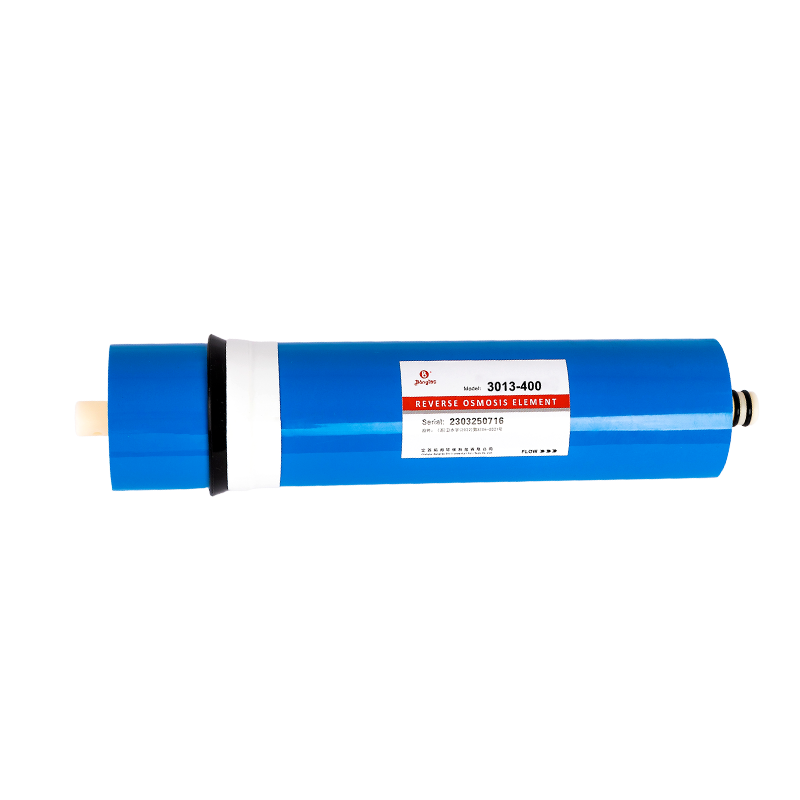
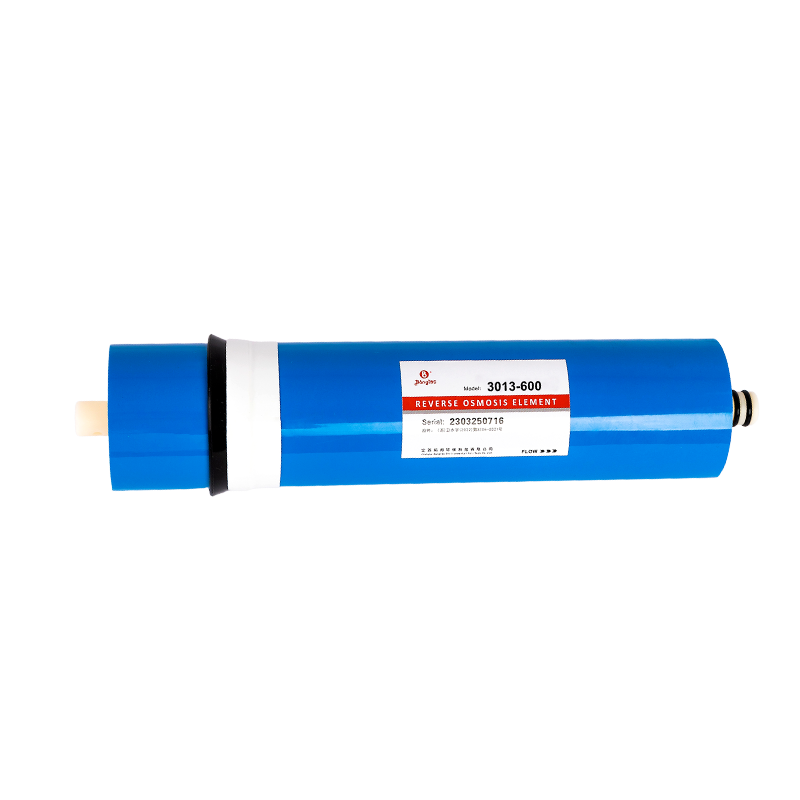
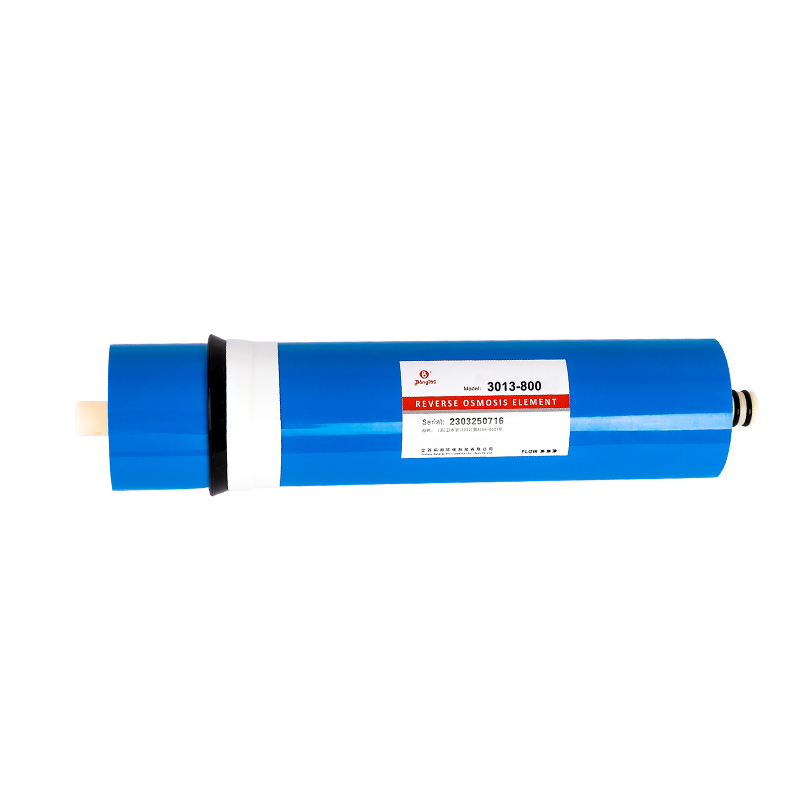
Domestic RO Membrane 3013 is a high-performance reverse osmosis membrane element designed for residential water purification applications. Featuring a standard 3013 dimension, it is compatible with under-sink RO systems, countertop purification units, and various household terminal filtration devices. The membrane delivers excellent salt rejection, stable water output, and reliable anti-fouling performance, serving as the core component for deep purification of drinking water in homes. Jiangsu Bangtec Huachuang Sci-tech Co., Ltd., as a professional China Domestic RO Membrane 3013 supplier, leverages a research team led by doctoral graduates from the Chinese Academy of Sciences to continuously advance membrane technology industrialization.
Product Positioning and Technical Specifications
The 3013 RO membrane represents a standard specification in the residential reverse osmosis market, where "30" denotes a membrane diameter of 3.0 inches and "13" indicates an element length of 13 inches. This dimensional standard is widely adopted across the household water purification industry, balancing filtration efficiency with equipment space requirements.
| Parameter |
Typical Value |
Description |
| Element Diameter |
3.0 inches |
Standard residential size, compatible with mainstream housings |
| Element Length |
13 inches |
Provides sufficient membrane area for stable production |
| Applicable Water Source |
Municipal tap water |
Optimized for Chinese water quality characteristics |
| Typical Salt Rejection |
Greater than or equal to 97% |
Effectively removes heavy metals, bacteria, and dissolved solids |
| Typical Water Output |
200-400 GPD |
Meets daily drinking needs for 3-5 person households |
| Operating Pressure Range |
0.1-0.4 MPa |
Compatible with both pump-assisted and pump-free systems |
| pH Tolerance Range |
2-11 |
Wide pH adaptability for varying water conditions |
| Maximum Operating Temperature |
45 degrees Celsius |
Satisfies typical residential ambient requirements |
Core Technical Advantages
The Domestic RO Membrane 3013 incorporates multiple technical strengths in material selection and manufacturing process control:
Polyamide Composite Technology: Utilizing Thin Film Composite (TFC) technology, an ultra-thin polyamide functional layer is coated onto a polysulfone support layer, with the functional layer typically controlled below 0.2 micrometers in thickness. This structure enables high permeability while maintaining excellent ion rejection capability.
Anti-Fouling Surface Treatment: Addressing regional water quality challenges including elevated hardness and residual chlorine, the membrane surface undergoes hydrophilic modification to reduce organic matter and colloid deposition, extending element service life to 2-3 years under normal conditions.
Broad Pressure Adaptability: The 3013 RO membrane operates stably across a wide pressure range of 0.1-0.4 MPa, suitable for both premium pump-equipped purification equipment and pump-free systems relying on municipal water pressure.
Application Scenarios and Selection Guidance
China Domestic RO Membrane 3013 primarily serves the following application scenarios:
| Application |
Compatible Equipment |
Selection Focus |
| Under-sink RO System |
50-100 GPD units |
Salt rejection stability and waste water ratio |
| Countertop Instant-Heat Purifier |
Compact integrated devices |
Fast water delivery and low noise operation |
| Small Commercial Water Station |
200-400 GPD units |
Continuous operation durability |
| Rural Residential Purification |
Pre-filter plus RO combination |
Pre-treatment pairing for extended membrane life |
Maintenance and Replacement Schedule
Membrane performance degradation occurs gradually. Users can assess replacement needs through the following indicators:
When water output declines by more than 30% from initial values, significant membrane surface fouling or blockage has likely occurred. When salt rejection drops below 90%, the permeate TDS level will rise noticeably, compromising drinking water safety. When the waste water ratio increases from an initial 1:1 to 1:3 or higher, membrane flux has substantially deteriorated. Users are advised to test permeate TDS levels every 12-18 months and establish replacement schedules based on local water quality conditions.
Industry Certifications and Quality Assurance
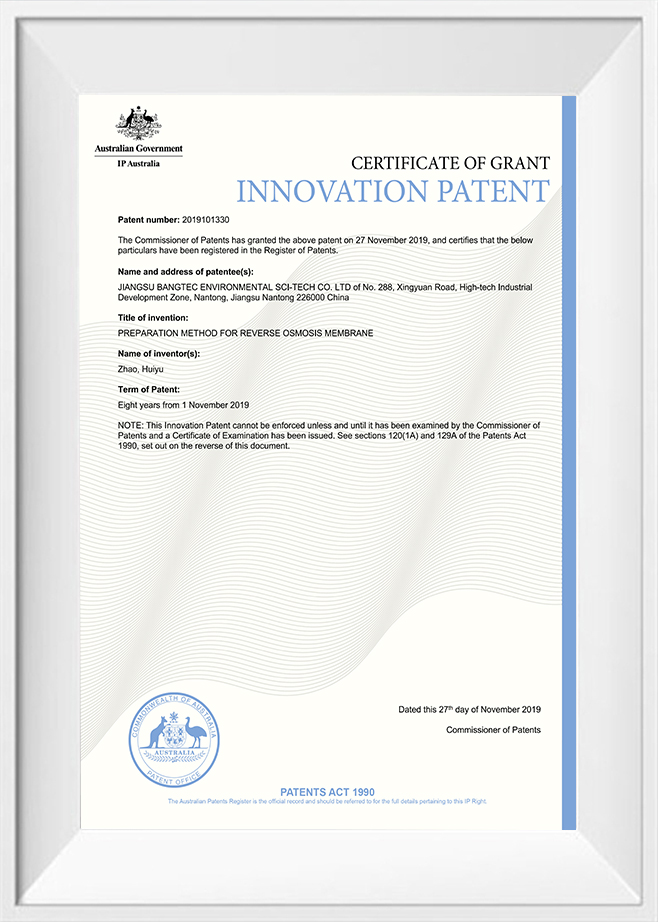
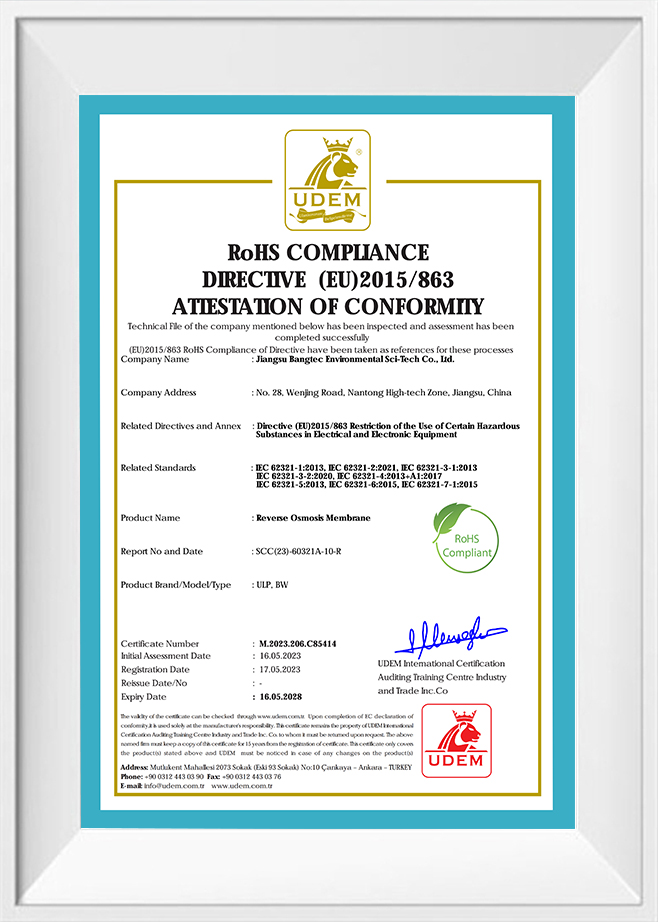
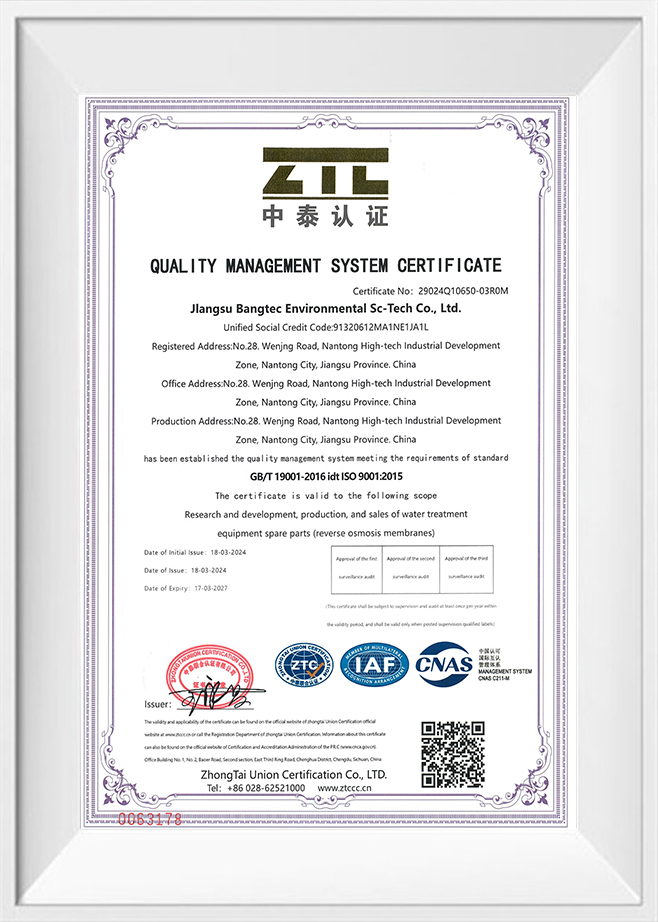
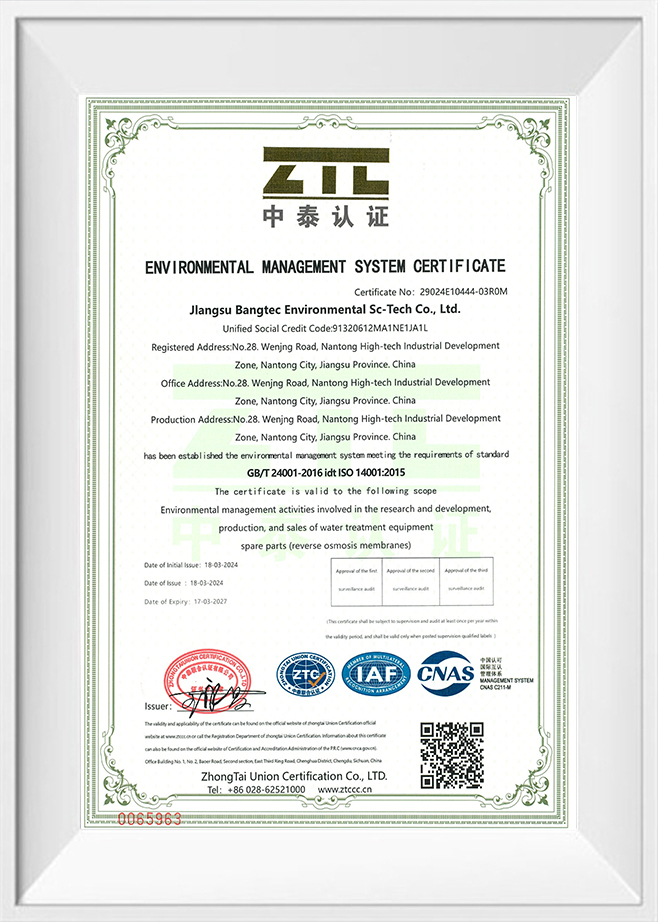
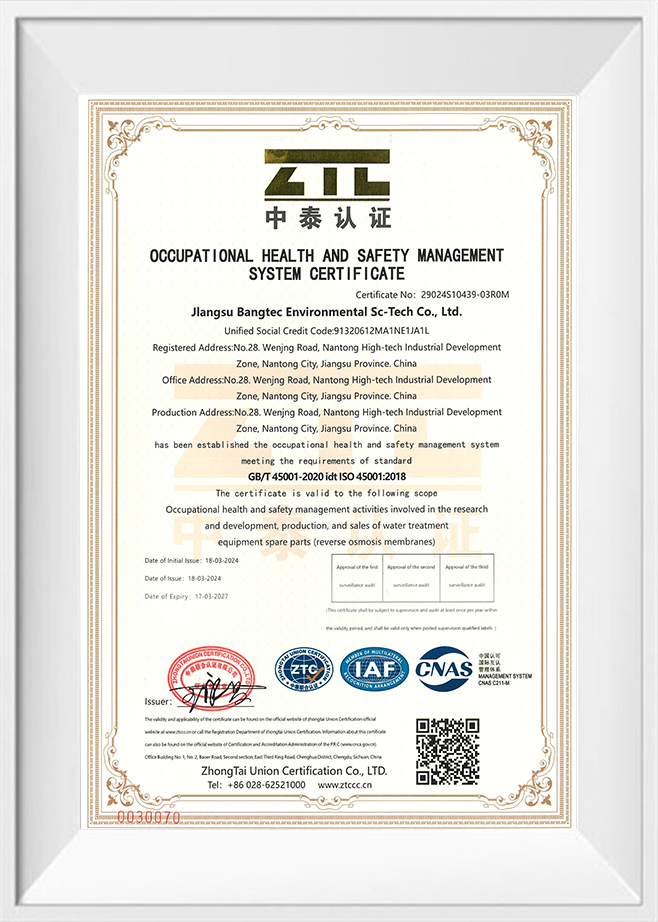
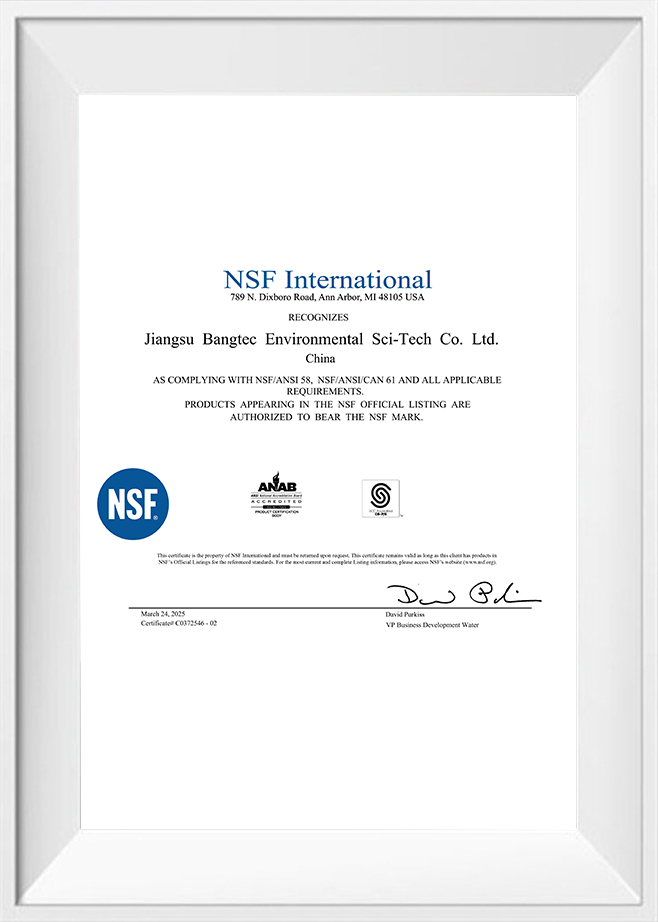
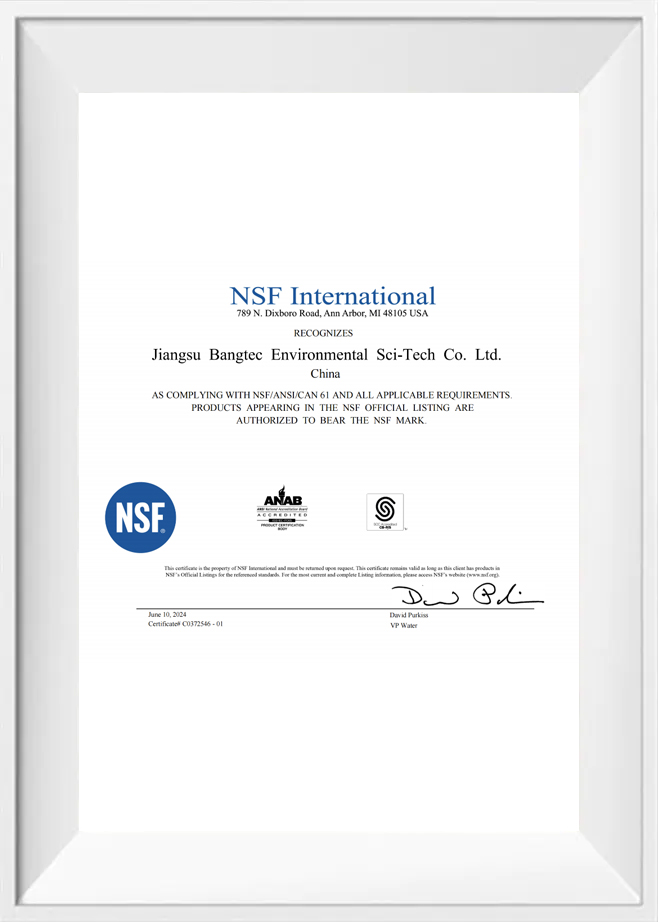
Within the membrane manufacturing sector, certification systems serve as critical benchmarks for product quality evaluation. Jiangsu Bangtec Huachuang Sci-tech Co., Ltd. has obtained the Triple Standards Integration Management System, encompassing ISO9001 Quality Management System, ISO14001 Environmental Management System, and ISO45001 Occupational Health and Safety Management System certifications. The company's products also hold CE certification and Jiangsu Provincial Water-related Product Approval. With multiple domestic and international invention patents and three overseas R&D institutions, the company continuously drives membrane material technology advancement.
Frequently Asked Questions
What salt rejection rate can the Domestic RO Membrane 3013 achieve
Under standard test conditions (25 degrees Celsius, 2000 ppm NaCl solution, 0.55 MPa operating pressure), the 3013 RO membrane typically achieves salt rejection greater than or equal to 97%, effectively removing heavy metal ions including lead, arsenic, and cadmium, as well as bacteria and viruses.
What is the normal service life of the membrane element
Under municipal tap water conditions with proper pre-filtration using PP sediment and activated carbon cartridges, the Domestic RO Membrane 3013 typically delivers 24-36 months of service life. In areas where water hardness exceeds 300 ppm or chlorine residual is elevated, replacement intervals should be shortened to 18-24 months.
What distinguishes the 3013 specification from the 1812 specification
The 1812 membrane element features a 1.8-inch diameter and 12-inch length, primarily used in early low-capacity purification systems. The 3013 membrane element, with its 3.0-inch diameter and 13-inch length, provides approximately 60%-80% greater membrane area and water output, better suited to modern household demands for high-flow purification.
How can users determine when membrane replacement is needed
Users can measure TDS values of both purified water and tap water using a TDS meter to calculate salt rejection. Replacement is recommended when salt rejection falls below 90%, water output declines by more than 30% from initial levels, or the waste water ratio increases significantly.
What are the differentiated advantages of Bangtec membrane products
Jiangsu Bangtec Huachuang Sci-tech Co., Ltd. is led by a research team of doctoral graduates from the Chinese Academy of Sciences, offering product lines covering high, medium, and low-pressure reverse osmosis membranes along with anti-fouling reverse osmosis membranes. The company's membrane products have reached internationally leading performance levels and are widely applied in photovoltaic, lithium battery, steel, power, chemical, textile printing and dyeing, and coal chemical industries.


 EN
EN  عربى
عربى