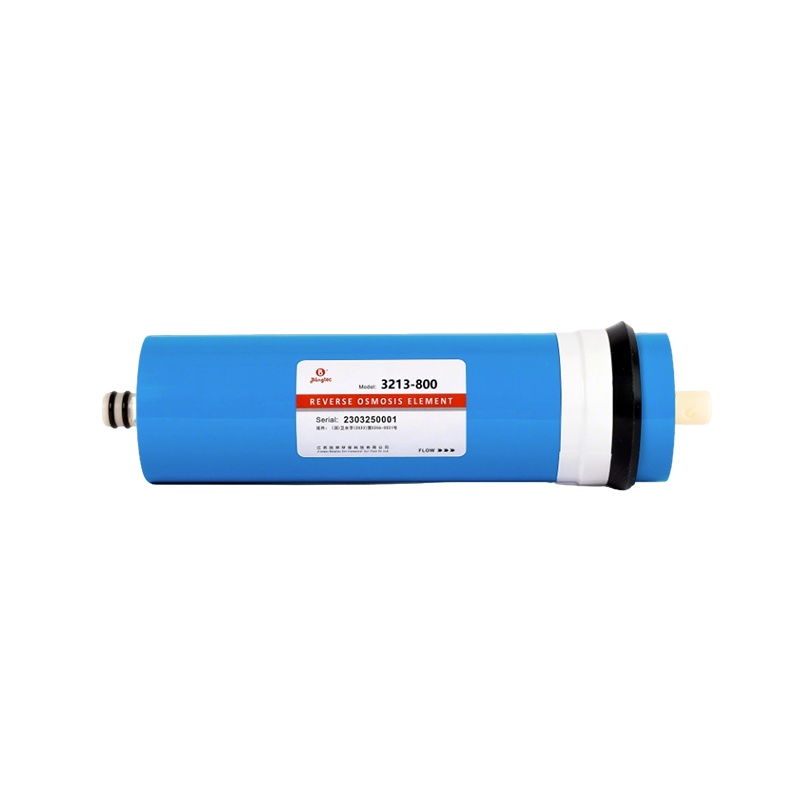
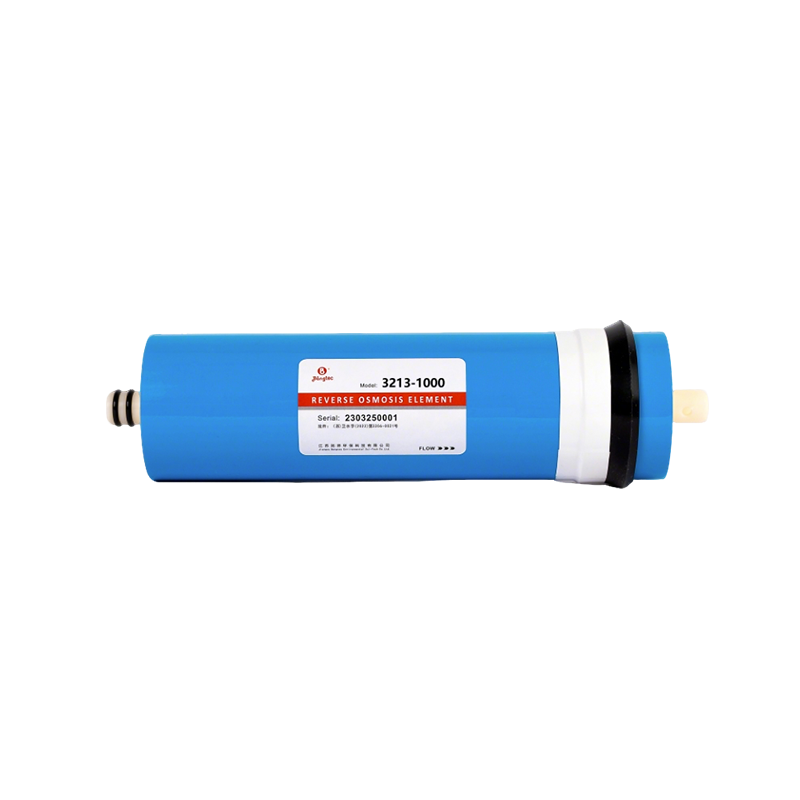
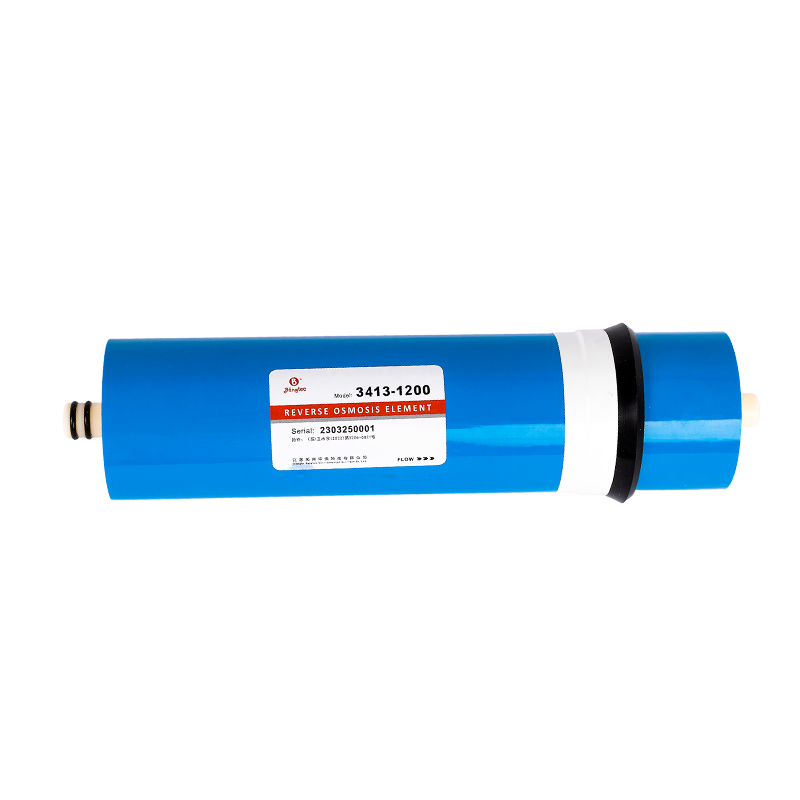
Domestic RO Membrane serves as the core filtration component in residential water purification systems. With pore sizes as small as 0.0001 microns, it effectively intercepts heavy metal ions, bacteria, viruses, and organic contaminants, producing purified water suitable for direct consumption. As a leading China Domestic RO Membrane manufacturer, Jiangsu Bangtec Huachuang Sci-tech Co., Ltd. leverages a research team comprising doctoral graduates from the Chinese Academy of Sciences and overseas high-level talents to develop a comprehensive product portfolio covering high-pressure, low-pressure, ultra-low-pressure, and anti-fouling Domestic RO Membrane series, widely applied in household water purification, commercial drinking water, and industrial pure water preparation.
Core Conclusion: Domestic RO Membranes Have Achieved International Competitiveness
Through years of technological accumulation, Domestic RO Membrane products from Chinese manufacturers have reached internationally leading levels in key indicators such as salt rejection rate, water production capacity, and service life. As a professional Domestic RO Membrane Manufacturer, Jiangsu Bangtec Huachuang Sci-tech Co., Ltd. has achieved full-process independent control from membrane sheet substrates to finished membrane elements through self-developed core formulations and coating processes, breaking the long-standing technical dependence on imported brands.
Domestic RO Membrane Product Categories and Technical Parameters
Based on differences in operating pressure and filtration performance, Domestic RO Membrane products can be classified into multiple subcategories. The following table summarizes the core parameter comparisons of mainstream product types:
| Product Type |
Operating Pressure (MPa) |
Salt Rejection (%) |
Water Production (GPD) |
Typical Application |
| Domestic High Rejection Membrane |
0.5 - 0.8 |
≥ 98.5 |
50 - 100 |
Household water purification in high-hardness water areas |
| Domestic High Flow Membrane |
0.4 - 0.6 |
≥ 97.0 |
400 - 800 |
Tankless high-flow water purifiers |
| Domestic ULP Membrane |
0.15 - 0.3 |
≥ 96.0 |
75 - 150 |
Energy-saving purification in low-pressure water supply environments |
| Domestic XLP Membrane |
0.08 - 0.15 |
≥ 95.0 |
50 - 100 |
Ultra-low-pressure water purification in rural and old residential areas |
| Domestic Ro Membrane Element |
0.3 - 0.8 |
≥ 97.0 |
50 - 800 |
General-purpose household and commercial water purification systems |
Technical Principles and Filtration Mechanism
The working principle of Domestic RO Membrane is based on the selective permeability of semi-permeable membranes. Under externally applied pressure exceeding the osmotic pressure of the solution, water molecules can pass through the membrane layer while dissolved salts, heavy metal ions (such as lead, cadmium, and arsenic), bacteria (particle size approximately 0.5 - 5 microns), and viruses (particle size approximately 0.02 - 0.3 microns) are effectively intercepted. Taking Domestic High Rejection Membrane as an example, its sodium chloride rejection rate can reach above 98.5%, and its total dissolved solids (TDS) removal rate remains stable in the range of 95% - 99%.
Domestic ULP Membrane and Domestic XLP Membrane employ special membrane sheet formulations and flow channel designs, maintaining high salt rejection performance while significantly reducing operating pressure. This technological breakthrough enables users in areas with insufficient municipal water supply pressure (typically 0.1 - 0.3 MPa) to achieve stable water purification without additional booster pumps, substantially reducing equipment operating energy consumption and noise.
Quality Certification System of Domestic RO Membrane Supplier
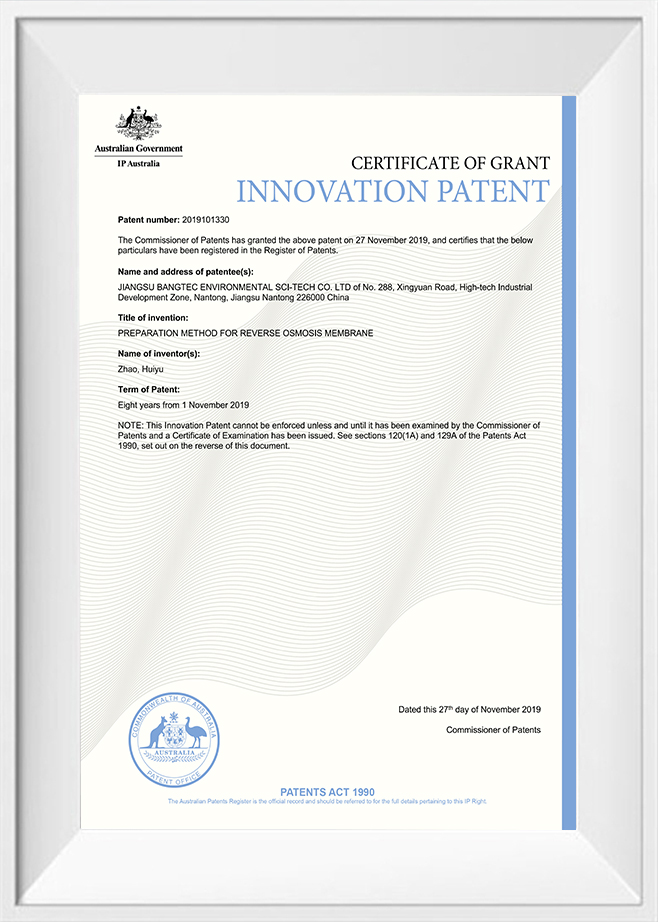
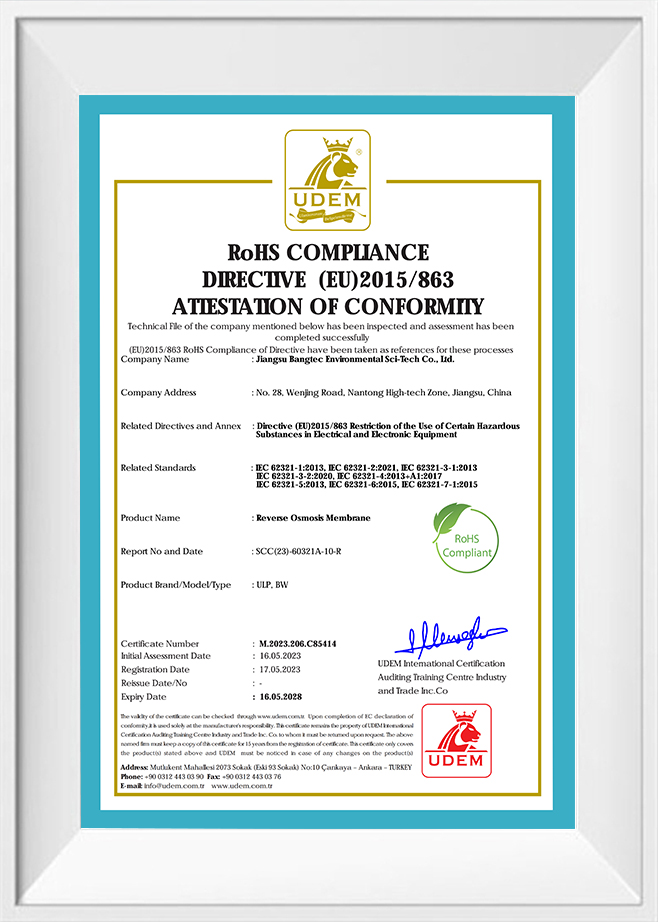
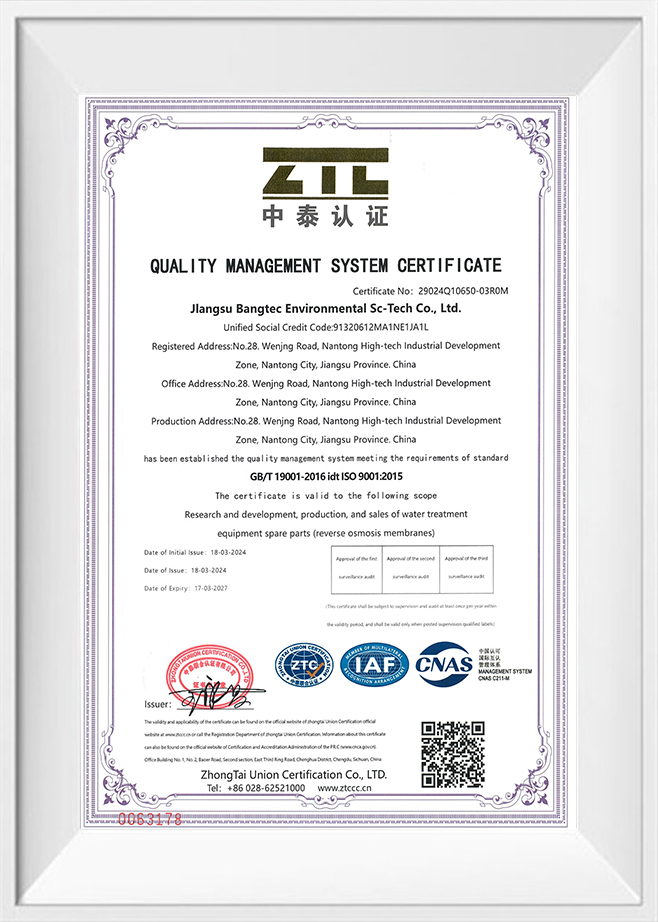
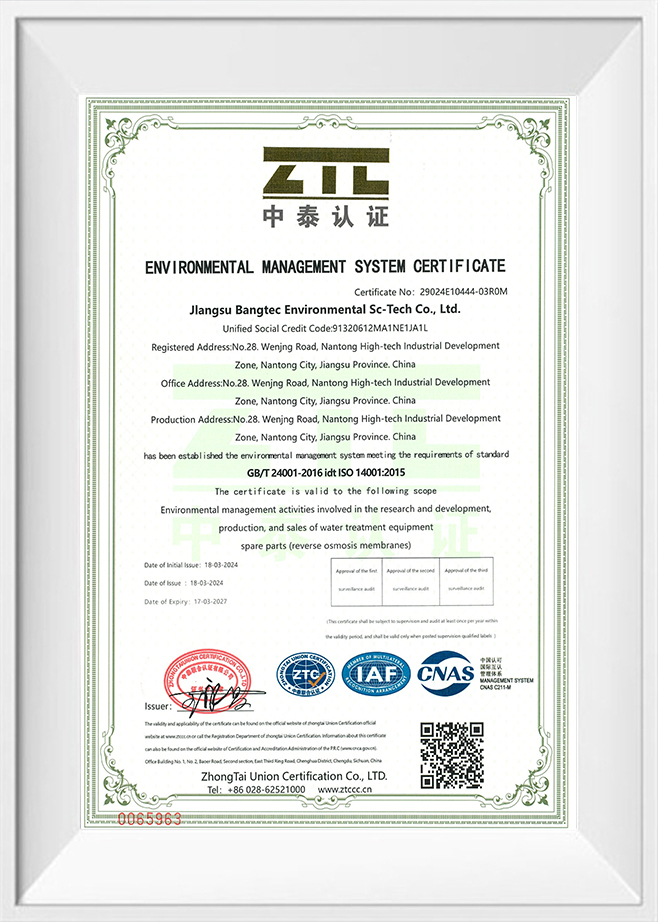
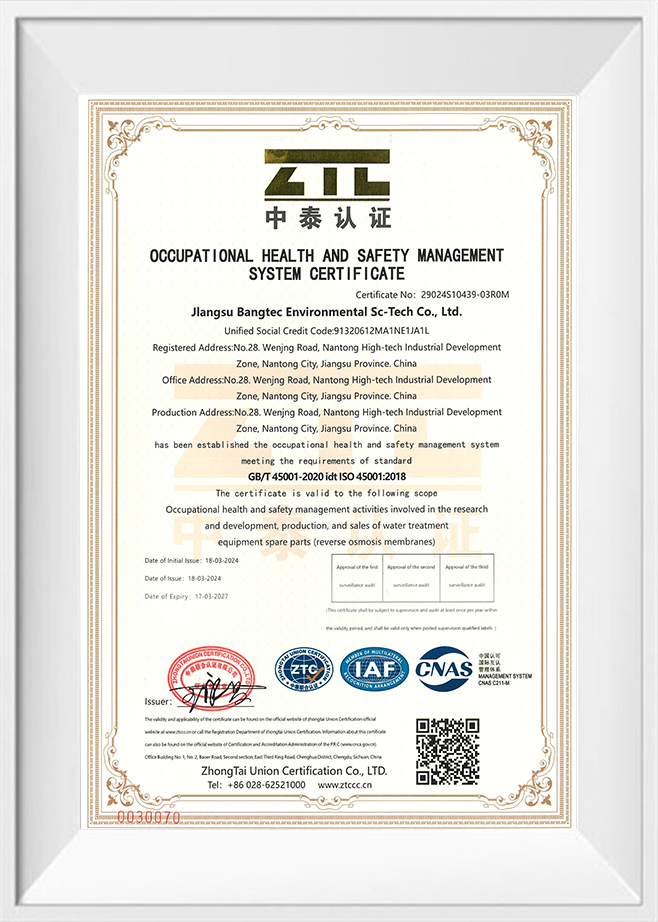
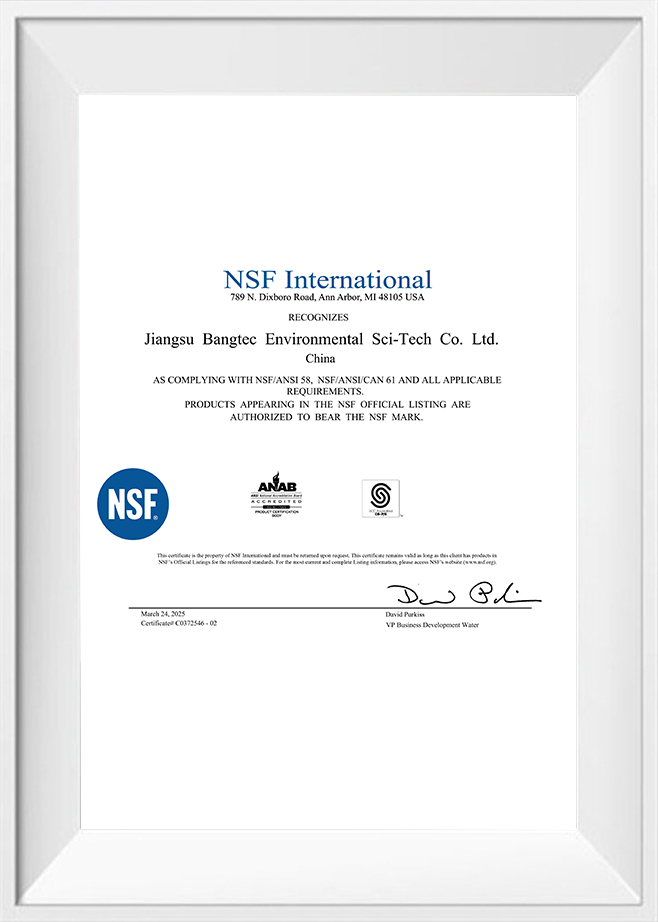
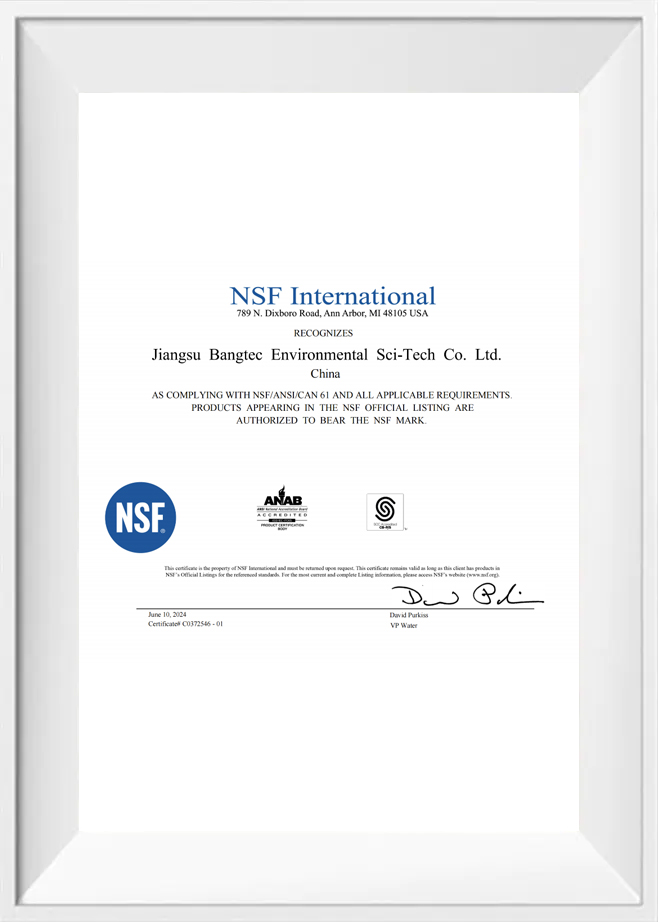
As a professional Domestic RO Membrane Supplier, Jiangsu Bangtec Huachuang Sci-tech Co., Ltd. has established a comprehensive quality control system. The company has obtained triple certifications including ISO9001 Quality Management System, ISO14001 Environmental Management System, and ISO45001 Occupational Health and Safety Management System, along with CE international certification and Jiangsu Provincial Water-related Product Health Approval. These qualifications not only ensure that the production process of Household RO membrane components complies with international standards but also provide regulatory assurance for products entering overseas markets.
At the R&D level, the company has established three research institutions overseas, bringing together multiple returned doctoral talents and top industry experts. To date, the company holds multiple domestic and international invention patents, and the performance indicators of newly developed products have reached internationally leading levels according to third-party testing.
Application Scenarios and Selection Recommendations
Different water quality conditions and usage requirements correspond to different Domestic RO Membrane selection schemes:
- High TDS Water Areas (TDS > 500 ppm): Priority should be given to Domestic High Rejection Membrane to ensure outlet TDS is reduced below 50 ppm, meeting drinking water standards.
- Large Households or Multi-Person Families: Domestic High Flow Membrane (400GPD and above) is recommended, with water output flow reaching 1.0 - 1.5 L/min, meeting immediate water needs without storage tanks.
- Old Pipeline Networks or Rural Low-Pressure Environments: Domestic XLP Membrane can start operating at extremely low pressure of 0.08 MPa, suitable for electricity-free or low water pressure scenarios.
- Energy-Saving Household Water Purifiers: Domestic ULP Membrane saves approximately 30% - 40% energy compared to traditional high-pressure membranes, suitable for users sensitive to energy consumption.
Frequently Asked Questions
What is the typical service life of a Domestic RO Membrane
Under normal operating conditions, Household RO membrane components typically have a service life of 2 to 3 years. The actual lifespan depends on influent water quality, daily water consumption, and pre-filtration configuration. It is recommended to test the outlet TDS value every 6 to 12 months and consider replacement when the TDS removal rate drops by more than 10%.
What are the main differences between Domestic ULP Membrane and conventional high-pressure membranes
Domestic ULP Membrane utilizes optimized membrane sheet formulations and wider flow channel designs, capable of operating at low pressure conditions of 0.15 - 0.3 MPa, whereas traditional high-pressure membranes typically require operating pressures above 0.5 MPa. Low-pressure operation not only reduces booster pump energy consumption but also minimizes equipment operating noise.
How to determine if a Domestic RO Membrane needs replacement
The following indicators can be used for judgment: 1) Significant reduction in water output flow; 2) Deterioration in water taste or presence of odors; 3) TDS meter showing outlet TDS values approaching more than 20% of the inlet value; 4) Abnormal increase in wastewater ratio. If any of the above conditions occur, timely replacement of the Domestic Ro Membrane Element is recommended.
Does Domestic High Flow Membrane affect filtration precision
No. Domestic High Flow Membrane increases water production capacity by enlarging membrane area and optimizing flow channel structures, while maintaining RO-grade pore sizes of 0.0001 microns. Taking the 400GPD specification as an example, the salt rejection rate remains stable above 97%, consistent with standard flow membranes.
How effective is Domestic RO Membrane at removing scale
Domestic RO Membrane achieves removal rates of 95% - 98% for hardness ions such as calcium and magnesium, effectively preventing scale formation. For high-hardness water (TDS > 800 ppm), it is recommended to use in combination with pre-filters such as water softeners or anti-scale cartridges to extend the service life of the membrane element.


 EN
EN  عربى
عربى