
Content
Reverse osmosis for wine is not a single trick. It is a pressure-driven separation step that can remove water, ethanol, or small acids from grape must or finished wine. Winemakers reach for it when a vintage ripens too fast, when a batch reaches 15.5% alcohol and tastes hot, when a high-acid must needs softening, or when a rosé needs concentration without cooking. RO can solve those problems, but only if the membrane, pressure, temperature, and cleaning regime match the wine style. The wrong setup strips aromas and leaves a thin, bitter wine. The right setup is selective, gentle, and repeatable.
RO is not a simple filter. In wine, a reverse osmosis membrane rejects most sugars, polysaccharides, tannins, anthocyanins, and other large flavor compounds while allowing water, ethanol, and some small organic acids to pass. The separation depends on pressure, temperature, feed velocity, and membrane chemistry. Typical wine RO operates between 20 and 60 bar. Dealcoholization usually runs at 40–60 bar and 10–15°C to protect volatile esters. Concentration runs lower, often 25–45 bar, because the goal is to remove water without pushing aroma compounds through the membrane. A single pass might remove 1–2% alcohol by volume or concentrate a must by 10–20% volume. Nanofiltration, a looser version of the same membrane family, can selectively remove tartaric acid, malic acid, and potassium.
The practical limit is not pressure. It is selectivity. If the membrane is too open, ethanol passes easily but so do the aroma compounds you want to keep. If the membrane is too tight, you need extreme pressure and risk compacting the fouling layer. The winery’s real decision is which separation target matters most: alcohol, water, acid, or color.
Dealcoholization is the most common wine RO application. The system removes a water-ethanol mixture, then usually recovers ethanol and aroma compounds in a second stage. A typical pass lowers alcohol by 1–2% ABV. Multiple passes or a larger membrane area can go further, but each pass increases the risk of losing fruity esters. Low temperature, short residence time, and an aroma recovery column make the difference between a balanced 12.5% wine and a hollow 11% wine.
Concentration removes water to raise sugar, alcohol, or color intensity. A high-sugar must from a wet vintage can be concentrated by 10–20% volume before fermentation. A finished wine can be concentrated by 5–15% volume to intensify flavor. The membrane must handle high solids and pectin without rapid fouling. Feed spacers and turbulence matter as much as membrane chemistry.
Nanofiltration can remove small acids and potassium without stripping color. It is used for tartrate stabilization, deacidification, and pH adjustment. NF membranes have a looser structure than RO, so they pass more organic acids while still rejecting larger phenolics. The trade-off is lower rejection of alcohol and water, which makes NF less useful for dealcoholization.
| Application | Membrane | Pressure | Temperature | Key risk |
|---|---|---|---|---|
| Alcohol reduction | RO | 40–60 bar | 10–15°C | Aroma loss |
| Concentration | RO | 25–45 bar | 8–15°C | Fouling by pectin |
| Acid adjustment | NF | 15–30 bar | 10–20°C | Over-removal of acidity |
Wine is a difficult feed. It contains ethanol, sugar, acid, polyphenols, proteins, and living microorganisms. A membrane that works for brackish water may fail in wine because the materials cannot tolerate alcohol or because the cleaning regime cannot remove pigment. The first selection criterion is material compatibility. Thin-film composite polyamide membranes are standard, but seals, permeate spacers, and housing must also tolerate 10–15% ethanol and pH 2–11 cleaning. Food-contact compliance, such as FDA or EU food-contact regulations, is not optional. The second criterion is pore size and rejection profile. RO membranes reject sugars and ethanol to different degrees. NF membranes reject tartrates and malic acid more selectively. The third criterion is element geometry. A 2540 element suits small batch systems, while 4040 and 8040 elements fit larger winery lines. Feed spacers should resist compaction and promote turbulence because wine fouling is often organic and sticky.
Do not choose a membrane by salt rejection alone. A seawater RO membrane with 99.8% NaCl rejection may be too tight and too hydrophobic for wine. A fouling-resistant RO membrane designed for high organic loads often performs better because it resists polyphenol adsorption and cleans more completely. For acid adjustment, an NF membrane with a defined molecular weight cut-off around 200–300 Da gives more control than a tight RO membrane.
| Property | RO membrane | NF membrane |
|---|---|---|
| Sugar retention | High | High |
| Ethanol passage | Moderate to high | High |
| Acid passage | Low | Moderate to high |
| Typical pressure | 25–60 bar | 10–30 bar |
| Best wine use | Dealcoholization, concentration | Acid adjustment, tartrate stability |
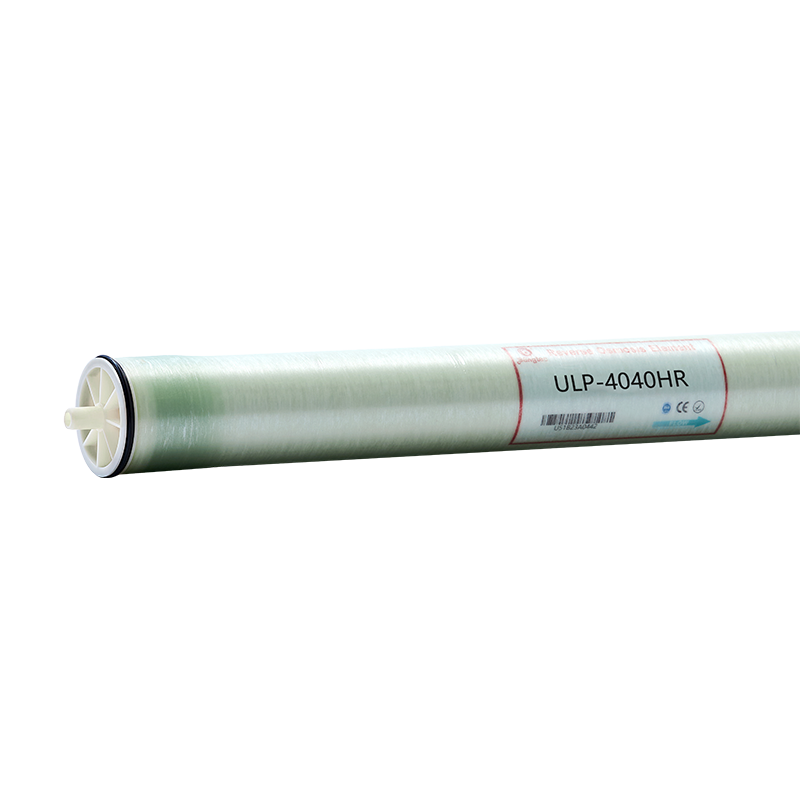 Industrial Reverse Osmosis Membrane Range for Demanding Separation DutiesBrowse Bangtec industrial RO membrane series, including low-pressure, brackish water, fouling-resistant, seawater, nanofiltration, commercial, domestic, and sheet options.View Product →
Fouling is the main reason wine RO systems lose performance. Pigments, tannins, polysaccharides, proteins, yeast, and tartrate crystals collect on the feed spacer and membrane surface. The first symptom is a drop in permeate flow at constant pressure, followed by rising pressure drop and changing rejection. A system that starts at 20 L/m²·h may fall below 10 L/m²·h within a few batches if cleaning is inadequate.
Cleaning must be designed for wine, not water. A typical sequence starts with a warm alkaline wash (0.1–0.5% NaOH, 40–50°C) to dissolve organic matter and pigments, followed by an acid wash (citric or nitric acid, pH 2–3) to remove tartrates and mineral scale. Some wineries add an enzyme cleaner for protein and pectin. Temperature limits matter: many polyamide membranes cannot exceed 45–50°C, and high pH can hydrolyze the active layer. Cleaning frequency depends on batch size and wine type. A small batch system may clean after every 2–4 hours of operation. A large continuous line may clean once per day. Fouling-resistant membranes with a hydrophilic surface and a wide feed spacer reduce cleaning frequency and extend life. With proper care, wine RO membranes last one to three years. Without it, six months is possible.
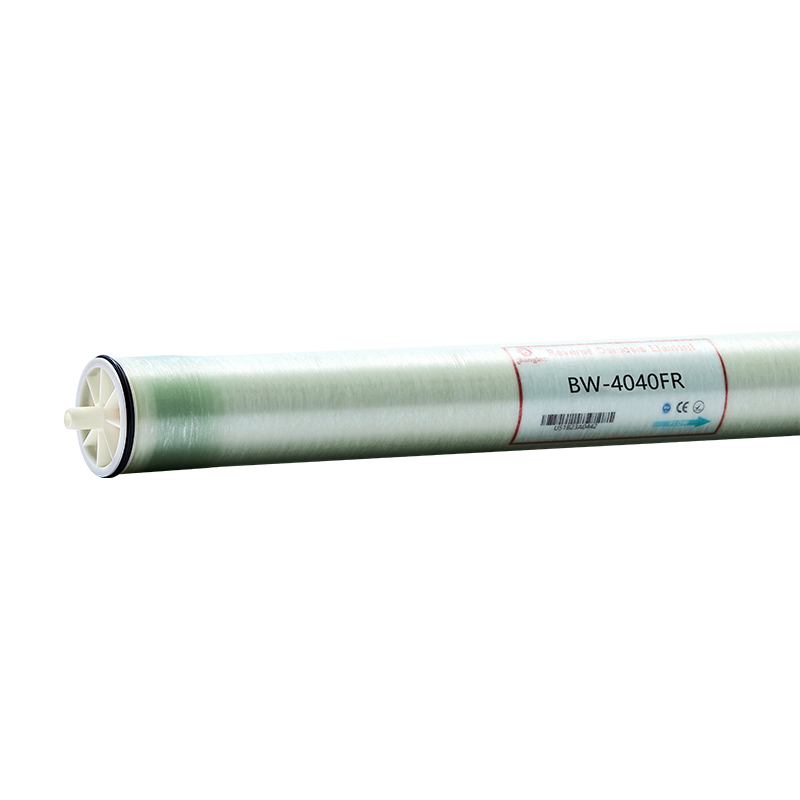 Fouling Resistant RO Membrane Elements BW-4040FR and BW-8040-400FRAnti-fouling reverse osmosis elements with hydrophilic surface and 34-mil feed channel for high-turbidity, high-organic feedwater; reduce cleaning frequency versus conventional RO.View Product →
Start with the batch size and target. A 1,000 L batch of wine needs a different system than a 20,000 L tank. Flow rate, membrane area, and number of stages determine whether you can process a tank in one shift or three days. Dealcoholization is more energy-intensive than concentration because ethanol passage requires higher pressure and often a second distillation step. Concentration is gentler but produces a larger volume of permeate that must be managed.
Purchase risk usually comes from three places: materials, controls, and support. Materials must be food-grade and alcohol-resistant. Controls should log pressure, temperature, flow, and conductivity so you can prove consistency. Support matters because wine RO is not a set-and-forget process. A membrane manufacturer that produces its own flat sheet and elements can help you match the membrane to the wine style. Bangtec, for example, develops and manufactures RO and NF membranes for industrial water and beverage-adjacent streams, and its membrane technology team works from pilot data rather than a catalog alone. Its automated production base covers industrial, commercial, and domestic membrane elements, which means replacement supply is less likely to depend on a single imported lot.
Ask for a pilot test with your own wine. A 2540 or 4040 element in a small skid can reveal fouling rate, aroma loss, and cleaning needs before you buy a full line. Check the warranty terms for alcohol exposure and cleaning chemicals. Verify that the permeate and retentate lines are sanitary and drainable. Finally, calculate total cost per liter treated: membrane replacement, cleaning chemicals, energy, and downtime often outweigh the initial purchase price.
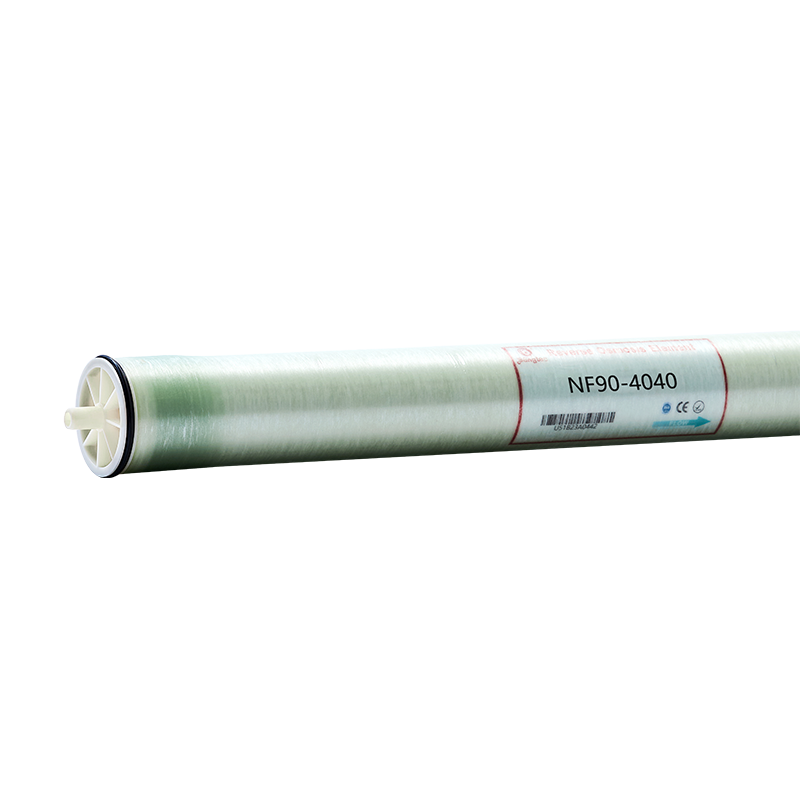 Nanofiltration Membrane Series for Concentration and SeparationBrowse NF90, NF60, and NF30 membrane elements for brine purification, material concentration, desalination, COD removal, and selective monovalent salt permeation.View Product →
It can. Volatile esters and some aroma compounds are small enough to pass through RO membranes, especially at higher temperatures. Low-temperature operation, short residence time, and an aroma recovery stage reduce the loss. Bench trials with your own wine are the only reliable way to judge the sensory impact.
No. Home systems are not sanitary, cannot reach the pressures needed for wine, and use materials that may not tolerate alcohol or acidic cleaning. They also lack the instrumentation to control concentration and alcohol removal. A wine RO system needs food-grade wetted materials, sanitary pumps, and temperature control.
A single pass typically removes 1–2% ABV. Multi-stage systems can remove more, but each additional pass increases aroma loss and processing cost. Most wineries target a final alcohol between 12% and 14% rather than removing all ethanol.
Regulations vary by country and region. Some allow RO for must concentration, acid adjustment, and dealcoholization with specific limits. Others restrict it. Check with your local wine authority before installing a system, and document every treatment batch.
Reverse osmosis for wine works best when it is treated as a precision tool, not a rescue machine. Match the membrane to the job, keep temperatures low, clean before fouling becomes visible, and pilot the process on your own wine. The wineries that get consistent results are the ones that measure rejection, aroma, and cleaning performance every batch.
Popular Products

+86-513 8659 8187
+86-189 6299 3952
No.28 Wenjing Road, Nangtong High-tech Industrial Development Zone, Jiangsu Province, China


 EN
EN  عربى
عربى