
Content
A plant engineer calls on a Tuesday: permeate conductivity on one 4040 brackish water train has moved from 18 to 46 µS/cm in three weeks. Feed pressure, flow, recovery and feed conductivity have not moved at all. By Friday the cause is a hardened interconnector O-ring on the last element in the vessel — not the water, not the membrane. The number on its own told him nothing. The change told him everything.
The short answer: conductivity of RO permeate is a trend parameter, not a certificate. A reading of 40 µS/cm can be perfectly healthy on seawater feed and alarming on a second-pass unit that read 3 µS/cm last month. Judge any value against three things: a temperature-corrected baseline, identical operating conditions, and a known feed analysis.
What follows covers what the reading actually measures, which values are realistic for different feeds, and how to trace a rise back to its cause before anyone touches an element.
Ultrapure water conducts almost nothing — roughly 0.055 µS/cm at 25 °C. Every microsiemens above that comes from dissolved ions, largely the ones a polyamide membrane rejects well: sodium, chloride, calcium, sulphate, bicarbonate. That is why conductivity is such an efficient proxy for salt passage. One inexpensive probe, read in seconds, tracks the whole dissolved load of the permeate.
Two limits matter. Conductivity counts electrical charge rather than mass, and each ion carries charge differently, so the conversion factor between conductivity and TDS depends on which ions dominate your water.
| Dominant ions in the water | Typical TDS/EC factor | EC at 100 mg/L TDS |
|---|---|---|
| Sodium chloride (coastal, softened or second-pass feed) | 0.45–0.55 | 180–220 µS/cm |
| Mixed natural and brackish water | 0.55–0.65 | 155–180 µS/cm |
| Hardness and bicarbonate dominated | 0.65–0.80 | 125–155 µS/cm |
The second limit is larger: uncharged species are invisible to the probe. Dissolved CO2 crosses a polyamide layer almost as freely as water, and boron, silica and many low-molecular-weight organics pass as well. A permeate reading 5 µS/cm can still carry a meaningful CO2 load, which is why high-purity systems track pH and resistivity alongside conductivity.
Datasheet rejection figures are measured at standard test conditions — 2,000 mg/L NaCl, 225 psi, 25 °C, 15% recovery — so they rank elements against each other. They do not predict your permeate. Field bands look more like this:
| Feed source | Feed conductivity | Typical salt rejection | Expected permeate |
|---|---|---|---|
| Domestic under-sink unit | 300–800 µS/cm | 90–96% | 12–80 µS/cm |
| Municipal tap water | 200–600 µS/cm | 95–98% | 4–20 µS/cm |
| Brackish well water | 1,000–3,000 µS/cm | 97–99% | 10–60 µS/cm |
| Seawater | 45,000–55,000 µS/cm | 99.4–99.7% | 150–400 µS/cm |
| Second-pass permeate as feed | 10–50 µS/cm | 90–97% | 0.5–5 µS/cm |
For a brackish feed in that middle band, a 4-inch brackish water element is the usual starting point, and the BW4040 sits squarely in that duty. It is sized for the flows and pressures of a small-to-mid industrial skid, and it is the element most plants use as the reference point when they later compare a low-pressure or fouling-resistant option.
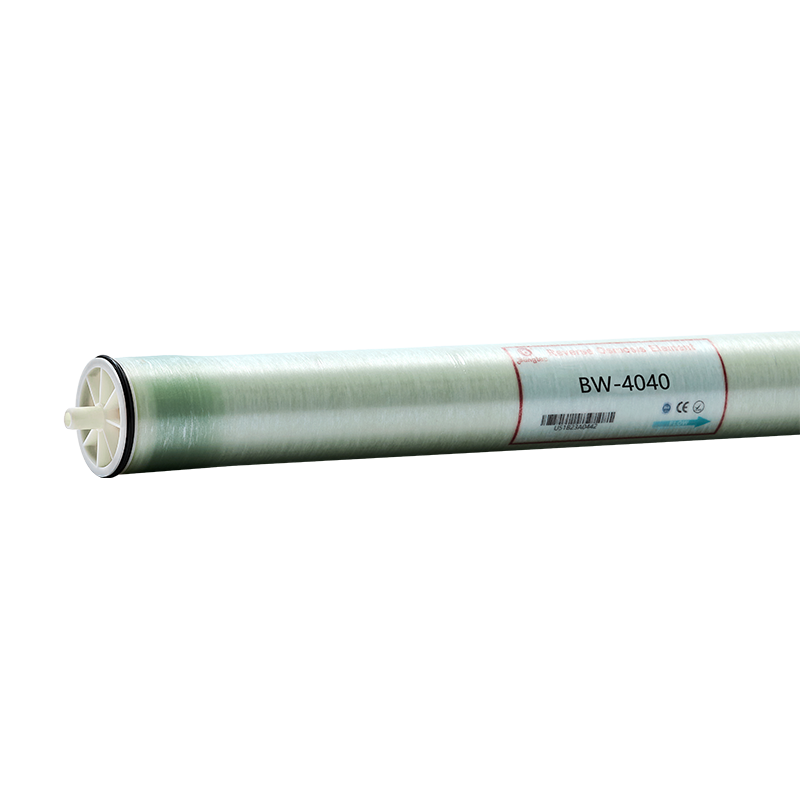 BW-4040 Brackish Water RO Membrane Element for 4-Inch SkidsA 4-inch brackish water element for small-to-mid industrial skids, with 99.7% stable rejection and 2,400 GPD permeate flow.View Product →
Note the width of each band. A 10 µS/cm move inside the brackish row may mean nothing at all, while the same absolute change on a second pass can wipe out most of the rejection margin you designed for.
Most high-conductivity complaints in the field are resolved inside the first two steps, before anyone breaks a connection.
At the design stage the fouling-resistant route is the cheapest fix of all: wider feed channels and a modified surface let a demanding feed hold its rejection between cleanings instead of drifting between them. In the 4-inch bracket that duty is covered by the BW4040FR.
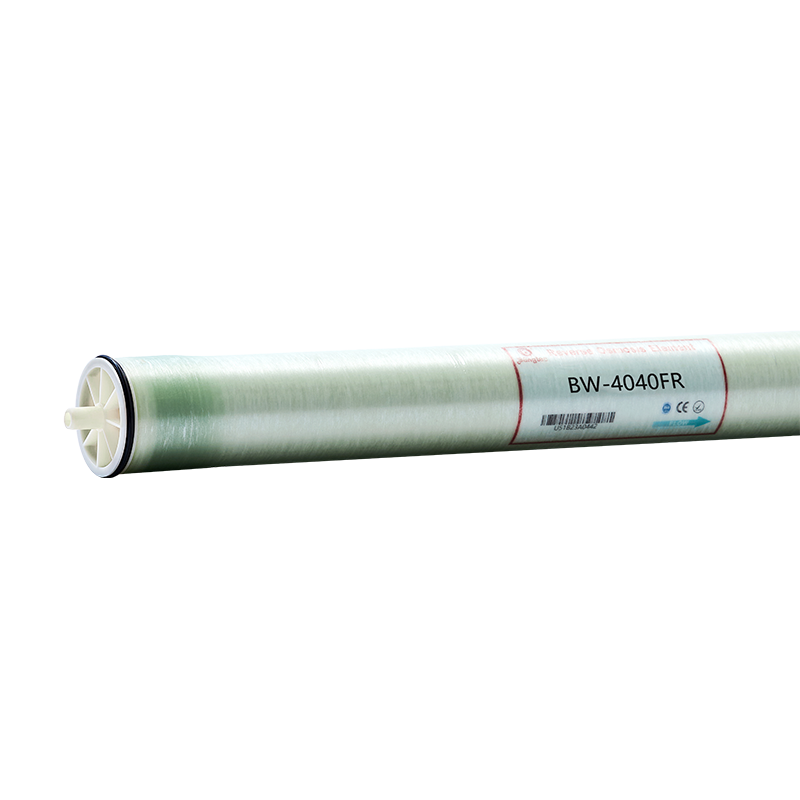 BW-4040FR Fouling Resistant RO Membrane Element for Demanding FeedsA 4-inch fouling-resistant element with 34 mil spacer and modified surface, suited to complex feeds where rejection must hold between cleanings.View Product →
Conductivity itself rises about 2% per °C, which a compensated meter removes for you. Salt passage through polyamide rises roughly 3% per °C, which no meter can remove. A feed warming from 15 °C to 25 °C produces permeate with about a third more ions, and a wrong compensation setting adds a second, artificial shift on top of that.
Dissolved carbon dioxide passes the membrane almost freely. At the near-neutral pH of most permeate it is only partly ionized, so it adds little to conductivity while adding real dissolved load. If CO2 matters downstream, measure pH, alkalinity or CO2 directly — not conductivity.
An open beaker left on a bench absorbs atmospheric CO2 within minutes and drifts upward. Sample from the same port every time, flush for two to three minutes, avoid air bubbles, and record temperature alongside conductivity so you can normalize later. For very low readings, calibrate in the range you actually measure; a 1,413 µS/cm standard says little about a 4 µS/cm result.
Start from the target, not from the element. Boiler make-up may need under 10 µS/cm, a rinse stage may tolerate 50, and a domestic unit is judged by taste and scale.
Then remember that rejection follows net driving pressure. Cutting feed pressure to save energy, or selecting a high-permeability element so the pump can run at lower pressure, lets a little more salt through — often one to three percentage points of rejection, which on a 20 µS/cm permeate is a visible change. Ultra-low pressure elements such as the ULP4040 earn their place when pumping energy dominates the cost model and your conductivity target has that margin; they are the wrong pick when the target is tight and the feed runs warm.
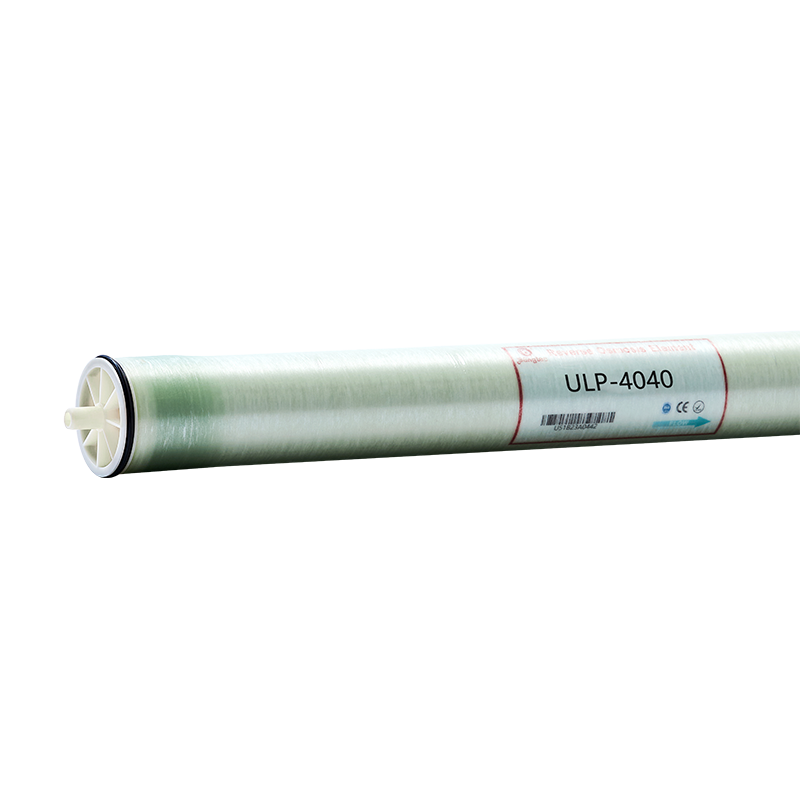 ULP-4040 Ultra-Low Pressure RO Membrane Element for Low-TDS SourcesA 4-inch low-pressure element for TDS under 1,500 ppm, offering 2,700 GPD permeate flow when pumping energy dominates the cost model.View Product →
Recovery, staging and pretreatment matter as much as the element itself, so a checklist is worth more than a single datasheet figure — the selection factors that decide commercial RO membrane performance are a sensible place to start.
Only relative to the feed. Against a 500 µS/cm feed that is 98% rejection and excellent. Against a 30 µS/cm second-pass feed it means something has failed.
No. The probe counts ions only. Microbes, dissolved CO2, boron, silica and uncharged organics cross the membrane and the probe without leaving a trace, so sanitary and analytical testing sit outside this measurement.
The pen applies a fixed factor, usually 0.5, to the conductivity it measures. Close to zero that factor is meaningless, and CO2 does not conduct until it ionizes.
Continuously or daily on an industrial train, always with pressure, flow, recovery and temperature beside it. Per-vessel readings once a month will find a leaking O-ring long before the combined permeate header makes it obvious.
Permeate conductivity cannot tell you everything, but it is the cheapest early warning you will ever install. Log it properly, normalize it honestly, and act on trends rather than single values.
It also helps when the sheet and the element come from the same source. Bangtec manufactures its own RO sheet and element production in Nantong and builds industrial, commercial and domestic elements from it, supported by more than 50 patents, a membrane R&D team with GE and Chinese Academy of Sciences backgrounds, and ISO 9001, CE, FDA and NSF listings. When rejection is documented at the source, a conductivity trend becomes a maintenance signal rather than a debate.
Popular Products

+86-513 8659 8187
+86-189 6299 3952
No.28 Wenjing Road, Nangtong High-tech Industrial Development Zone, Jiangsu Province, China


 EN
 عربى