
Content
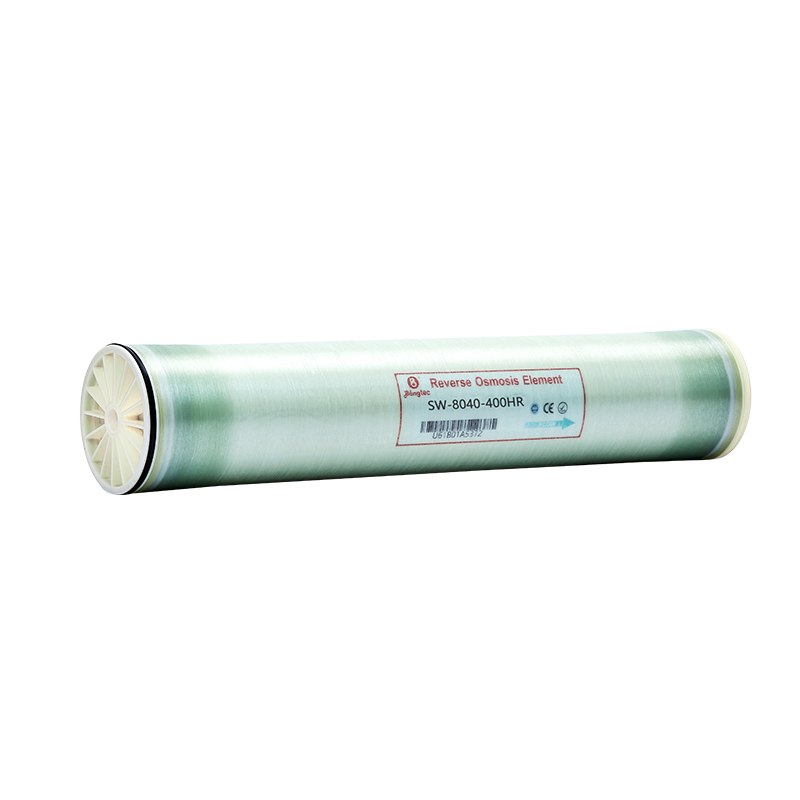
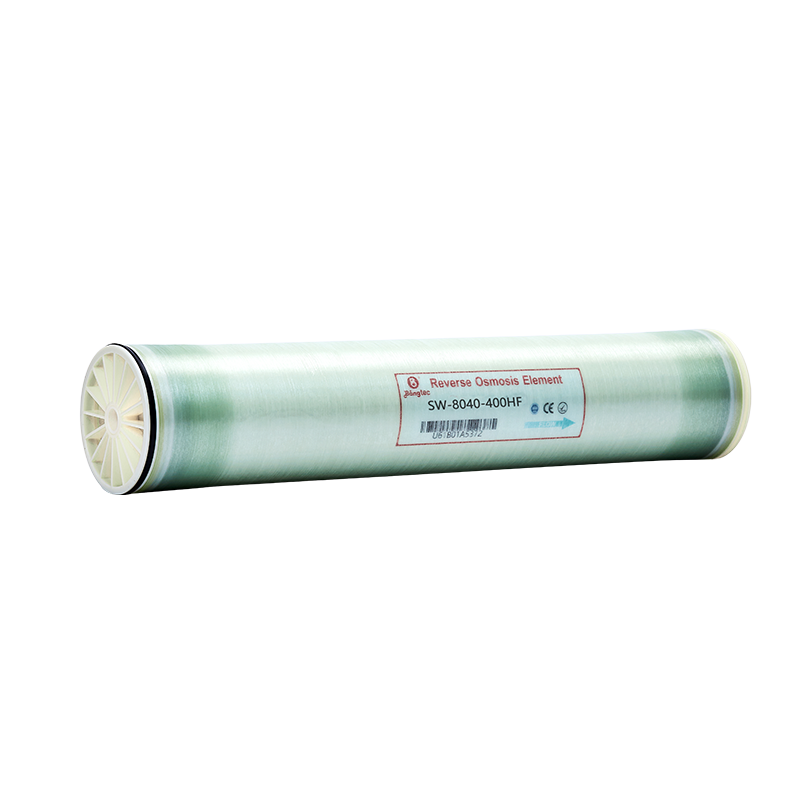
A Sea Water RO Membrane is a spiral-wound reverse osmosis element built to desalinate feed water with salinity above roughly 10000 ppm TDS, including open-ocean intake and high-concentration brackish sources. Operating at 55 to 70 bar, it pushes water through a dense polyamide active layer while rejecting 99.5 percent to 99.8 percent of dissolved salts, delivering permeate with TDS below 500 mg per liter. This makes it the core separation component in seawater desalination plants, island water supply systems, marine vessels, and industrial high-salinity concentration processes.
Every Sea Water RO Membrane relies on the solution-diffusion mechanism rather than simple filtration. Applied pressure exceeding the natural osmotic pressure of seawater, typically 55 to 70 bar, forces water molecules to dissolve into the polyamide active layer and diffuse toward the low-pressure side. Hydrated ions such as sodium, chloride, magnesium, and calcium carry larger effective radii and are held back by steric hindrance and charge exclusion, so they concentrate on the feed side instead of passing through.
Because the separation depends on molecular diffusion rather than pore straining, feed water quality has a direct effect on output. Neutral compounds like boric acid are harder to reject than charged ions, with standard SW Ro Membrane products achieving around 90 to 92 percent boron rejection under normal conditions. Systems targeting boron below 0.3 ppm usually raise feed pH above 8.5 or add a second RO pass to compensate.
Salt rejection, permeate flow, and long-term stability are the three figures that matter most when comparing a Sea Water RO Membrane Manufacturer against another. Under the industry-standard test of 32000 ppm NaCl at 5.5 MPa, 25 degrees C, pH 8, and 8 percent recovery, a typical 8040-format element produces 6500 to 9000 GPD of permeate while holding rejection at 99.6 percent or higher.
| Parameter | Typical Range | Notes |
|---|---|---|
| Salt Rejection | 99.5% to 99.8% | Measured after 24 to 48 hours of stable operation |
| Operating Pressure | 55 to 70 bar | Rises with feed TDS and water temperature |
| System Recovery | 45% to 50% | Two-stage design can reach 55% to 60% |
| Specific Energy Use | 2.8 to 3.8 kWh per cubic meter | Below 3.0 kWh with energy recovery devices |
| Free Chlorine Limit | Below 0.1 ppm | Oxidation permanently damages the active layer |
| Feed SDI | Below 5, ideally under 3 | Lower SDI extends the interval between cleanings |
A Sea Water RO Membrane and a brackish water membrane are not interchangeable, even though both fall under the RO Membrane Element category. The seawater version uses a denser active layer and a higher-pressure FRP outer wrap to withstand 55 to 70 bar, while a Brackish Water RO Membrane is tuned for TDS below 10000 ppm and runs at only 10 to 25 bar with higher flux but lower rejection. Choosing the wrong type either wastes energy on over-built brackish equipment or under-rejects salt in a seawater application, so feed water TDS should be confirmed before ordering.
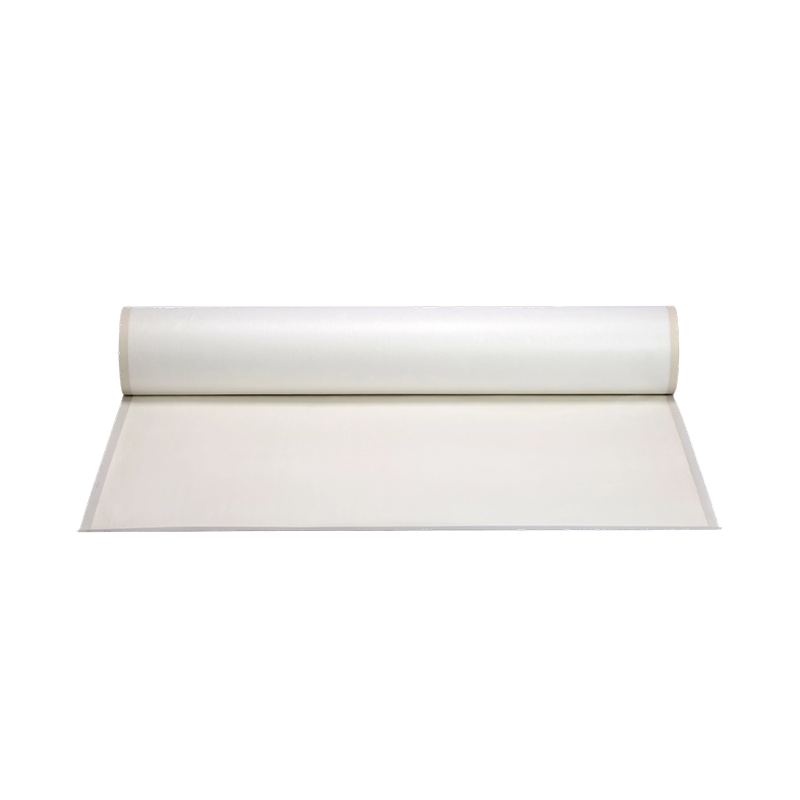
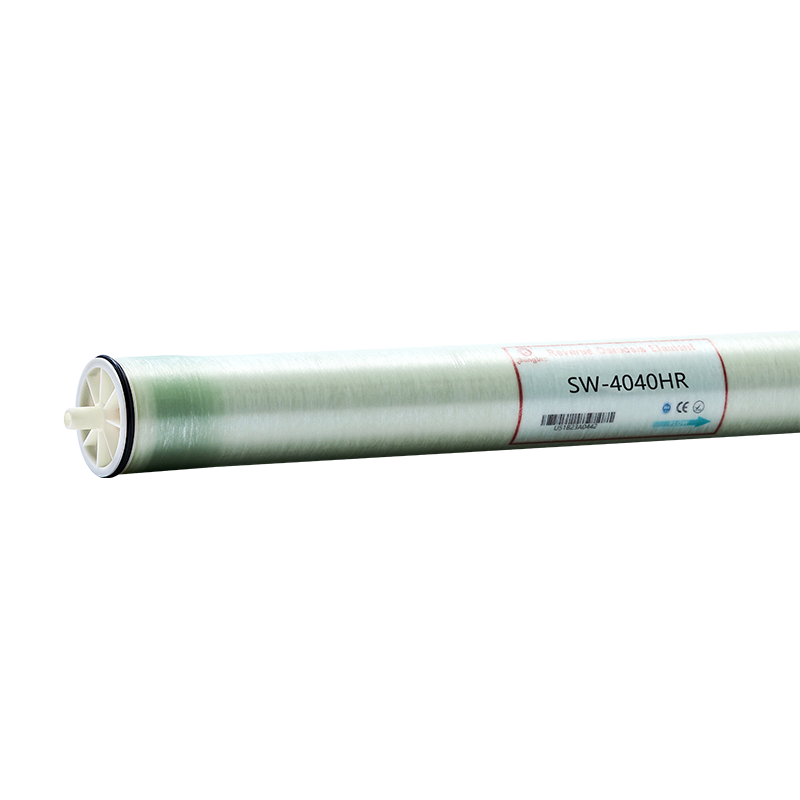
Bangtec offers a full range of SW Ro Membrane elements and RO Membrane Sheet options sized for single households up to large desalination trains, letting engineers match rejection, flux, and housing size to the exact project.
A modern Sea Water RO Membrane is a thin-film composite built from three layers. A polyester non-woven backing gives mechanical strength, a porous polysulfone layer acts as an ultrafiltration support, and a cross-linked aromatic polyamide layer roughly 0.2 micrometers thick performs the actual separation. This active layer is formed through interfacial polymerization, which is why premium Sea Water RO Membrane Supplier products can reach a water permeability coefficient around 2 to 5 times 10 to the negative 12 m per s per Pa while keeping salt passage extremely low.
The 34-mil feed spacer used across the SW element line widens the inlet flow channel compared with narrower commercial designs, cutting pressure drop across the element and slowing the rate at which particulate matter accumulates on the membrane surface. That combination of a tight active layer and a wide feed channel is what allows Sea Water Ro Membrane products to hold flux steady between cleanings.
Raw seawater carries suspended solids, algae, dissolved organics, and scaling ions such as calcium, barium, and strontium, all of which foul membrane surfaces if left untreated. Field data shows that inadequate pretreatment can cause a flux decline of 30 to 50 percent within the first 12 months, while a properly sized pretreatment train combined with scheduled CIP cleaning can push service life beyond 3 years.
| Pretreatment Stage | Purpose | Target Result |
|---|---|---|
| Bar screen and hydrocyclone | Remove coarse debris and sand | Protects downstream pumps and media beds |
| Coagulation or dissolved air flotation | Reduce turbidity and algae load | Lowers organic fouling potential |
| Multi-media or UF filtration | Control fine particulates | SDI under 3, turbidity under 0.1 NTU |
| Cartridge filtration and dechlorination | Catch residual particles, remove free chlorine | Protects the polyamide layer from oxidation |
China Sea Water RO Membrane demand has grown well beyond municipal drinking water. Large single-train SWRO plants now exceed 100000 cubic meters per day of production, and global installed SWRO capacity has passed 40 million cubic meters per day. On the industrial side, a Sea Water RO Membrane Manufacturer supplies elements for coastal power plant boiler feedwater, petrochemical cooling water desalination, and freshwater production on island resorts and marine vessels.
| Application | Typical Feed TDS | Selection Priority |
|---|---|---|
| Municipal drinking water | 35000 to 38000 ppm | Rejection at or above 99.7%, boron control |
| Industrial boiler feedwater | 35000 to 45000 ppm | Rejection at or above 99.8%, second-pass RO |
| Island and marine water supply | 30000 to 38000 ppm | Compact housing, vibration resistance |
| High-salinity wastewater concentration | 10000 to 80000 ppm | Fouling-resistant surface, wide feed spacer |
Feed pressure, inter-stage pressure differential, permeate flow, and permeate conductivity should be logged daily. A CIP cleaning cycle is generally warranted once normalized permeate flow drops 10 to 15 percent, differential pressure rises 15 percent, or salt rejection trends downward. Inorganic scale responds to citric or hydrochloric acid circulation at pH 2 to 3, organic fouling and biofilm respond to alkaline cleaners at pH 11 to 12, and iron or aluminum deposits are treated with oxalic acid or sodium bisulfite reduction cleaning. Cleaning solution temperature should stay below 35 degrees C to avoid stressing the membrane structure.
During shutdowns longer than 7 days, elements should sit in a 1 percent sodium bisulfite preservative solution to prevent biological growth. For shorter stops of 1 to 7 days, a 30-minute low-pressure flush every 24 hours is generally enough to keep the membrane surface stable.
Sourcing a Sea Water RO Membrane purely on unit price often backfires once operating costs are included. A low-energy design that hits target flux at a lower operating pressure can cut high-pressure pump electricity use meaningfully. As a reference point, a 10000 cubic meter per day plant can save roughly 150000 to 200000 kWh per year for every 1 bar reduction in operating pressure, so the pressure rating on a datasheet is worth checking as closely as the rejection figure.
Cleaning recovery rate and replacement interval also weigh heavily on lifetime cost. Elements with a wide feed spacer and smoother surface finish typically need less frequent CIP cycles, which lowers chemical spend and downtime. Working with a Sea Water RO Membrane Supplier that documents ISO9001, ISO14001, ISO45001, and CE certification gives buyers a way to verify that membrane sheet production, element rolling, and performance testing are controlled consistently across batches.
What separates a seawater membrane from a nanofiltration membrane?
A Nanofiltration Membrane rejects mainly multivalent ions and larger organic molecules while passing more monovalent salt, making it suited to softening and selective separation rather than full desalination. A Sea Water RO Membrane rejects monovalent and multivalent ions alike, which is required to bring 35000 ppm seawater down to drinking water levels.
Why does salt rejection drop over time?
The most common causes are oxidative damage to the polyamide layer from excess free chlorine, mechanical stress from water hammer or pressure spikes, scaling-driven concentration polarization, and worn O-rings or interconnectors. Keeping free chlorine under 0.1 ppm and following the pretreatment and cleaning schedule addresses most of these causes.
How long does a seawater element typically last?
Under good pretreatment and maintenance, 3 to 5 years of service is typical before normalized flow falls below 70 percent of the original value or rejection can no longer be restored with CIP cleaning.
Does temperature change performance?
Each 1 degree C rise in feed temperature increases permeate flow by roughly 3 to 3.5 percent but also raises salt passage. Systems are usually sized against the highest expected annual water temperature so summer output stays within design limits.
Popular Products

+86-513 8659 8187
+86-189 6299 3952
No.28 Wenjing Road, Nangtong High-tech Industrial Development Zone, Jiangsu Province, China


 EN
EN  عربى
عربى