
Content
An Ultra Low Pressure RO Membrane is a reverse osmosis element engineered to reach standard salt rejection at roughly two-thirds the operating pressure of a conventional low-pressure membrane. Running at about 150 psi (1.03 MPa) instead of 225 psi (1.55 MPa), it still delivers a stabilized salt rejection rate of up to 99.5 percent, which means lower pump energy, smaller vessels, and reduced long-term operating cost for any system treating water sources under roughly 2000 ppm TDS.
Because it demands less driving pressure to push water through the membrane sheet, this product line is often the default choice wherever surface water, groundwater, tap water, or municipal water needs deep desalination without the capital cost of a high-pressure pump station. It is built from aromatic polyamide thin film composite material, the same chemistry family used across most modern industrial RO membrane elements, and it is manufactured for continuous industrial duty rather than short-cycle point-of-use filtration.
The defining advantage of an ultra low pressure RO membrane element is that it reaches comparable or better salt rejection than a standard low-pressure membrane while consuming noticeably less energy. Under standard test conditions (1500 mg/L NaCl solution, 25 degrees Celsius, pH 7.5 to 8.0, 15 percent recovery), a typical 8040-size element achieves a stabilized salt rejection of 99.5 percent, a minimum rejection no lower than 99.3 percent, and a permeate flow near 2200 GPD depending on the exact model size.
The gap between the two membrane families becomes clear once the test pressures are compared side by side. A conventional low-pressure membrane is rated at 225 psi, while the ultra low pressure version reaches the same water quality target at only 150 psi, a reduction of roughly one third. That difference directly lowers the required horsepower for feed pumps and reduces the wall thickness, and therefore cost, of piping and pressure vessels.
| Technical Parameter | Ultra Low Pressure RO (ULP) | Conventional Low Pressure RO (LP) |
| Standard Test Pressure | 150 psi (1.03 MPa) | 225 psi (1.55 MPa) |
| Test Solution Concentration | 1500 to 2000 ppm NaCl | 2000 ppm NaCl |
| Stabilized Salt Rejection | 99.0 percent or higher | 99.3 percent or higher |
| Applicable Source TDS Range | Under 2000 ppm | Under 2000 ppm |
| Operating Temperature Range | 45 degrees Celsius maximum | 45 degrees Celsius maximum |
| Continuous Operation pH Range | 3 to 10 | 2 to 11 |
| Maximum Operating Pressure | 600 psi (4.14 MPa) | 600 psi (4.14 MPa) |
| Feed Water SDI Requirement | 5.0 or lower | 5.0 or lower |
| Free Chlorine Tolerance | Under 0.1 mg/L | Under 0.1 mg/L |
Industrial-grade elements are commonly sold in two housing sizes, 4040 and 8040, matched to small-to-medium and large-scale systems respectively. A 4040 element measures 4 inches in diameter and 40 inches in length, while an 8040 element is 8 inches in diameter and the same 40-inch length. Both fit standard pressure vessels, so upgrading an existing skid from conventional low-pressure elements to ultra low pressure elements usually does not require a new housing design.
| Model | Effective Area ft2 (m2) | Avg Permeate Flow GPD (m3/d) | Stabilized Rejection | Recovery Rate |
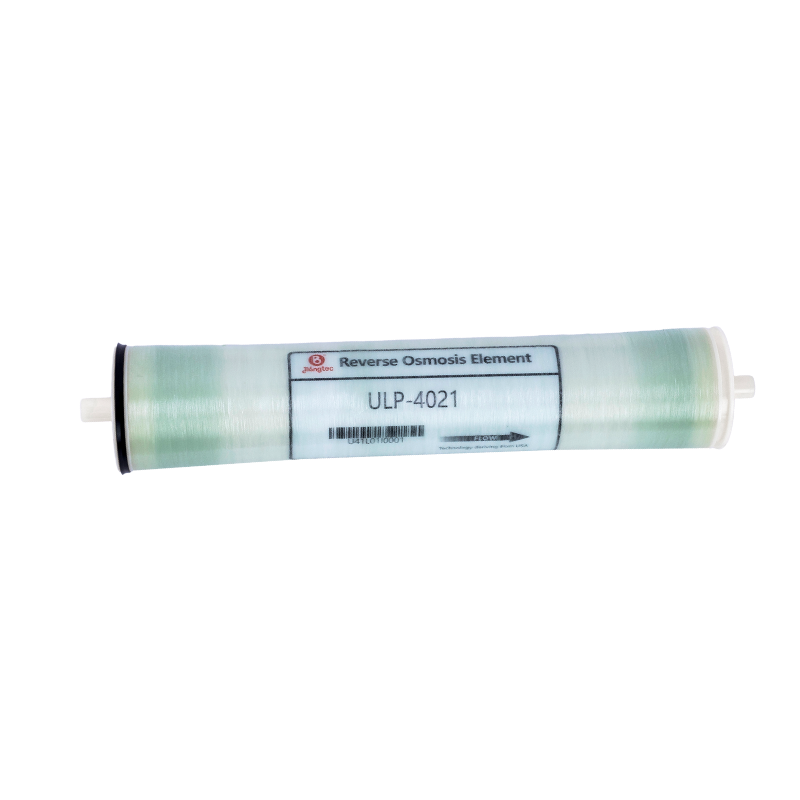
| ULP-4021 | 38 (3.5) | 1000 (3.8) | 99.0 percent | 8 percent |
| ULP-4040 | 90 (8.4) | 2500 to 2600 (9.5 to 9.8) | 99.0 percent | 15 percent |
| ULP-8040 | 400 (37.2) | 11000 (41.6) | 99.0 to 99.2 percent | 15 percent |
| ULP-8440 | 440 (41) | 12000 (45) | 99.2 percent | 15 percent |
Permeate flow figures are average values under test conditions of 25 degrees Celsius feed temperature, 150 psi test pressure, 500 to 2000 ppm NaCl concentration, and pH 7.5. Individual elements may deviate from the listed average by up to 15 percent, which is normal and accounted for in system design.
Each element in the series is tuned for a different balance of rejection, flow, and feed water tolerance, so system designers can match the exact model to their raw water profile and daily production target.
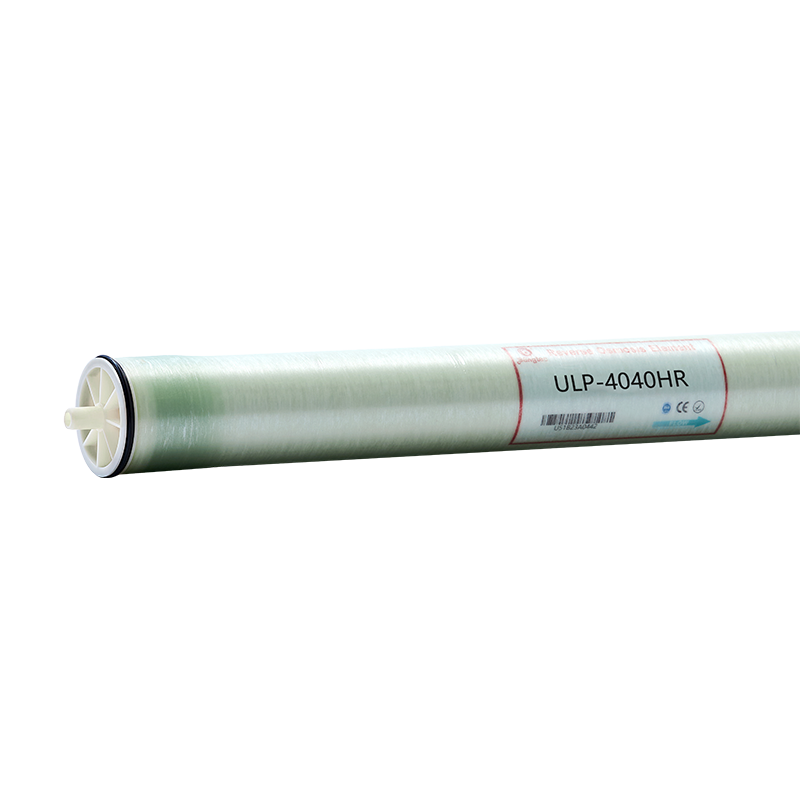
ULP-4040HR
High Rejection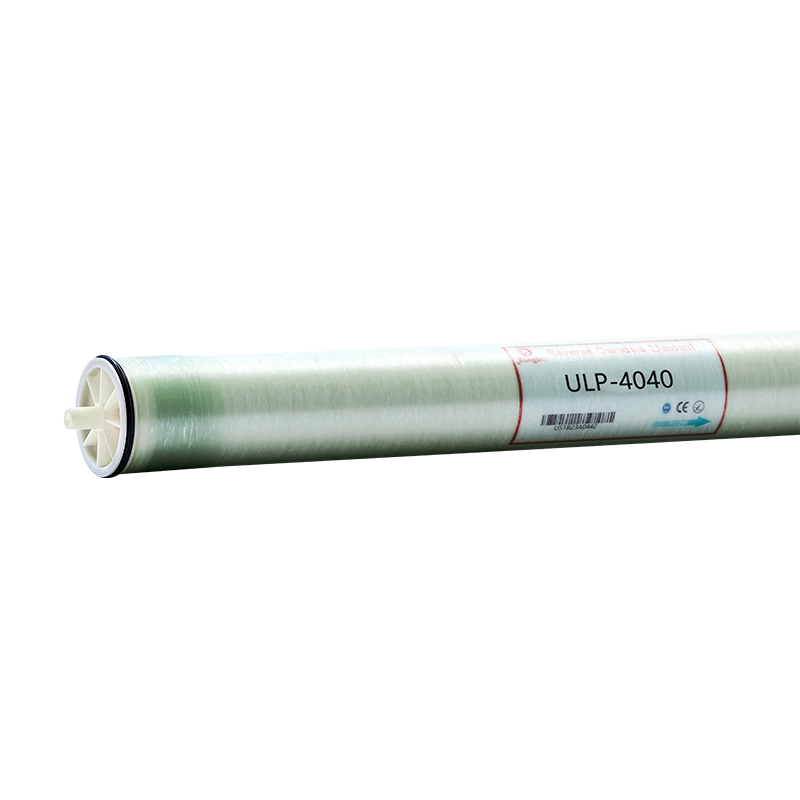
ULP-4040
Standard Duty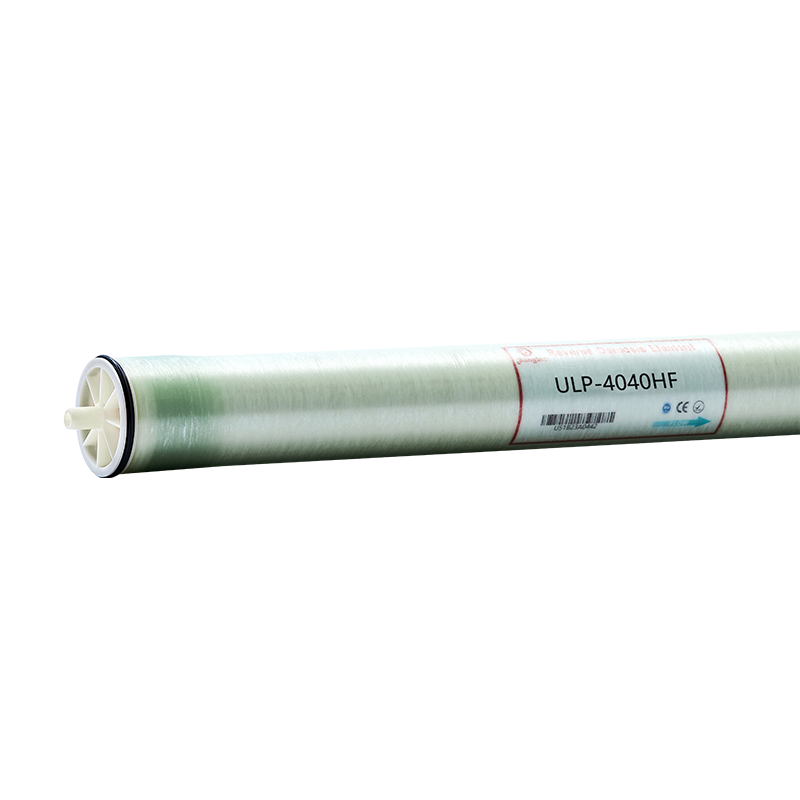
ULP-4040HF
High Flow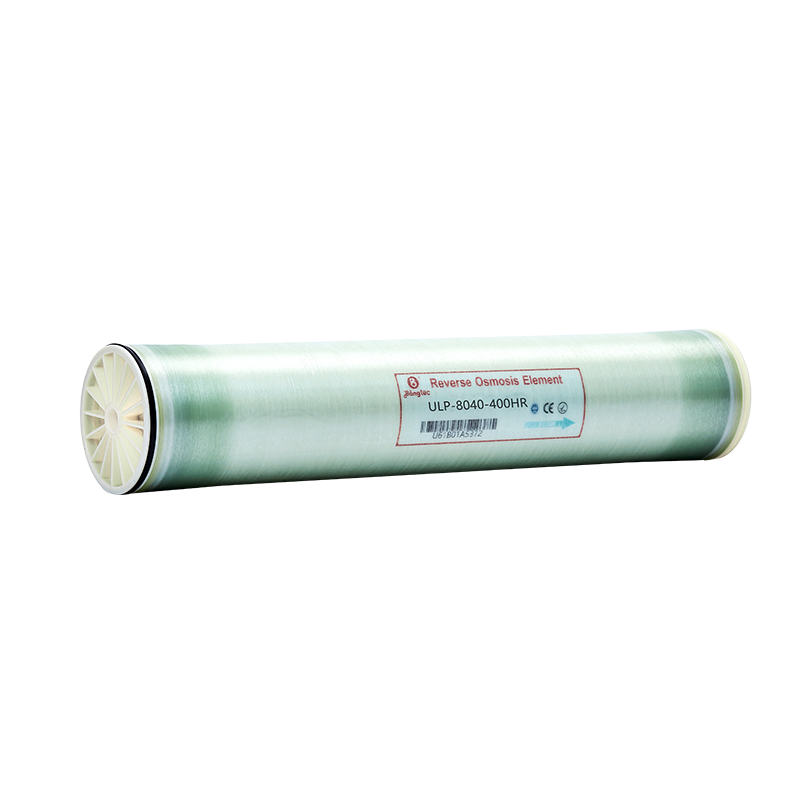
ULP-8040-400HR
Large System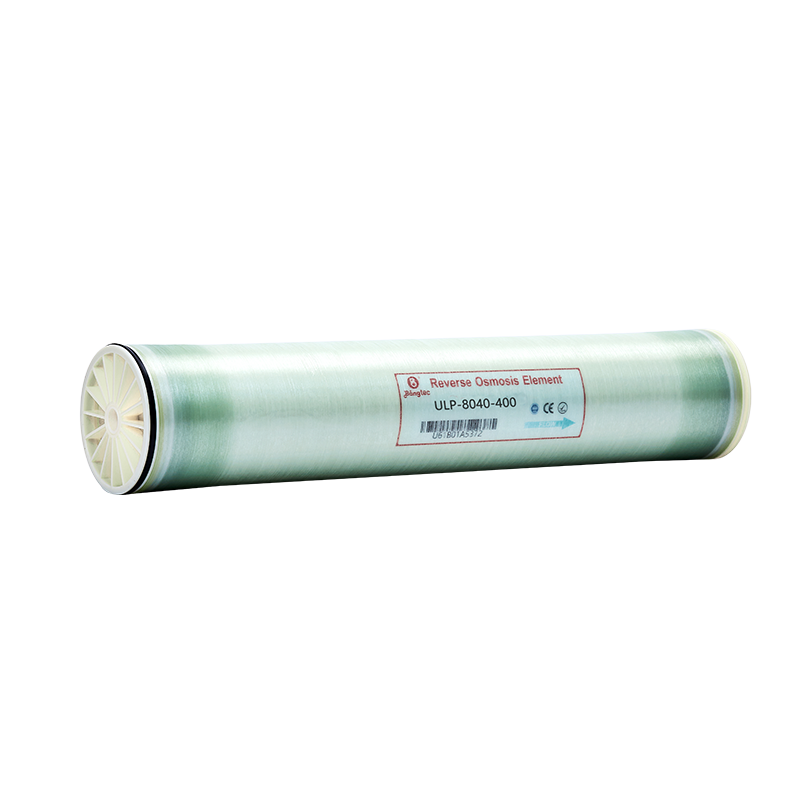
ULP-8040-400
High ProductionThe combination of low energy draw and dependable rejection makes this membrane family a common fit across a wide range of industrial and municipal water lines. The table below lists the sectors that use it most often, along with the water quality target each application usually requires.
| Application Field | Typical Use | Water Quality Requirement |
| Industrial Pure Water | Process water for electronics, semiconductors, pharmaceuticals | Conductivity under 10 uS/cm |
| Food and Beverage | Bottled drinking water, beverage blending water | Meets drinking water standards |
| Boiler Feed Water | Industrial boiler softening and demineralized water | TDS under 50 ppm |
| Municipal Water Supply | Dual water supply for residential and industrial parks | Meets potable water standards |
| EDI Pretreatment | Front-end deep treatment for electrodeionization systems | Feed TDS under 500 ppm |
| Cooling Tower Makeup | Makeup water for cooling tower recirculation systems | Hardness under 100 ppm |
In sectors such as photovoltaics, lithium batteries, steel, power generation, chemicals, printing and dyeing, and coal chemical processing, this membrane type typically removes 95 to 99 percent of dissolved salts, colloids, organics, bacteria, and pyrogens from the feed stream, serving as the core barrier stage of the whole water treatment train.
Long-term, stable performance depends heavily on what happens before the water ever reaches the membrane. Feed water should meet a Silt Density Index of 5.0 or lower, turbidity under 1 NTU, and a free chlorine level under 0.1 mg/L. Thin film composite membranes are sensitive to oxidizers, so any residual chlorine or strong oxidant left in the feed stream will damage the membrane pore structure over time, showing up as rising permeate flow paired with falling salt rejection.
A standard pretreatment train usually includes multimedia filtration to strip out suspended solids and colloids, activated carbon adsorption to remove chlorine and organics, and cartridge filtration at the 5-micron level to catch any remaining particles. Sources with high hardness need a softener or antiscalant dosing system to prevent calcium carbonate and similar scale from building up on the membrane surface.
| Cleaning Trigger | Threshold | Recommended Response |
| Normalized permeate flow drop | 10 percent or more | Schedule chemical cleaning |
| Normalized salt passage increase | 5 to 10 percent | Schedule chemical cleaning |
| Normalized differential pressure increase | 10 to 15 percent | Schedule chemical cleaning |
| Inorganic scale present | Visual or performance indication | Acid clean at pH 1 to 2 |
| Organic fouling or biofilm present | Visual or performance indication | Alkaline clean at pH 12 |
The economic case for switching to an ultra low pressure membrane rests almost entirely on pump energy. Take an industrial pure water station treating 1000 cubic meters per day as an example: dropping the operating pressure from 225 psi to 150 psi cuts high-pressure pump power demand by roughly 30 to 40 percent. At an industrial electricity rate of 0.8 RMB per kWh and 8000 operating hours a year, that translates into an estimated 150,000 to 250,000 RMB in annual electricity savings.
Lower operating pressure also protects the hardware around the membrane. Less compaction stress on the membrane sheet slows the rate of differential pressure growth over time, and lighter mechanical load on piping and valves extends their working life. Under normal operation with proper pretreatment, an industrial ultra low pressure RO membrane element typically lasts 3 to 5 years before replacement is needed, and for continuously operating municipal systems, the cumulative savings over that window can meaningfully reduce total cost of ownership.
What is the main difference between Ultra Low Pressure and Low Pressure RO membranes
Ultra Low Pressure RO membranes run at roughly two-thirds the pressure of standard low-pressure membranes, which makes them better suited to water sources under 2000 ppm TDS. They deliver maximum energy savings while still holding a salt rejection rate of 99 percent or higher.
What TDS range is suitable for Ultra Low Pressure RO membranes
They generally fit water sources with TDS from 200 to 2000 ppm, covering surface water, groundwater, tap water, and municipal water. For sources above roughly 3000 ppm, a brackish water membrane is the better choice.
Does using Ultra Low Pressure membranes reduce salt rejection
No. When operated within the recommended parameters, these membranes maintain 99 percent or higher salt rejection under standard test conditions, with stable and predictable permeate conductivity.
How much energy can Ultra Low Pressure membranes save
Savings depend on system design, but in large continuous-operation systems the lower operating pressure meaningfully reduces electricity cost per cubic meter of permeate, with substantial cumulative savings across a 3 to 5 year membrane life.
Can Ultra Low Pressure membranes directly replace existing standard membranes
In most cases yes, since housing sizes are standardized. System pressure settings and design conditions still need to be reviewed to confirm pumps, piping, and controls are compatible with the new operating point.
What pretreatment is required for Ultra Low Pressure membranes
Feed water should meet an SDI of 5 or lower, turbidity under 1 NTU, and zero free chlorine. A standard train includes multimedia filtration, activated carbon filtration, and cartridge filtration, with softening or antiscalant dosing added when needed.
What is the expected service life of Ultra Low Pressure membranes
With proper pretreatment and standard operating conditions, industrial and municipal elements typically last 3 to 5 years, with the exact figure depending on feed water quality and maintenance frequency.
Are Ultra Low Pressure membranes suitable for municipal drinking water projects
Yes. They are widely used in municipal tap water and surface water treatment systems, particularly where controlling long-term energy cost is a project priority.
Popular Products



+86-513 8659 8187
+86-189 6299 3952
No.28 Wenjing Road, Nangtong High-tech Industrial Development Zone, Jiangsu Province, China


 EN
EN  عربى
عربى