Content
Extreme Low Pressure RO Membrane is a reverse osmosis element built for low-salinity feed water, reaching stabilized salt rejection above 99% while operating at a feed pressure as low as 100 psi (0.69 MPa). Compared with a standard brackish water membrane running near 225 psi, this XLP Ro Membrane category cuts pump energy demand by roughly 25% to 35% on water sources under 1000 ppm TDS, which is why it has become the default choice for the second pass in two-stage RO trains, bottled water lines, and boiler makeup water systems.
A conventional Industrial RO Membrane needs a certain minimum driving pressure to push water through its active layer. When the feed water is already low in dissolved salts, most of that pressure is wasted overcoming the membrane's own resistance rather than fighting osmotic pressure. Extreme Low Pressure RO Membrane elements solve this by using a thinner, more permeable polyamide layer, so the same volume of permeate is produced with far less pump work. On a mid-size municipal or industrial line, that translates directly into a smaller pump, a lower-rated pressure vessel, and a meaningfully lower electricity bill every month.
Extra Low Pressure Ro Membrane elements are built on a thin-film composite structure formed through interfacial polymerization. Controlling the cross-linking density of the polyamide layer during production keeps the active barrier thin and hydrophilic, which lowers the hydraulic resistance the feed pump has to overcome without sacrificing salt rejection. The feed spacer is typically 28 mil or 34 mil, a thickness chosen to balance pressure drop against resistance to fouling. Manufacturers with dedicated polymer chemistry teams, including doctoral-level researchers focused on membrane cross-linking control, are generally able to hold rejection performance more consistently across production batches.
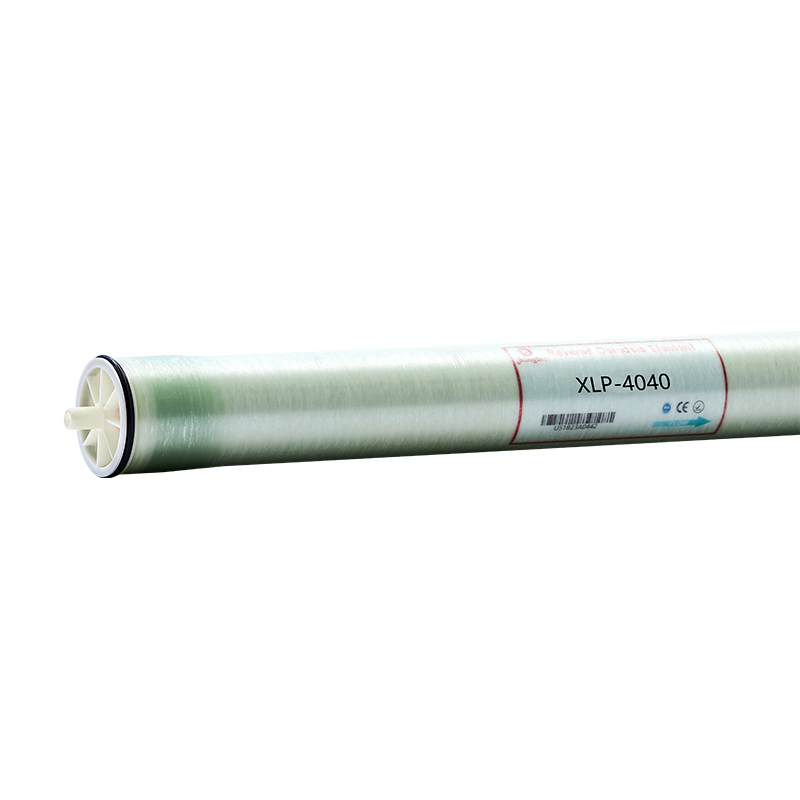
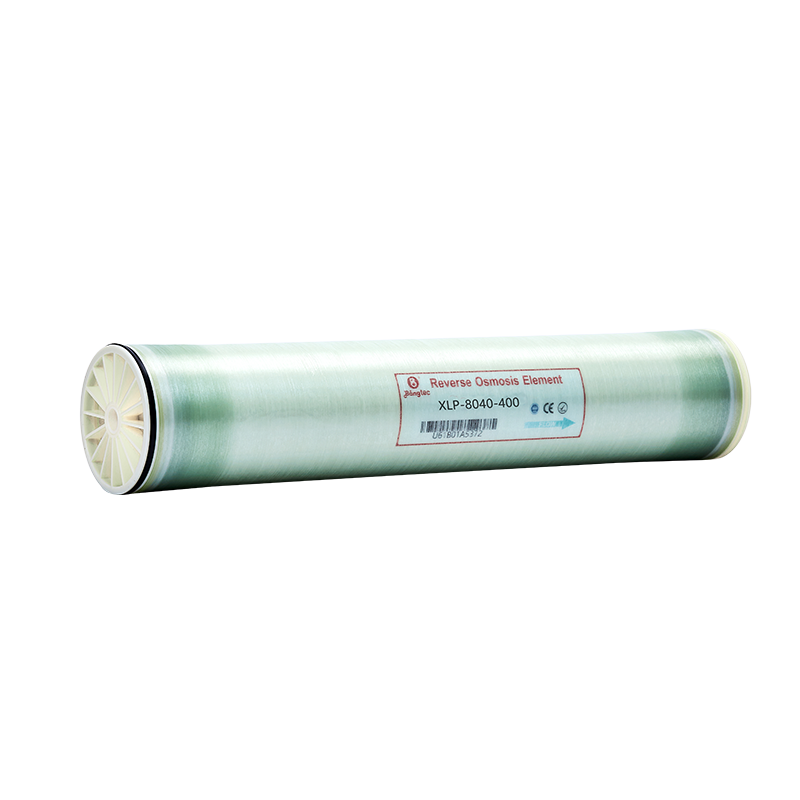
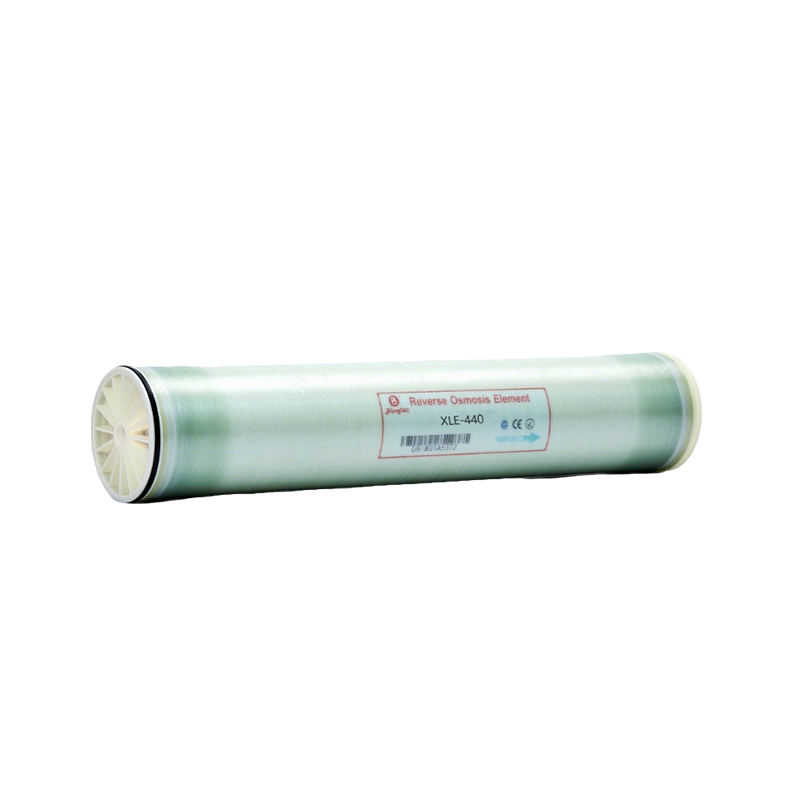
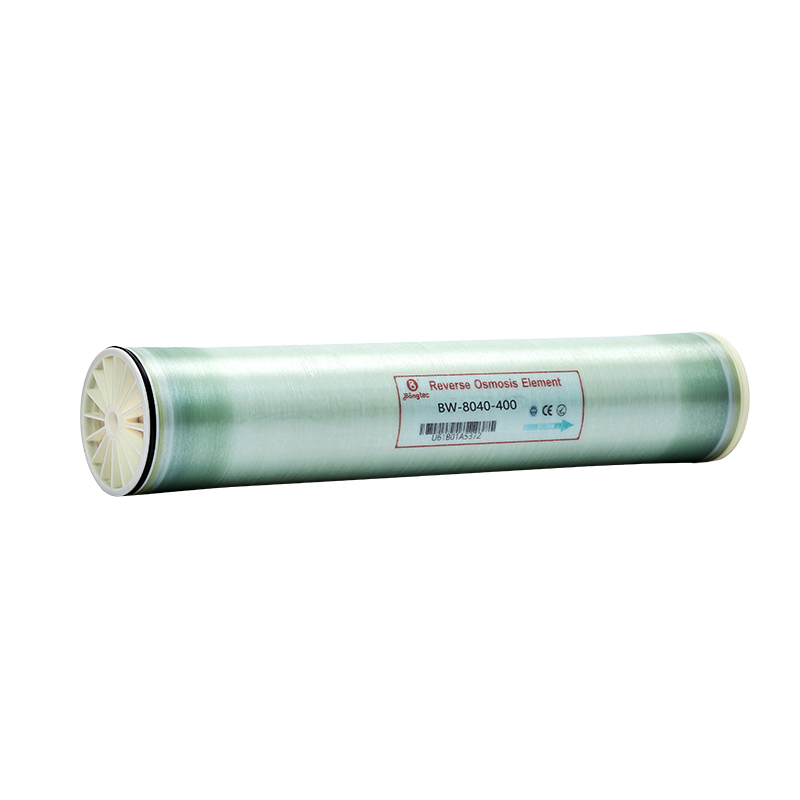
Extreme Low Pressure RO Membrane elements are produced in the standard 4040 and 8040 industrial housings, along with larger-area variants for higher-capacity systems. The table below summarizes typical performance figures reported under standard test conditions of 500 ppm NaCl, 25°C, pH 7.5 to 8.0, and 15% single-element recovery.
| Model | Active Area | Permeate Flow | Stable Rejection | Test Pressure |
|---|---|---|---|---|
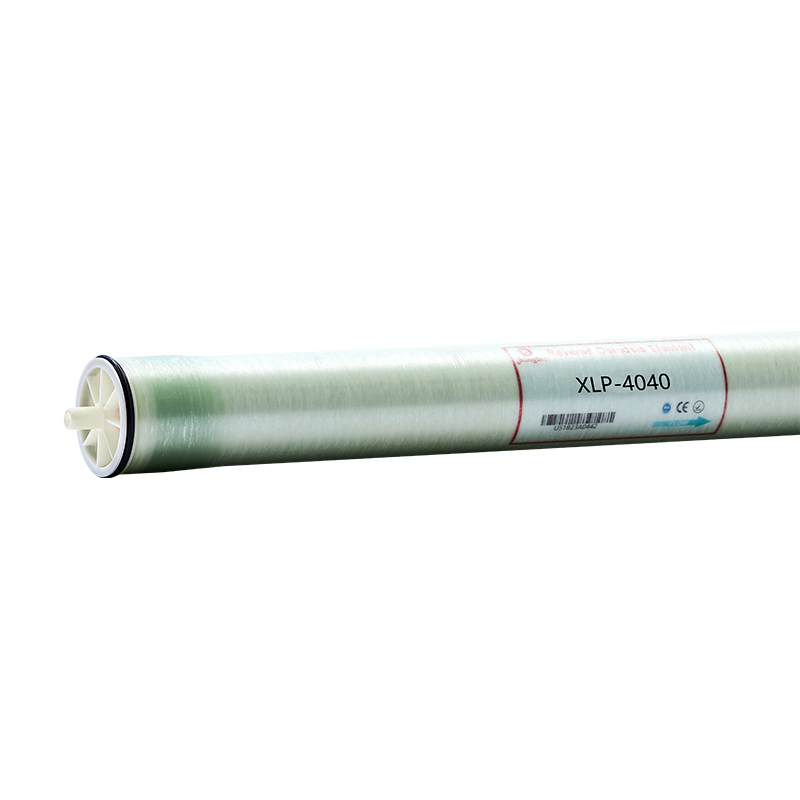
| XLP-4040 | 85 ft² (7.9 m²) | 2,700 GPD (10.2 m³/d) | 98% | 100 psi (0.69 MPa) |
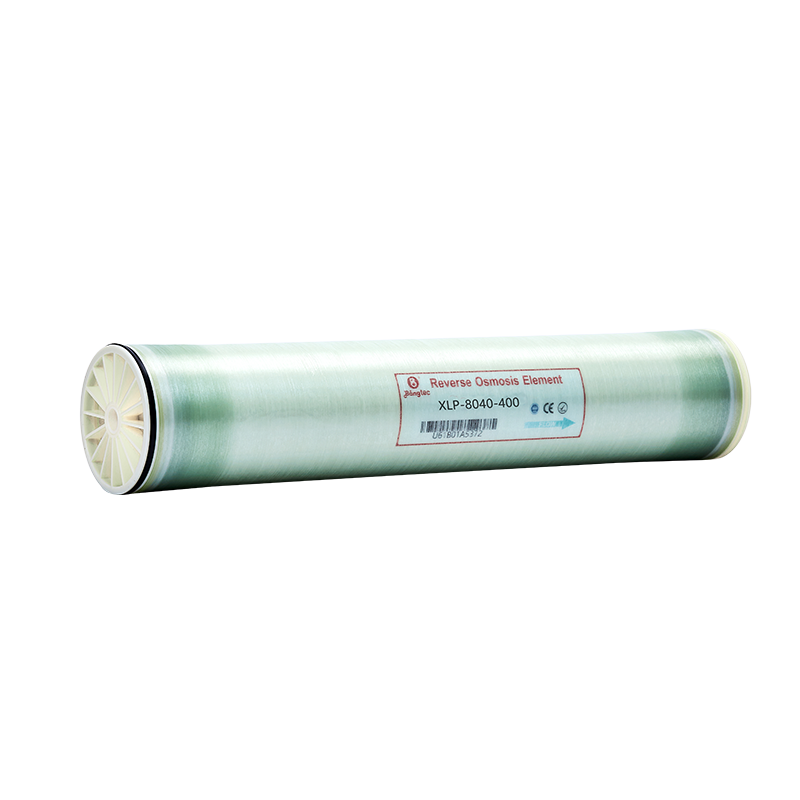
| XLP-8040-400 | 400 ft² (37.2 m²) | 12,000 GPD (45.4 m³/d) | 98% | 100 psi (0.69 MPa) |
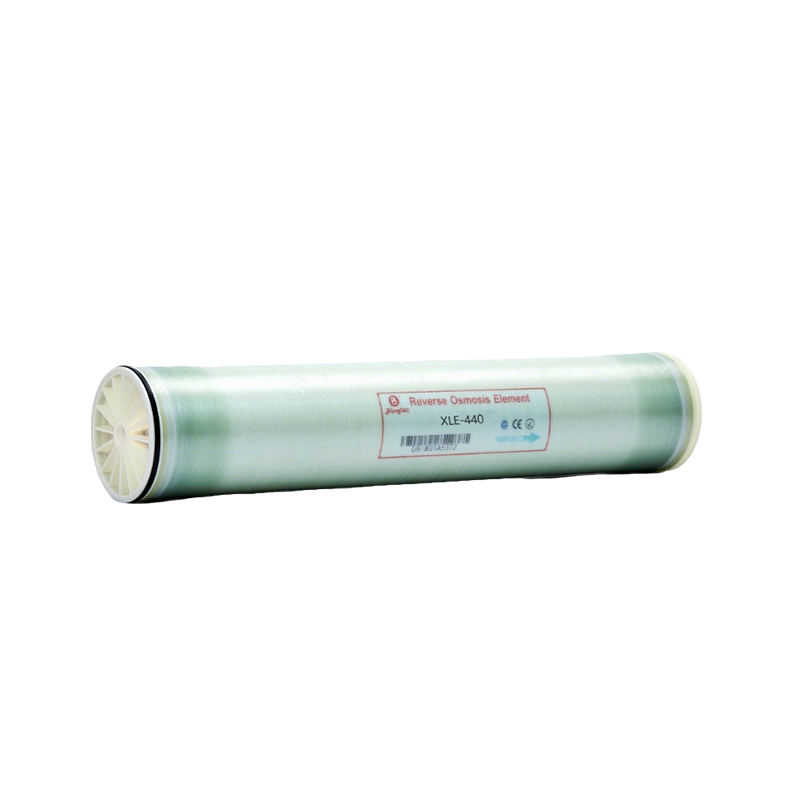
| XLE-440 | 440 ft² (40.9 m²) | 12,700 GPD (48.0 m³/d) | 99% | 100 psi (0.69 MPa) |
Permeate flow tolerance is typically rated at plus or minus 15%. Larger active-area elements such as the XLE-440 reduce the number of housings needed for a given output, which lowers both vessel cost and floor space requirements on new builds.
A full range of XLP membrane elements covering compact residential-adjacent housings through high-capacity 8040 vessels, engineered for consistent rejection at reduced feed pressure.
Because Extreme Low Pressure RO Membrane is designed around feed water under 1000 ppm TDS, it fits a specific set of use cases rather than every RO application:
| Parameter | Recommended Range |
|---|---|
| Feed SDI15 | Below 5.0 |
| Free chlorine | Below 0.1 mg/L, dechlorination required |
| Operating temperature | 3°C to 45°C, best near 25°C |
| Continuous operation pH | 3 to 10 |
| Chemical cleaning pH | 1 to 13 |
| Maximum pressure drop per element | 15 psi (0.1 MPa) |
Multimedia filtration, activated carbon filtration, and 5-micron cartridge filtration are the standard pretreatment stages ahead of an Industrial XLP Ro Membrane system. Feed water with higher organic loading generally benefits from an ultrafiltration pretreatment stage to protect the membrane surface from fouling.
Using a 100 m³/d system treating water at 1000 ppm TDS as a reference case, the operating pressure difference alone produces a substantial gap in yearly electricity spend.
| Item | Standard BW Membrane | Extreme Low Pressure Membrane |
|---|---|---|
| Operating pressure | 225 psi (1.55 MPa) | 100 psi (0.69 MPa) |
| Pump power estimate | Approx. 18.5 kW | Approx. 8.2 kW |
| Annual energy (8,000 hrs) | 148,000 kWh | 65,600 kWh |
These two categories are often confused because both target energy savings, but they are matched to different feed water conditions.
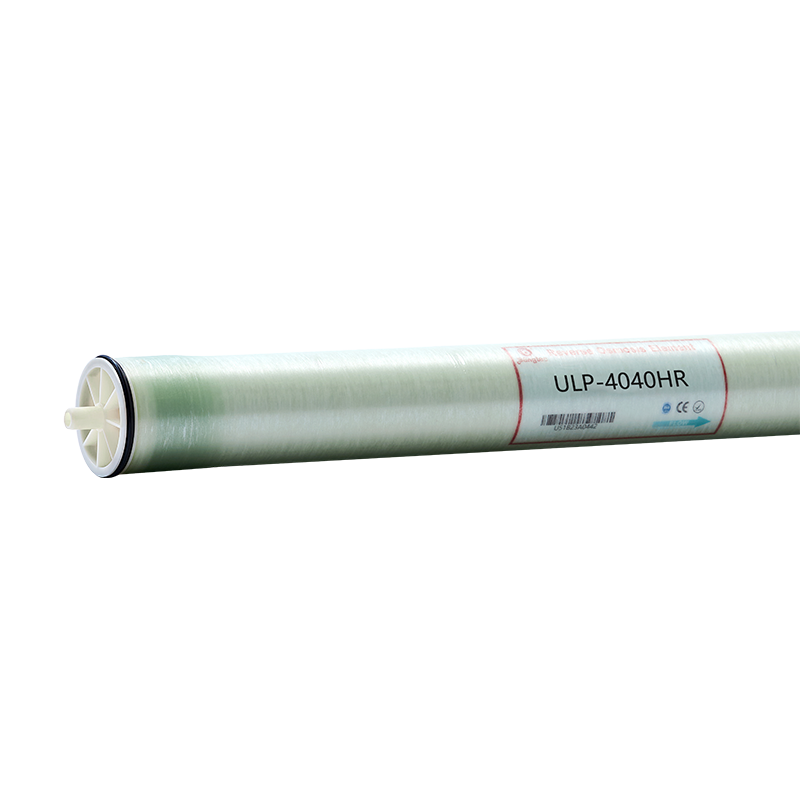
| Factor | Extreme Low Pressure (XLP) | Ultra Low Pressure (ULP) |
|---|---|---|
| Typical operating pressure | 100 psi | 110 to 150 psi |
| Feed TDS range | Under 1,000 ppm | Up to 2,000 to 4,000 ppm |
| Best fit | Tap water, low-TDS groundwater, second pass | Moderate-salinity groundwater, first pass |
If the feed source runs above 1,000 ppm on a regular basis, an Ultra Low Pressure RO Membrane or a Brackish Water RO Membrane is usually the safer selection, since running an XLP element outside its design TDS range shortens membrane life and increases cleaning frequency.
In most cases yes, since XLP-4040 and XLP-8040 elements share standard industrial dimensions. The pump curve needs to be reviewed first, though, because a system originally sized for 225 psi will over-pressurize a low-pressure element unless the pump output is reduced through a variable frequency drive or a throttling valve.
No. Seawater typically carries around 35,000 ppm TDS, far beyond the low-salinity design range of an Extreme Low Pressure RO Membrane. Seawater desalination requires a dedicated SW Ro Membrane rated for 800 to 1,200 psi.
Under proper pretreatment and cleaning practice, service life typically runs 3 to 5 years. The main factors shortening that window are elevated feed SDI, chlorine exposure above the tolerance limit, and delayed cleaning once flux or rejection starts to drop by 10% to 15% from baseline.
Standard pretreatment covers multimedia filtration, activated carbon filtration, and 5-micron cartridge filtration, with feed SDI15 kept below 5.0, turbidity under 1 NTU, and free chlorine under 0.1 mg/L. Sources with higher organic content benefit from an added ultrafiltration stage ahead of the RO Membrane Element.
Popular Products

+86-513 8659 8187
+86-189 6299 3952
No.28 Wenjing Road, Nangtong High-tech Industrial Development Zone, Jiangsu Province, China


 EN
EN  عربى
عربى