
Content
If a water analysis shows 1,500 mg/L total dissolved solids and the process limit is 50 mg/L, reverse osmosis is often the first process that can close the gap without evaporation. The short definition is this: reverse osmosis (RO) is a pressure-driven membrane separation in which water is forced through a semipermeable membrane that rejects most dissolved salts, small organics, and suspended matter. The feed water leaves as two streams, a low-salt permeate and a concentrated reject. That definition sounds simple, but the engineering sits in the pressure, pretreatment, recovery, and membrane choice.
To define reverse osmosis accurately, start with osmosis. Osmosis is the natural movement of water across a semipermeable membrane from a dilute solution toward a more concentrated one. The driving force is osmotic pressure. Reverse osmosis applies external pressure greater than the feed's osmotic pressure, so water moves in the opposite direction, from the concentrated feed side to the dilute permeate side. Dissolved ions and most contaminants are left behind. In one sentence, RO is osmosis run backward by pressure.
| Aspect | Osmosis | Reverse osmosis |
|---|---|---|
| Driving force | Osmotic pressure | Applied pressure above osmotic pressure |
| Water movement | Dilute side to concentrated side | Concentrated feed side to permeate side |
| Typical use | Natural biological process | Desalination, industrial water, drinking water |
An RO membrane is not a simple screen. The active layer is a thin polyamide film with effective pore dimensions in the sub-nanometer range, and separation depends on solution diffusion, charge, and affinity as well as size. That is why a membrane can reject sodium and chloride while passing some small uncharged molecules.
An RO system has four streams to track: feed, permeate, concentrate, and any recycle. Feed passes through pretreatment, then a high-pressure pump raises it above osmotic pressure. The pressurized feed enters a membrane element, where part of the water passes through the membrane as permeate. The remaining concentrate leaves with the rejected salts. A seawater system at 35,000 mg/L feed has an osmotic pressure near 25 bar and may operate at 55 to 70 bar; a brackish water system at 2,000 mg/L often runs at 10 to 20 bar.
Two terms keep the design honest. Recovery is permeate flow divided by feed flow. Salt rejection is one minus permeate TDS divided by feed TDS. A brackish system may recover 65 to 80 percent, while a seawater system may recover 35 to 50 percent because the concentrate becomes too salty to push against economically. Concentration factor is 1 divided by (1 minus recovery); at 75 percent recovery, salts in the concentrate are four times the feed concentration. That number drives scaling risk and pretreatment design.
Stages and passes are not the same. A two-stage array sends concentrate from the first stage to the second. A two-pass system sends permeate through a second membrane set. The first changes recovery; the second changes product quality.
Datasheet values are reference points, not a plant guarantee. Read them with the test conditions attached.
Normalization compares current performance with commissioning data at the same temperature, pressure, and recovery. Without normalization, a 5 percent change can look like a membrane failure when it is only a temperature shift.
RO elements are selected by feed salinity, pressure, fouling risk, and temperature. Brackish water membranes handle roughly 1,000 to 10,000 mg/L TDS and are the workhorses of industrial water treatment. Seawater membranes use thicker, higher-rejection construction for high-pressure duty. Low-pressure and ultra-low-pressure elements reduce pump energy when the feed is mild. Fouling-resistant elements change surface chemistry or feed spacer geometry to tolerate organics and biological load. Nanofiltration is a related pressure-driven process: it rejects multivalent ions and larger organics more selectively, so it is not a drop-in replacement for RO when high salt rejection is required.
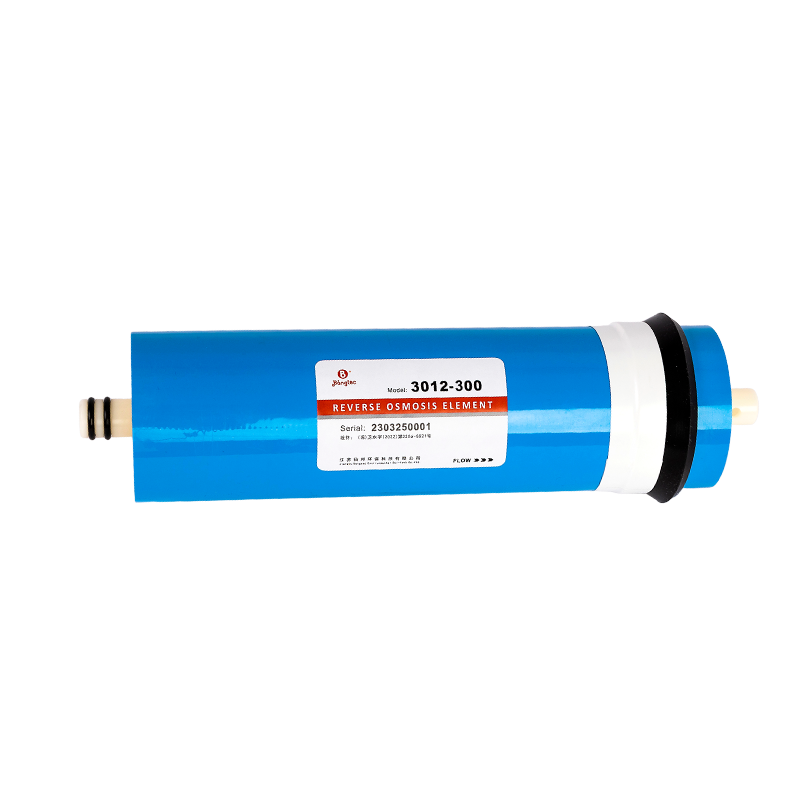
Element format matters as much as the membrane chemistry. A 4-inch element fits small skids and pilot units; an 8-inch element lowers cost per cubic meter at plant scale. The BW4040 is an example of a 4-inch brackish water element used where floor space and flow are moderate.
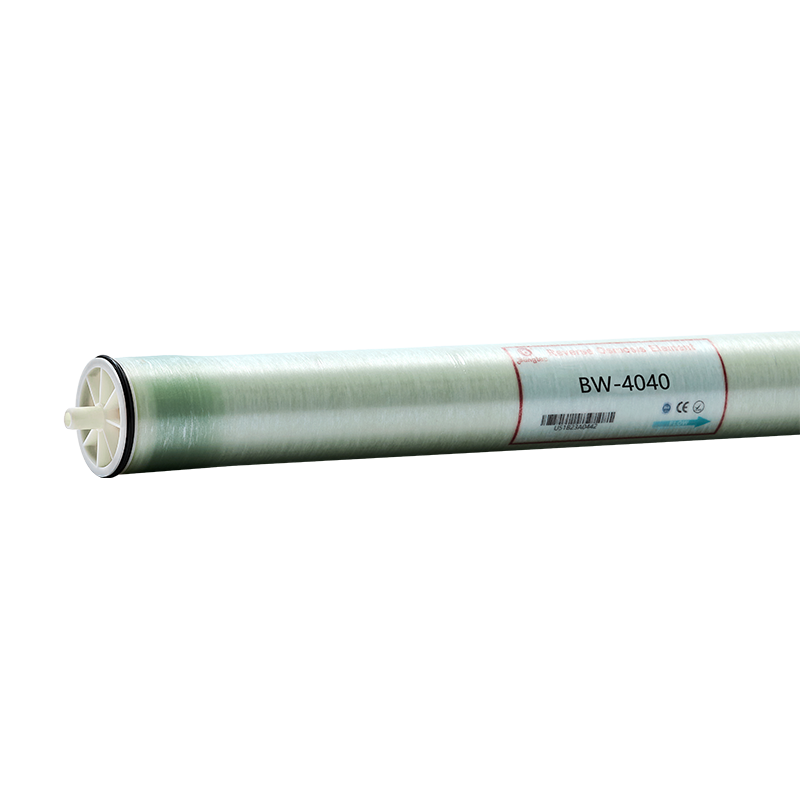 BW-4040 Brackish Water RO Membrane ElementA 4-inch brackish water element for small skids and pilot units, with moderate flow and stable rejection for commercial treatment.View Product →
Industrial RO is not one product. A 20 m3/h plant treating cooling blowdown needs pretreatment, antiscalant dosing, cartridge filters, high-pressure pumps, membrane arrays, clean-in-place equipment, and instrumentation. A 1 m3/h commercial unit is compact but still needs pretreatment and a drain for concentrate. A home system uses small elements and usually adds carbon pre-filters, a storage tank, and a post-filter.
In seawater duty, a high-rejection element such as SW4040HF is used where feed TDS is high and a high-pressure pump is available.
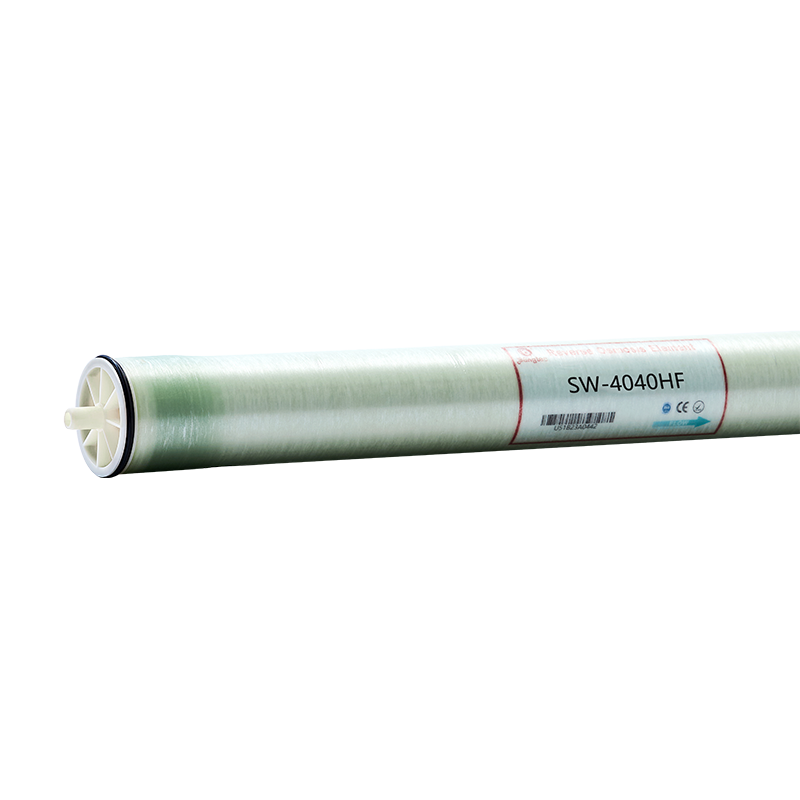 SW-4040HF Seawater RO Membrane ElementFor high-salt seawater duty with a high-pressure pump, this 4040 element provides high rejection and 1,900 GPD permeate flow.View Product →
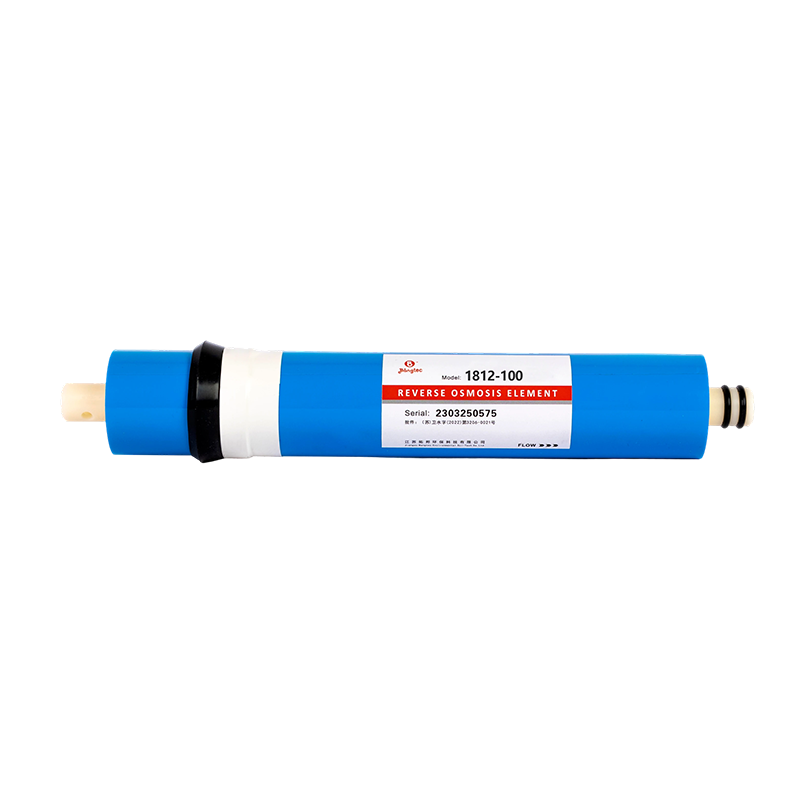
For a small under-sink unit, the 1812-size element is common; RO1812100 is one example of that format.
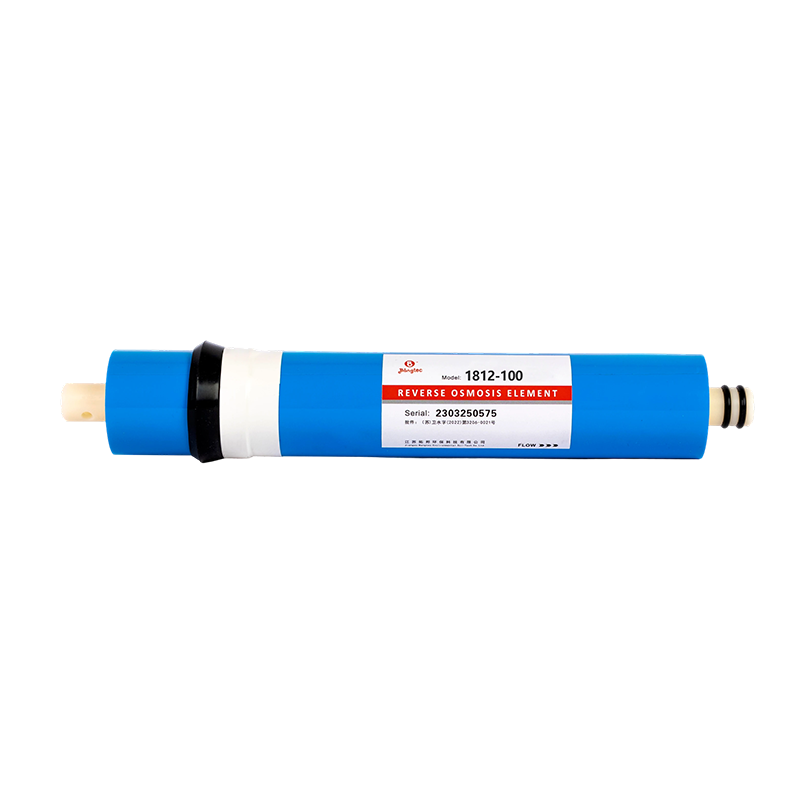 RO-1812-100 Domestic Reverse Osmosis Membrane ElementA 1812-size domestic element for small under-sink systems, offering higher flow than the 1812-75 for household drinking water.View Product →
Across these scales, the same definition applies: pressure, membrane, permeate, concentrate. The difference is the pretreatment, instrumentation, and operating discipline that keep the membrane within its design envelope.
RO is not a sterilizer. It removes many bacteria and viruses, but it does not guarantee sterile water. It also does not remove dissolved gases such as carbon dioxide well, and it can pass small uncharged molecules depending on membrane type and pH. Chlorine and other oxidants can degrade polyamide membranes, so dechlorination is often required. Concentrate must be managed, and high recovery increases scaling risk. If a supplier promises 99.99 percent removal of everything, ask for the specific contaminant list, test conditions, and analytical method.
Start with a complete water analysis: TDS, major ions, silica, iron, manganese, hardness, chlorine, COD, temperature, and pH. Define product flow and quality, then calculate recovery, concentration factor, and scaling indices. Check that the proposed element is rated for the feed chemistry and cleaning regime. Plan cartridge changes, antiscalant control, CIP frequency, and membrane replacement. A 10 percent rise in feed pressure at constant flow and temperature usually means fouling or scaling, not a reason to increase pump speed.
Bangtec manufactures RO and NF membrane sheets and elements; its membrane manufacturing and quality control page explains the production and certification context behind the range.
For a deeper look at selection factors, see this guide to RO membrane selection.
No. A filter removes particles by size; RO separates dissolved ions through a semipermeable membrane under pressure. Pretreatment filters are still used ahead of RO.
Brackish water systems often run at 10 to 20 bar, seawater at 55 to 70 bar, and home units rely on 40 to 60 psi line pressure or a small booster pump.
Yes. Rejection depends on the membrane and conditions, but 95 to 99.5 percent is typical for sodium chloride.
The rejected salts have to leave the system. Recovery determines how much permeate is produced and how concentrated the reject becomes.
Two to five years is common with good pretreatment, but chlorine exposure, fouling, and cleaning frequency can shorten or extend that range.
Normalized salt passage rises, feed pressure rises, or permeate flow falls at constant conditions. Compare against commissioning data before replacing elements.
Popular Products

+86-513 8659 8187
+86-189 6299 3952
No.28 Wenjing Road, Nangtong High-tech Industrial Development Zone, Jiangsu Province, China


 EN
 عربى