+86-513 8659 8187

Ro Membrane manufacturing Wholesale

Home / Products
Contact Us

About Bangtec

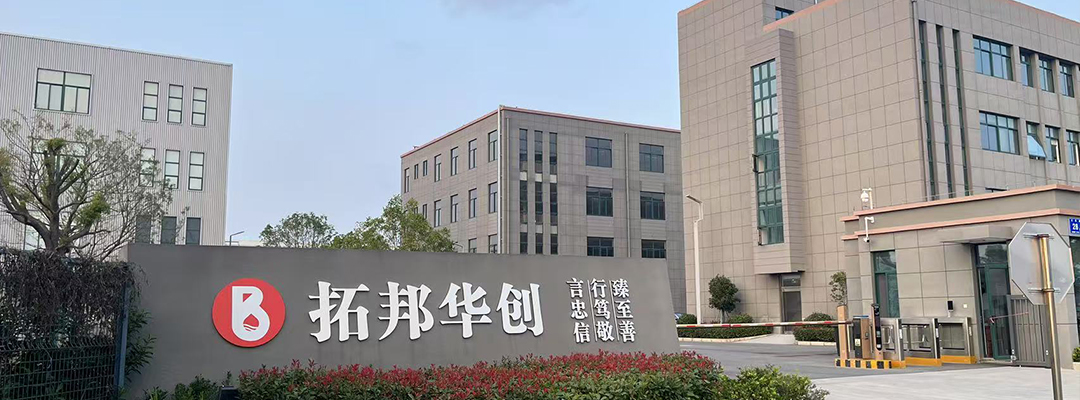
As China household water filter membrane supplier and home ro membrane factory, Jiangsu Bangtec Huachuang Sci-tech Co., Ltd. was founded under the leadership of Zhao Huiyu, a high-level talent in Jiangsu Province and a doctoral graduate from the Chinese Academy of Sciences (CAS), Bangtec has brought together a team of professionals, including multiple overseas and domestic doctors, returned high-level talents, and top-tier experts in the industry. The company is committed to the industrialization development of high-end nanofiltration membrane products and the promotion and application of overall solutions. Its product range covers a series of innovative products such as high, medium, and low-pressure reverse osmosis membranes, anti-pollution reverse osmosis membranes, and special separation nanofiltration membranes.

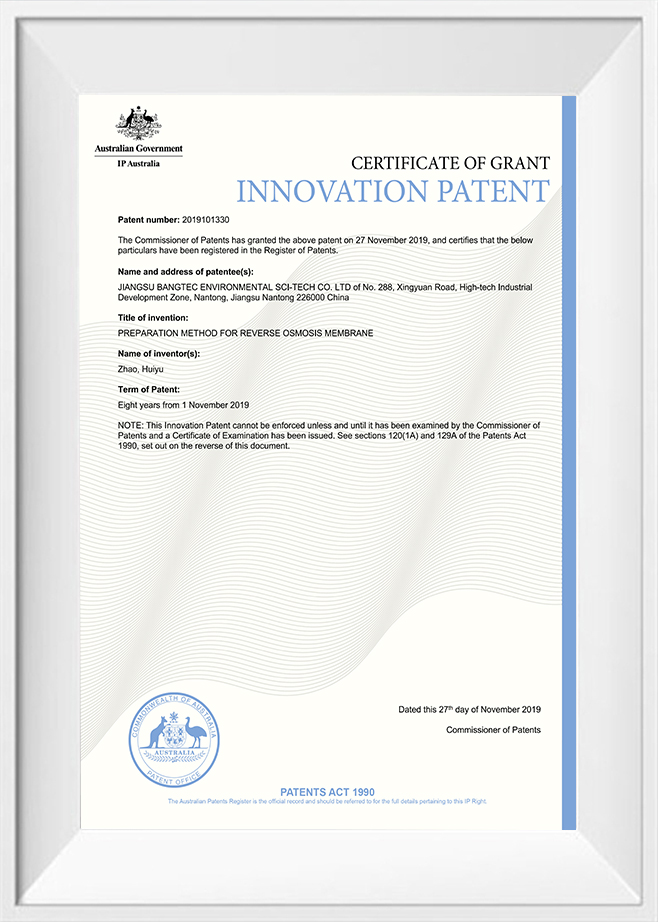
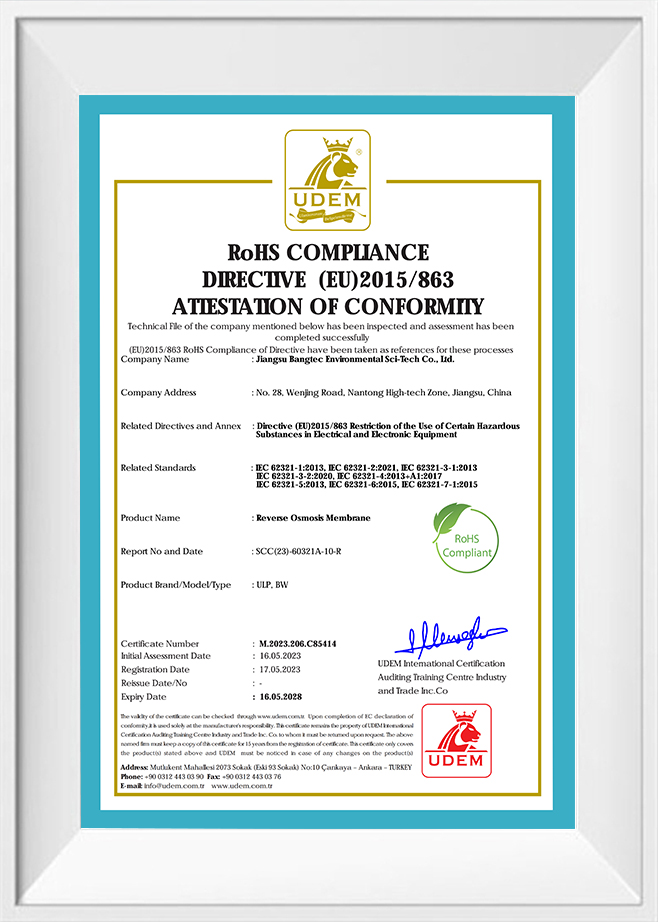
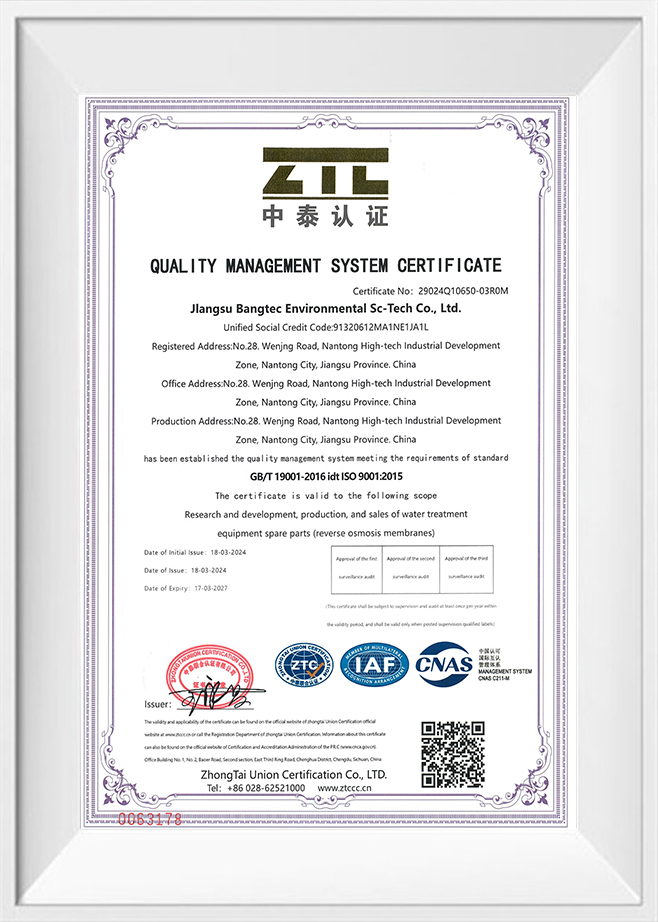
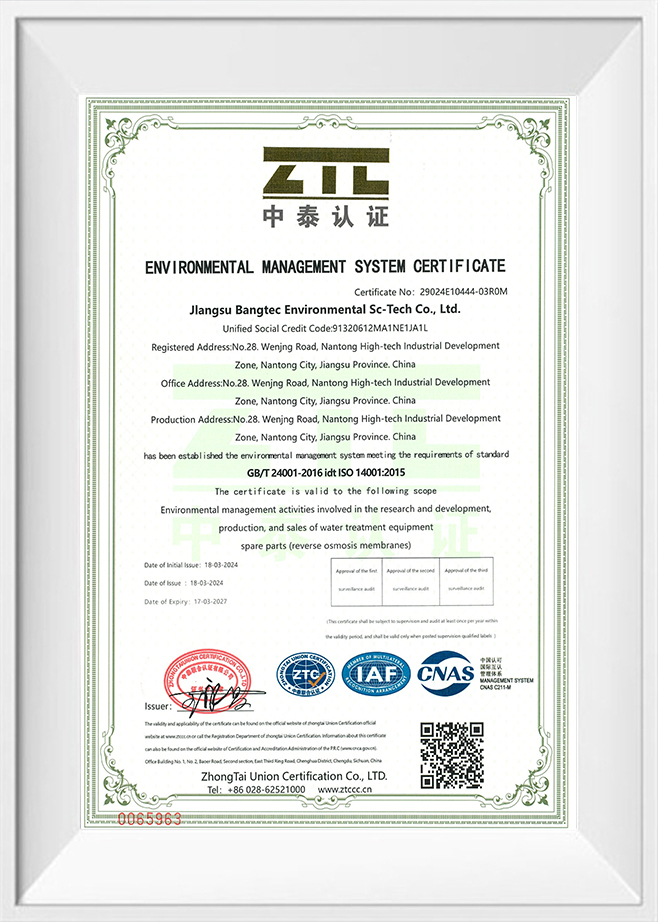
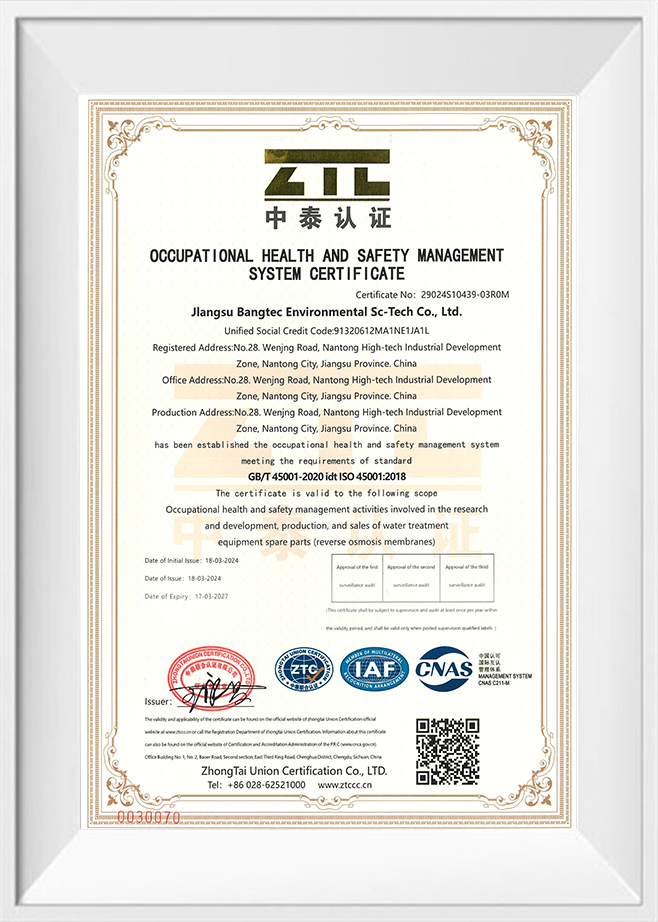
The company has successively obtained various domestic and international certifications, including the Triple Standards Integration Management System (namely ISO9001 Quality Management System, ISO14001 Environmental Management System, and ISO45001 Occupational Health and Safety Management System certifications), CE certification, and Jiangsu Provincial Water-related Approval. It also holds a number of domestic and international invention patents. With three R&D institutions established overseas, the company is able to continuously develop new products and services. The performance of the newly developed products has reached the international leading level, providing innovative products and solutions for multiple fields such as photovoltaics, lithium batteries, iron and steel, electric power, chemical industry, printing and dyeing, and coal chemical industry.

Adhering to the core values of "Faithful in Words, Earnest in Deeds, and Striving for Perfection", the company aims to provide customers with the most suitable products and solutions through continuous technological innovation.
Jiangsu Bangtec Huachuang Sci-tech Co., Ltd.

Certificate

  • Innovation patent certificate
  • CE
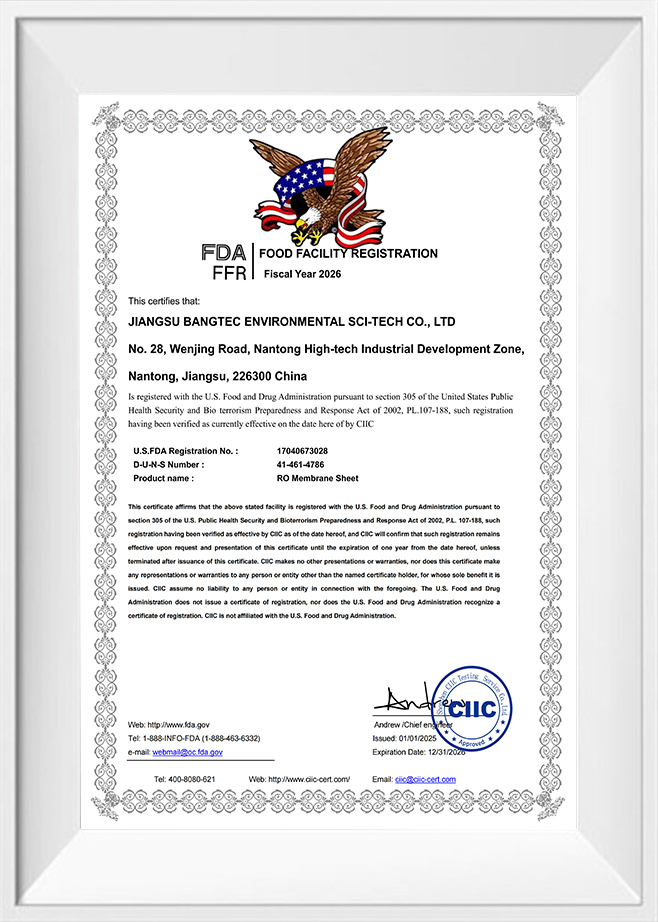
  • FDA
  • ISO9001:2015
  • ISO14001:2015
  • ISO45001:2018
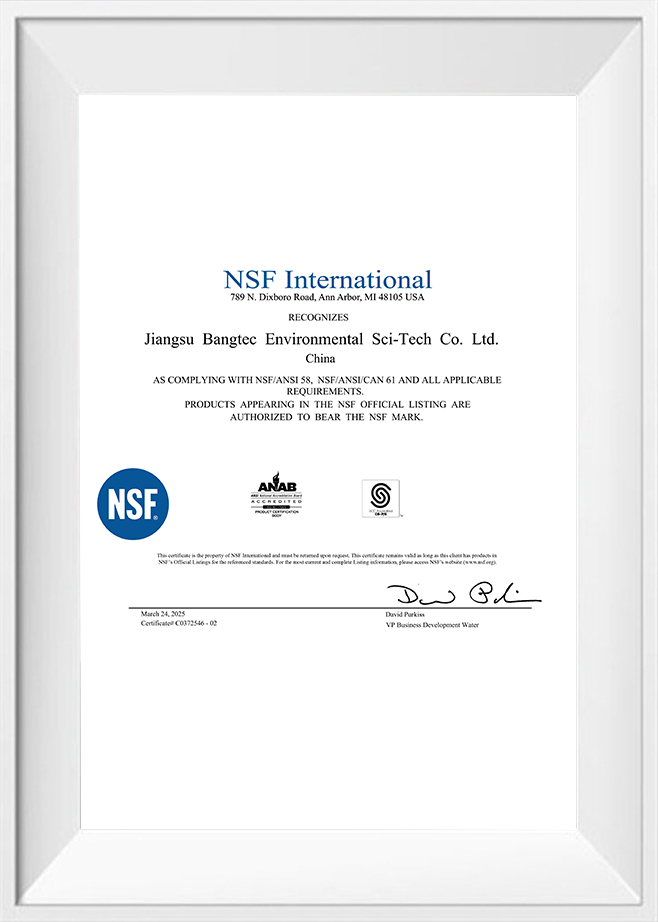
  • NSF International
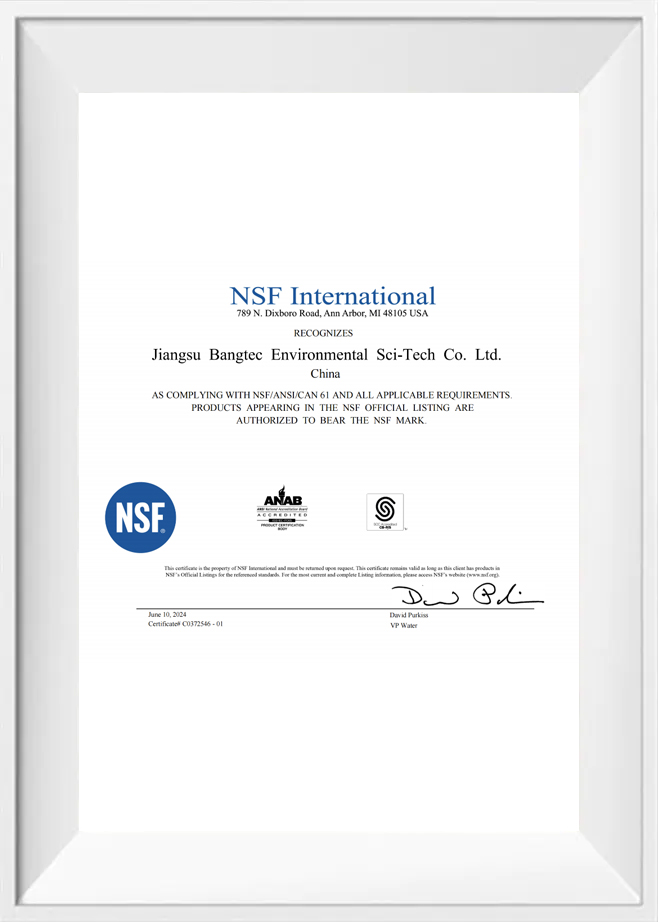
  • NSF International

Latest Updates

Industry knowledge

RO Membranes represent the core separation element in modern water treatment, widely applied in residential purification, industrial pure water production, and seawater desalination. As an RO Membrane Material Manufacturer, Jiangsu Bangtec Huachuang Sci-tech Co., Ltd. focuses on the industrial development of high-end nanofiltration membrane products, with a product portfolio covering high, medium, and low-pressure reverse osmosis membranes, anti-pollution reverse osmosis membranes, and special separation nanofiltration membranes. Whether performing RO Membrane Replacement or RO Membrane Change, selecting membrane elements with stable salt rejection and oxidation resistance is essential for long-term system operation.

Core Conclusion: Quality RO Membranes Determine System Lifespan and Water Purity

The core performance of a reverse osmosis system depends directly on the quality of RO Membranes. Under standard test conditions (2,000 ppm NaCl, 225 psi, 25 degrees C, pH 8, 15% recovery), industry-leading Filmtec RO Membrane products such as the BW30-400 achieve 99.5% stabilized salt rejection and 10,500 gpd (40 cubic meters per day) permeate flow. For Residential RO Membrane users, regularly monitoring permeate conductivity and flow rate changes provides the scientific basis for determining when replacement is necessary.

RO Membrane Material Structure and Performance Indicators

Modern Reverse Osmosis RO Membranes typically employ a polyamide thin-film composite structure, consisting of a non-woven fabric support layer, a polysulfone microporous intermediate layer, and a polyamide active separation layer. This three-layer composite design provides both high mechanical strength and high selectivity. Taking Dow Filmtec RO Membrane as an example, the BW30 series features a wide cleaning pH tolerance range of 1-13, a maximum operating temperature of 45 degrees C, a maximum operating pressure of 600 psi (41 bar), and free chlorine tolerance below 0.1 ppm.

Performance Parameter Filmtec BW30-400 Filmtec BW30-365
Membrane Type Polyamide Thin-Film Composite Polyamide Thin-Film Composite
Active Membrane Area 400 sq ft (37 sq m) 365 sq ft (34 sq m)
Permeate Flow Rate 10,500 gpd (40 cubic m per day) 9,500 gpd (36 cubic m per day)
Stabilized Salt Rejection 99.5% 99.5%
Minimum Salt Rejection 99.0% 99.0%
Feed Spacer Thickness 28 mil 34 mil
Maximum Operating Pressure 600 psi (41 bar) 600 psi (41 bar)
Continuous Operation pH Range 2-11 2-11
Cleaning pH Range (30 min) 1-13 1-13

RO Membrane Replacement Cycle and Evaluation Criteria

The replacement cycle for RO Water Membrane is not fixed, but depends on feed water quality, pretreatment effectiveness, and operational maintenance. In most applications, RO membranes require replacement every 2 to 3 years; with proper pretreatment and maintenance, service life can extend to 3 to 5 years or longer. When the following performance indicators appear, RO Membrane Replacement should be performed:

  • Permeate flow decline of 10% to 20%
  • Significant reduction in salt rejection with increased permeate conductivity
  • Sustained increase in operating pressure and energy consumption
  • Performance recovery below 85% after chemical cleaning (CIP)

For Home RO Membrane users, weekly TDS monitoring with a handheld meter is recommended. When RO permeate TDS exceeds 40 ppm or removal rate drops below 90%, membrane replacement should be considered. Delayed replacement not only degrades water quality but also increases energy costs due to high-pressure operation, ultimately resulting in higher total operating costs than timely replacement.

Oxidation Damage Protection and Anti-Oxidation Membrane Technology

Free chlorine and other oxidants represent the primary chemical damage source for RO membranes. Even trace chlorine residuals below 0.1 ppm can cause irreversible oxidative degradation of the polyamide separation layer during prolonged contact, manifesting as salt rejection decline and abnormal permeate flow increase. Therefore, development of Oxidation Resistance RO Membrane has become a key industry focus.

Jiangsu Bangtec Huachuang Sci-tech Co., Ltd. enhances membrane tolerance to oxidative environments through modification of the polyamide active layer chemical structure. Combined with comprehensive pretreatment processes such as activated carbon filtration or sodium bisulfite dosing, residual chlorine can be effectively removed to minimize oxidation damage risk. The company has obtained ISO9001 Quality Management System, ISO14001 Environmental Management System, and ISO45001 Occupational Health and Safety Management System certifications, along with CE certification and Jiangsu Provincial Water-related Approval, ensuring full quality control from material selection to finished product delivery.

Comparison of Residential and Industrial RO Membrane Applications

Comparison Dimension Residential RO Membrane Industrial RO Membrane
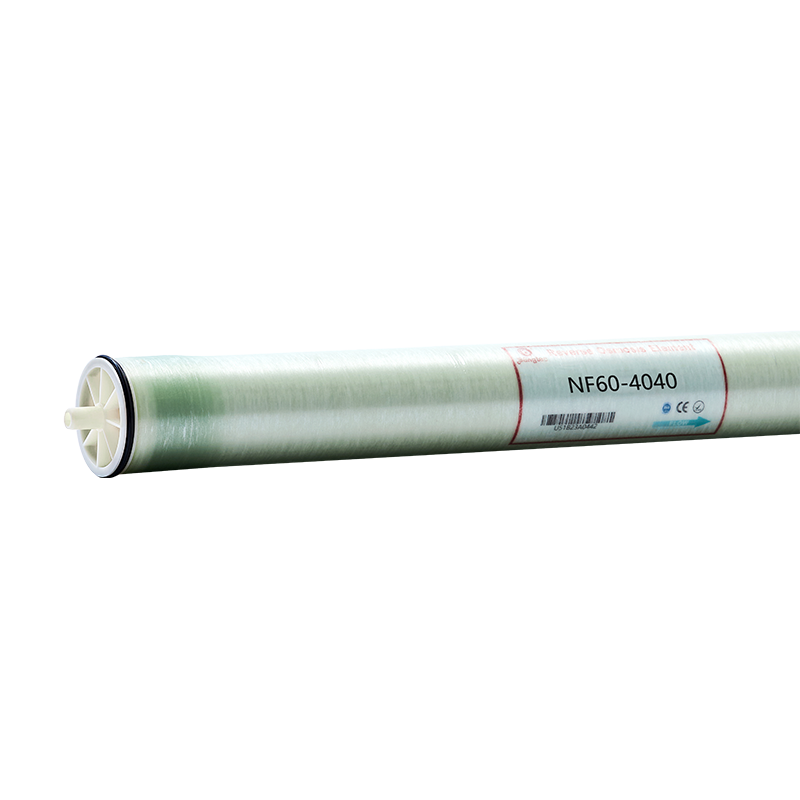
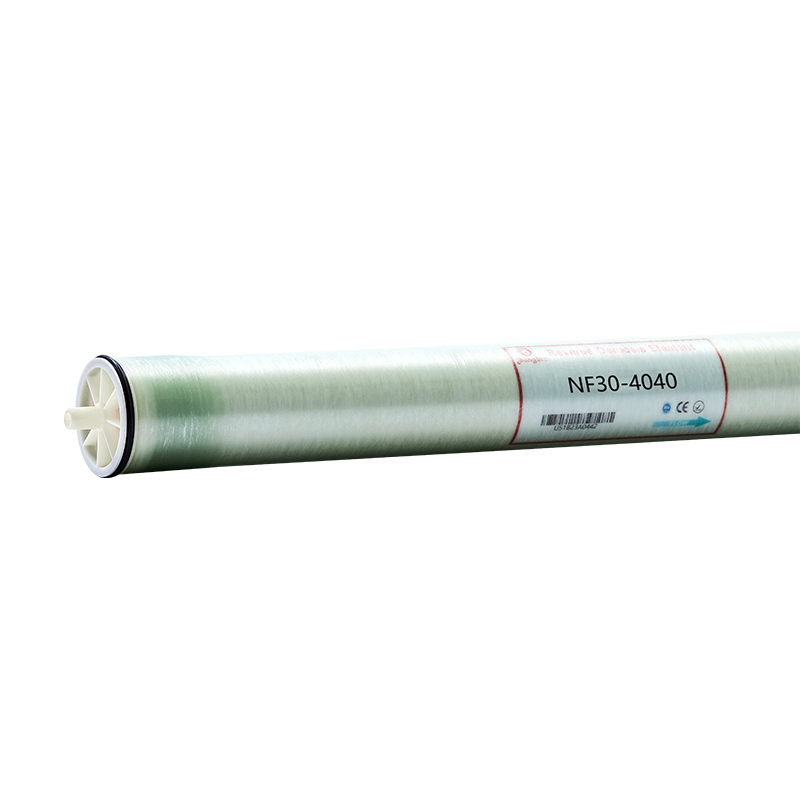
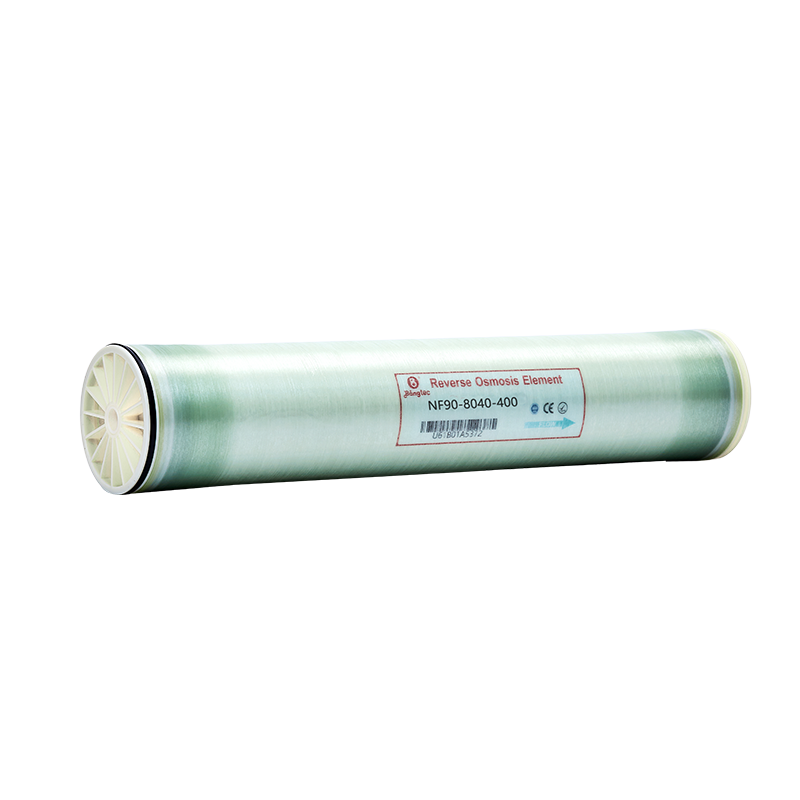
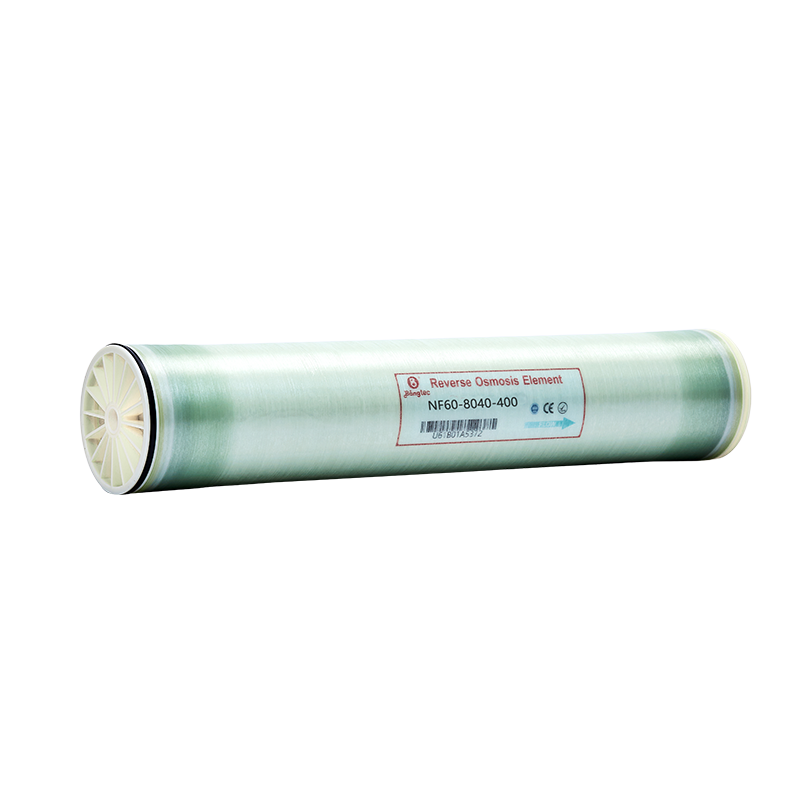
Typical Specifications 1812 / 2812 / 3012 / 3013 4040 / 8040
Flow Rate Range 50-800 GPD 2,500-12,000 GPD (per element)
Operating Pressure 50-80 psi 150-600 psi
Typical Lifespan 2-3 years 2-5 years (depending on water quality)
Primary Contaminants Residual chlorine, scale, organics Biofouling, scaling, colloids
Pretreatment Requirements Sediment filter + activated carbon Multi-media filtration + UF + softener
Replacement Cost Sensitivity High (directly affects household budget) Moderate (accounted in operating costs)

Key Measures to Extend RO Membrane Service Life

Through optimized system design and routine maintenance, RO Membranes service life can be extended by 30% to 50%. Specific measures include:

  • Control feed water SDI value: Maintain Silt Density Index below 3 to significantly reduce colloidal and particulate fouling load on the membrane surface
  • Thorough chlorine removal: Ensure timely activated carbon cartridge replacement, or employ sodium bisulfite chemical reduction to reduce residual chlorine below detection limits
  • Optimize recovery rate: Avoid excessive system recovery rates that cause scaling substance concentration in the concentrate stream to exceed saturation limits
  • Regular chemical cleaning: Perform CIP cleaning when performance declines by 10% to 15%, preventing fouling layer solidification into irreversible blockage
  • Select high-quality membrane elements: Products such as Filmtec RO Membrane, validated through long-term market testing, offer wider cleaning pH tolerance and more stable performance degradation curves

China Residential RO Membrane Market and Supply Chain

With increasing awareness of healthy drinking water among residents, the China Residential RO Membrane market continues to grow. As a Household Water Filter Membrane Supplier, domestic manufacturers are transitioning from pure membrane element production to integrated solution providers. Jiangsu Bangtec Huachuang Sci-tech Co., Ltd., leveraging a doctoral team from the Chinese Academy of Sciences and overseas returned high-level talents, has established three overseas R&D institutions for continuous new product development. The performance of newly developed products has reached internationally leading levels, providing innovative products and solutions for photovoltaic, lithium battery, steel, power, chemical, printing and dyeing, and coal chemical industries, with business coverage extending to the United States, Russia, South Korea, Thailand, Egypt, India, and other countries.

Frequently Asked Questions

How often should RO membranes be replaced?
Under standard municipal water conditions, residential RO membranes typically require replacement every 2 to 3 years; industrial systems with adequate pretreatment can operate for 3 to 5 years. Replacement timing should be based on permeate TDS, flow rate, and pressure data rather than calendar time alone.
How do I know when my RO membrane needs replacement?
Key indicators include: permeate flow decline exceeding 15%, salt rejection reduction exceeding 10%, abnormal operating pressure increase, and performance recovery below 85% after chemical cleaning. Residential systems can use a TDS pen; when removal rate drops below 90%, replacement is recommended.
What damage does free chlorine cause to RO membranes?
Free chlorine oxidizes the polyamide separation layer, causing irreversible salt rejection decline. Even trace residuals below 0.1 ppm can degrade membrane performance during prolonged contact. Residual chlorine must be thoroughly removed through activated carbon filtration or chemical reduction.
What is the difference between RO and nanofiltration membranes?
RO membranes typically remove over 99% of monovalent ions such as NaCl, while nanofiltration membranes primarily remove divalent ions and organic matter with lower rejection of monovalent ions. RO membranes are suited for high-purity water production, while nanofiltration is used for selective separation and softening applications.
How much does pretreatment affect RO membrane lifespan?
Proper pretreatment can extend RO membrane lifespan from 1-2 years to 3-5 years. Core pretreatment steps include: chlorine removal (activated carbon or reducing agents), hardness reduction (water softener), colloid control (UF ultrafiltration), and SDI value management (multi-media filtration).
What are the technical advantages of oxidation-resistant RO membranes?
Oxidation-resistant membranes enhance tolerance thresholds to chlorine and other oxidants through modification of the polyamide active layer molecular structure. During chlorine fluctuations or temporary pretreatment failures, such membrane elements demonstrate stronger performance stability and longer effective service life.